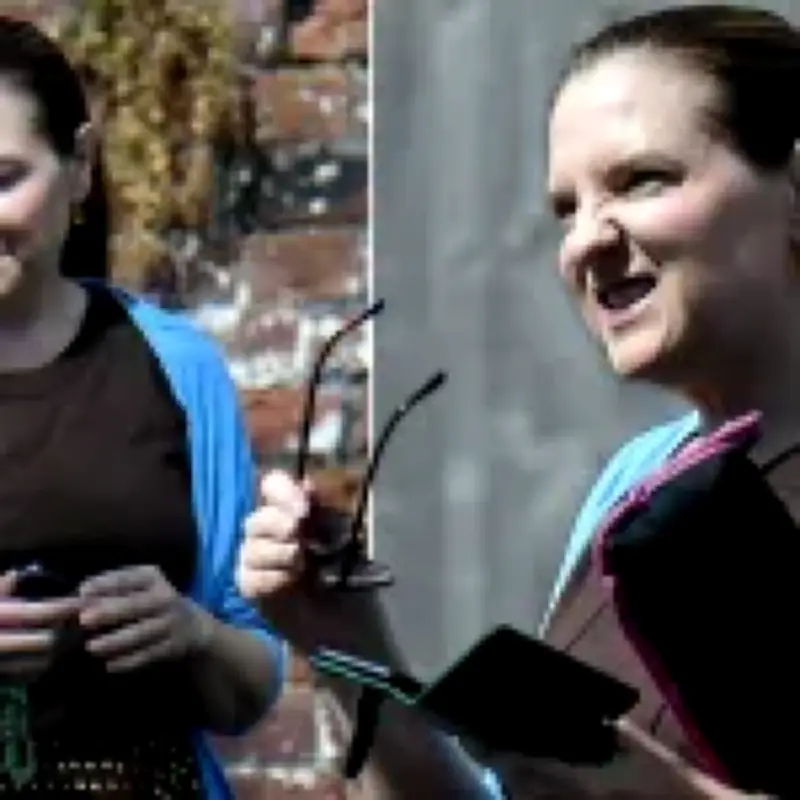
Louise Woodward, now 48, has been pictured during a rare public appearance in Shropshire, days after it was announced that The White Lotus star Meghann Fahy will portray her in a new HBO drama about the trial that transfixed Britain and America in 1997. Woodward was spotted in Bridgnorth accompanied by an elderly couple, carrying a folding chair and putting on her glasses as she stopped to read parking charges.
The 1997 Case
At just 18, Woodward left her home in Cheshire for what was supposed to be a gap year in America and instead found herself accused of murdering eight-month-old Matthew Eappen, convicted of second-degree murder and facing life behind bars. The case became an international obsession, divided medical experts and sparked furious debate on opposite sides of the Atlantic.
Woodward arrived in the US in 1996 and began working for doctors Deborah and Sunil Eappen at their home in Newton, Massachusetts, caring for their sons Matthew and Brendan. On February 4, 1997, Woodward called emergency services after eight-month-old Matthew became unresponsive while in her care. The baby was rushed to Boston Children’s Hospital with catastrophic brain injuries. Doctors discovered a subdural haematoma, retinal bleeding and a skull fracture, and prosecutors would later argue that Matthew had been violently shaken and his head slammed against a hard surface.

The Trial and Conviction
Matthew never recovered. His life support was withdrawn and he died on February 9. By then, Woodward had already been arrested. She vehemently denied deliberately harming Matthew, but was ultimately charged with first-degree murder. The trial was televised in America at a time when British courts remained firmly closed to cameras, allowing millions of viewers to watch the testimony and arguments unfold almost in real time.
After a three-week trial, the jury was sent away to decide her fate. Crucially, Woodward’s defence had requested that jurors not be given involuntary manslaughter as a possible lesser offence, effectively leaving them to choose between murder and acquittal. On October 30, the gamble spectacularly failed and Woodward was convicted of second-degree murder. She cried out in court: ‘I didn’t do anything… Why did they do that to me?’ The verdict carried a mandatory life sentence, with Woodward required to spend at least 15 years behind bars before becoming eligible for parole.
The Sentence Reduction
Just 11 days later, trial judge Hiller Zobel effectively overruled the severity of the jury’s verdict. He reduced Woodward’s conviction from second-degree murder to involuntary manslaughter, concluding the evidence supported culpability but not the malice required for murder. ‘I am morally certain that allowing this defendant on this evidence to remain convicted of second-degree murder would be a miscarriage of justice,’ he wrote. Zobel instead sentenced Woodward to 279 days – exactly the amount of time she had already spent in custody – and she walked free.
Prosecutors appealed in an attempt to reinstate the murder conviction, while Woodward’s lawyers sought to have her remaining conviction overturned. In June 1998, Massachusetts’ Supreme Judicial Court upheld Zobel’s decision to reduce the conviction to involuntary manslaughter, finding he had acted within his discretion. Woodward was then able to return to Britain.
Medical Debate and Aftermath
In the decades since Matthew’s death, the science and terminology surrounding shaken baby syndrome has become the subject of significant debate. The broader diagnosis is now commonly referred to as abusive head trauma, and mainstream paediatric medicine continues to recognise violent shaking as a potential mechanism of serious and fatal brain injury in infants. Paediatric radiologist Patrick Barnes – who appeared as a prosecution witness at her trial – later became a prominent critic of the way shaken baby cases were diagnosed. In 2015, he said that if he were giving evidence in the case with the benefit of contemporary medical knowledge, he would testify that Matthew’s injuries ‘could have been accidental’.

None of that has altered Woodward’s conviction. Matthew’s parents have also remained convinced that their son died as a result of her actions. Deborah and Sunil subsequently founded the Matty Eappen Foundation, dedicated to educating people about abusive head trauma.
Woodward has largely retreated from the public life that was forced upon her as a teenager. After returning to Britain, she studied law at London South Bank University and graduated in 2002 before beginning legal training. She eventually left the profession and went on to teach dance. Woodward met businessman Antony Elkes in 2006, with the couple marrying in 2013 and welcoming a daughter the following year. She has continued to maintain her innocence. ‘I have done nothing wrong,’ she said in a rare interview years after the trial. ‘I am entitled to enjoy my life. I am not going to apologise for being happy.’
HBO has yet to announce a release date for The Trial of Louise Woodward, but Fahy’s casting ensures the story is already attracting attention.