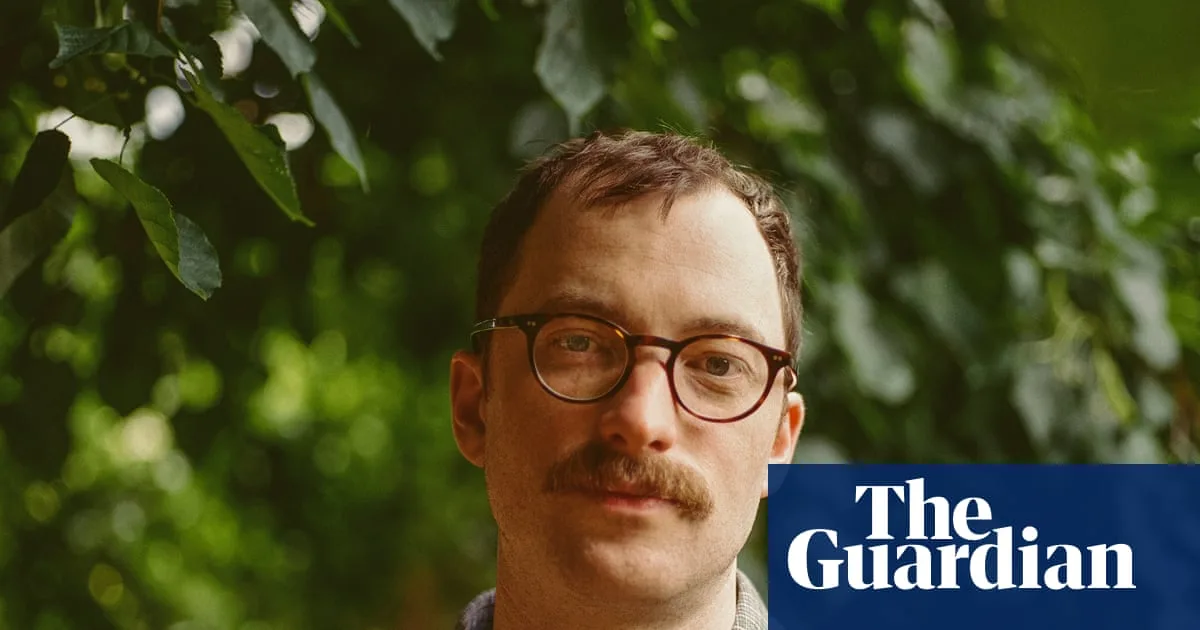
Jem Calder's writing career had a fairytale start. Sally Rooney emailed him, impressed with a short story he had submitted to the literary magazine she was editing soon after Conversations with Friends came out. It was the first story he had ever completed. Calder was already a huge fan of Rooney's, so the whole thing was surreal, he tells me. 'I cannot really imagine what could top that, to be honest.'
From Short Stories to a Debut Novel
That story ultimately ended up in Reward System, Calder's 2022 collection of six interconnected tales following a cast of sad young things living in an unnamed city. It was hailed as a book of the year; a review in this paper placed Calder among the most talented young writers of fiction at work today. Now, his debut novel, I Want You to Be Happy, picks up some of the themes of the first book: the trials of modern love, millennial ennui, consumer culture, technology, and political and ecological doom. It has already garnered famous fans: David Szalay has sung its praises, while Andrew O'Hagan says Calder is his new favourite writer.
The Story of Joey and Chuck
At the novel's opening, 23-year-old Joey meets 35-year-old Chuck at a bar. They sleep together and commence what might be described as situationship hell: Joey falls hard, but Chuck is not over his ex-fiancee. Joey seems to spend her life waiting for a text back. Like Reward System, the novel is pacy and astute; its 34-year-old author's bleak appraisal of life for young people today is right on the money. But in both books, the flinty cynicism is offset by a subterranean sense that something better is coming, and the denouements end up being oddly affirming. It helps, too, that Calder is funny.
It soon becomes clear that Joey and Chuck are not singing from the same songsheet. In modern dating parlance, Chuck might be categorised as an avoidant: he ditched his fiancee, then regrets it; he likes being around Joey but does not want to be with her. She pretty much wants a boyfriend, and he wants someone to take him out of himself, says Calder.
Commitmentphobia and Economic Realities
Chuck feels representative of a sort of endemic commitmentphobia that Calder links to an unstable and unpleasant economic reality foisted on his generation. 'You cannot afford to own a house, it is very difficult to have a family' – things that were often a given in previous relationships. These constraints express themselves on the emotional level as avoidance, or staying in casual relationships rather than settling down. There is a hedonism to it: because there is realistically no actual hope for the future, the younger generation has to content themselves with fooling around. But this ends up being a really shallow way to live your life – a lesson his characters have to try and get their heads around.
While the world from Joey's perspective seems relatively shiny, Chuck is deeply disillusioned. Calder says he is haunted by Chuck types – men in their 30s or 40s who have aged out of being cool, are suffering from some kind of creative or professional disappointment (perhaps they were in a band and almost-but-not-quite made it) – generally life hasn't turned out how they had imagined. 'I am always aware that I am only one bad draft of a novel away from being in that place,' he says.
Balancing Writing and Day Jobs
Calder grew up in Cambridge, studied English at Leeds, and has since worked a variety of jobs alongside writing, including those of his protagonists – Joey is a barista, and Chuck is a copywriter. He says he truly cannot relate to authors who complain of writer's block – having to work a day job gives him such motivation to get back to it and force himself to deal with something difficult in his writing. The novel, which took three years to write, alternates between the points of view of Joey and Chuck. Both write on the side of their day jobs, and the book is partly about two literary types falling in love, swapping Louise Gluck and Frank O'Hara poems, showing their work to each other. They are both creatively invigorated by the relationship, something Calder has experienced himself: he began writing the novel in the early stages of dating his girlfriend, meaning he could transcribe some of literally what was going through his head.
Power Dynamics and Generational Shifts
Chuck and Joey's power dynamic (he is older and richer) becomes more interesting as we come to realise that she is the talented one. I Want You to Be Happy is something of an expansion of the opening story in Reward System, in which a young woman, Julia, dates her older colleague. Both Joey and Julia actually do seem to have some kind of a purpose, and both men feel usurped by this younger woman, says Calder. These dynamics reflect a drama that is playing out across many professions, including the arts – older men feeling replaced by young, smart women. 'It is really funny to me, people trying to resist something that is well under way.'
Literary Influences and Setting
Just before starting to write, Calder binged the works of Elizabeth Taylor. 'She is probably my favourite writer,' he says – with a cutthroat level of concision that absolutely breaks your heart sometimes, the emotional brutality she can inflict in a couple of lines. Richard Yates was also a big influence for I Want You to Be Happy.
In the novel, locations are blurry, though Calder slowly leaves clues that we are in east London (with its attendant weird rental setups – one character lives in a warehouse conversion with nine housemates and two bathrooms). Similarly, he drops in consumer brands without naming them – 'aspirational-brand handsoap', a 'coral-coloured' debit card – which has a double effect on a reader: it is satisfying to clock the references (Aesop, Monzo), until you realise that means you are as brand-brained as Chuck and Joey.
Addiction and the Modern Condition
Calder's characters are addicted to instant gratification – buying stuff, social media, vaping, porn – anything to ward off the world's horrors (at one point Chuck reads a Guardian article on the climate, which he had forgotten to feel anxious about yet today, but now was). Chuck could be described as an alcoholic, though one of the big questions of the book is what really constitutes addiction, now that addict-like behaviour is so ubiquitous. The threshold for addiction has almost lowered, says Calder. It is the modern condition, to some extent. And he is aware that his readers are afflicted too, that he is competing for their attention in an uphill struggle against screens.
The Voice of a Generation?
Calder could be grouped with a cohort of young novelists to whom the 'voice of a generation' label can easily be applied, alongside the likes of Rooney, Oisin McKenna, Madeleine Gray – writers concerned with how a dismal macroeconomic climate impacts young lives. How does Calder feel about that badge? It is not something he consciously pursues at all, he says. 'It is unavoidable not to critique capitalism in some way if you are trying to address the absurdities of how we live now, but I also do not care about putting my political views in my fiction. The goal is always to just write realistically about how life feels.'
I Want You to Be Happy by Jem Calder is published by Faber on 21 May (£14.99). To support the Guardian order your copy at guardianbookshop.com. Delivery charges may apply.