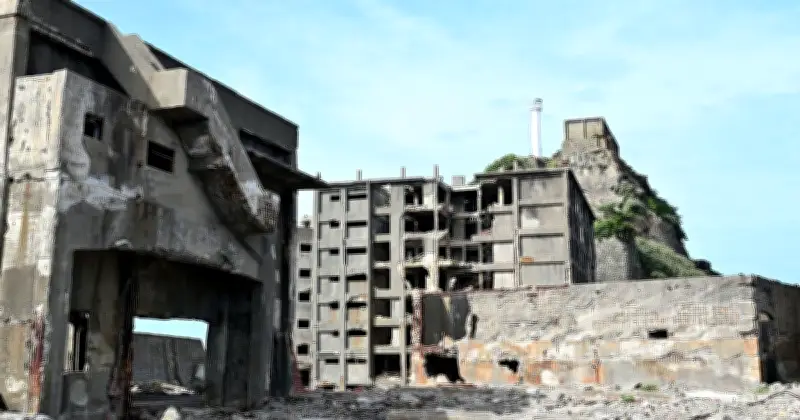
In the late 19th century, a remote Japanese island was a thriving town powered by its coal-mining industry. Today, it is slowly being reclaimed by the sea and nature. Given the island's dark history, perhaps it is for the best that this once-bustling town has fallen silent.
The Rise and Fall of Hashima Island
Hashima Island, located about 15 kilometres from Nagasaki, was once a bustling mining town. At its peak in the late 1950s, the island was home to more than 5,000 people who lived in towering apartment blocks, the remnants of which can still be seen today. Originally famous for its undersea coal mines, the island also has a very dark history.
A Town Built on Coal
The island was purchased by Mitsubishi in the late 19th century, and in 1916, construction began on apartment blocks to accommodate workers. There was a school, a kindergarten, a community centre, and a hospital. For entertainment, residents could visit the cinema or browse the many shops.
Dark Legacy of Forced Labour
After the end of World War II, Chinese and Korean prisoners of war were forced to work on the island, either constructing buildings or working in the mines. These prisoners were subjected to harrowing and dangerous conditions at the hands of Mitsubishi. Many died due to exhaustion and malnutrition—the exact number of deaths ranges from 137 to as many as 1,300. The workers named the island "Jail Island" or even "Hell Island," a far cry from the peaceful mining town it appeared to be.
Abandonment and UNESCO Controversy
By the 1970s, the coal had mostly been depleted, and the industry was dying. This led many residents to leave the island, and by the mid-1970s, the mine had closed, and everyone who once called the island home had left. In 2009, Japan requested that the island be included on the UNESCO World Heritage List. This request was condemned by the governments of North and South Korea and China, as, in the words of South Korea, it would "violate the dignity of the survivors of forced labour."
Eventually, South Korea and Japan reached a compromise: the island could be listed as long as Japan provided information about the use of forced labour. However, in 2021, it was found that Japan had not upheld its end of the bargain and had not displayed sufficient information about forced labour. In the museum detailing the island's history in Nagasaki, there are reportedly no testimonies from Koreans about forced labour or discrimination, and the one testimony from a Korean denies that forced labour was ever used.