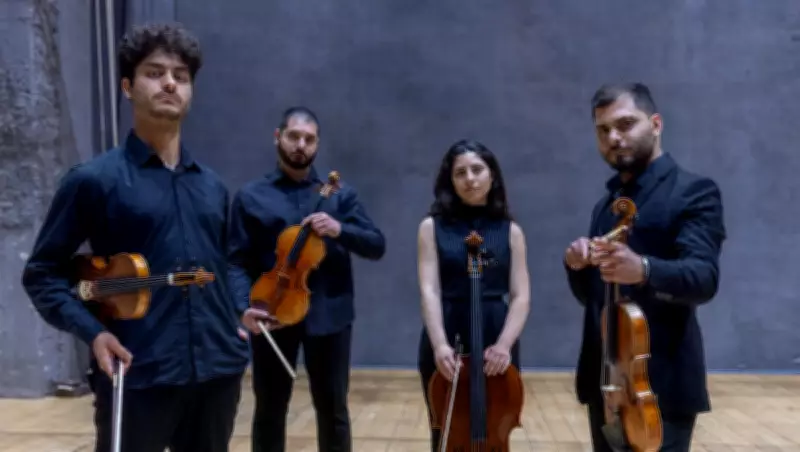
The four Saad siblings of the Galilee Quartet, now based in Paris, delivered a unique performance at Milton Court in London, blending classical Western music with Eastern improvisation. The evening began with a strategic opener: Webern's lyrical love-letter Langsamer Satz, the only classical work on the programme. It was as though the quartet wanted to prove they could play it straight, before travelling further and further away from traditional textures and instruments, trading acoustic performance for microphones, swapping strings for voices, percussion and oud.
Formed in 2011, the Palestinian ensemble was forced into hiatus in 2013 when eldest brother Omar was summoned for military conscription by Israel's IDF. Refusing to serve, he was imprisoned as a conscientious objector. The quartet are currently based in Paris, honing their signature blend of east-meets-west music-making.
By the final two pieces, music stands had disappeared too. "We improvise!" Mostafa declared. And, with nothing between them, the siblings at last began to play as they talked: bantering, bickering and sparking off one another, alert to shifting currents of energy and mood in two works composed (like the bulk of the programme) by Mostafa himself: an evocative fusion of Western techniques and colours allied to singing Arabic melodies, clustered with expressive, ornamental detail.

But much of the evening felt like a work in progress. The Webern was pallid, tuning unsettled and texture ungrounded. Arrangements of Fairouz's Yallah Tnam Rima and Asmahan's Ya Habibi Ta'ala and Emta Hata'raf (all sung with vulnerable, rapt beauty by cellist Tibah) failed to exploit the available instruments. Only Gandhi's Sama'l Eitab – bringing worlds together in a brooding "song of reproach", now flirting with a Piazzolla tango, now a baroque violin cadenza – began to explore what he described as the group's "complicated story as musicians and human beings".