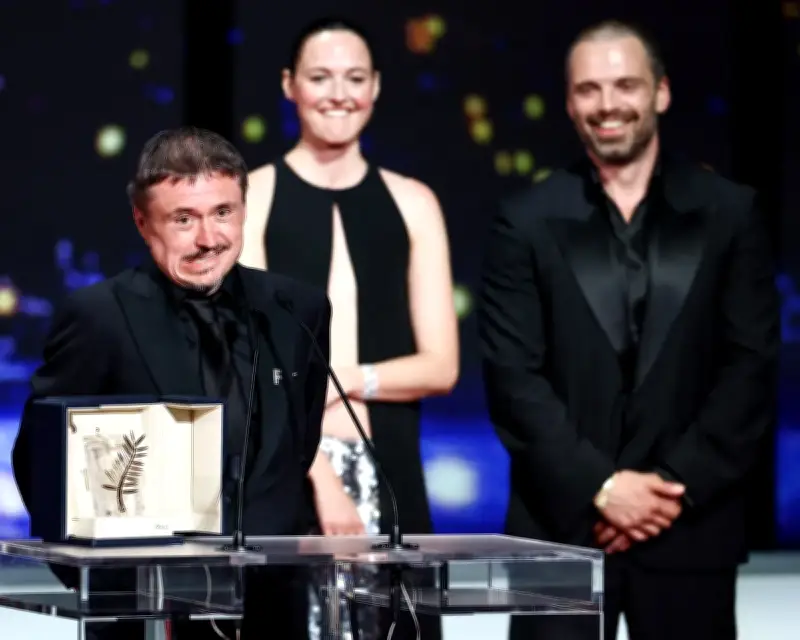
Cristian Mungiu's new film, Fjord, which won the Palme d'Or at Cannes this year, is a culture-clash drama that challenges both conservative and liberal values, avoiding the homogenised 'Europudding' the Romanian auteur has long criticised.
In an interview, Mungiu recalled a 2013 meeting in Brussels with then European Commission president José Manuel Barroso. The film-maker was part of a delegation lobbying against a potential EU-US trade deal that could have barred countries from subsidising their own productions. The argument was that without such subsidies, European cinema would become a homogenised mush of co-productions, unable to create national dramas like Mungiu's 2007 Palme d'Or winner, 4 Months, 3 Weeks and 2 Days.
A Culture Clash in the North
Barroso, an economic liberal, was unimpressed, and the meeting became heated. Mungiu recalled Barroso's frustration that people in Estonia were still reluctant to watch a film from Portugal. Mungiu pushed back, noting that historically, it had only been tens of years since European nations were fighting each other. "You can't pretend we've already got there," he said.
Fjord tells the story of Mihai and Lisbet Gheorghiu, a Romanian-Norwegian couple with five young children, who move from Bucharest to Norway. The Gheorghius are devout evangelical Christians, but the liberally minded locals welcome them. Mihai, an engineer, and nurse Lisbet find employment, and their children settle at school.
Tolerance Turns to Distrust
When a PE teacher notices bruises on the eldest daughter, Elia, tolerance turns to distrust. Child protection services become involved, and Mihai's denial of abuse, while insisting a slap on the bottom can be necessary to teach that "you can't escape punishment when you're wrong," complicates matters. The state separates the parents from their children, including their newborn baby, turning the family's values into a diplomatic incident.
Fjord is Mungiu's first English-language film and stars Oscar-nominated actors Sebastian Stan and Renate Reinsve. It is an international co-production, shot in Norway, edited in Romania, with sound designed in Finland and mixed in Denmark. Mungiu expressed ambivalence about the financing system that shaped the film.
Cinema as a Rorschach Test
The film is designed as a Rorschach test, with the bruise on Elia's back never fully explained. Whether viewers are more outraged by the Norwegian state's dogmatic liberalism or the Romanians' disciplinarian ways is meant to reveal more about the audience than the characters. "We watch too many stories that are there just to confirm to you that you are on the right side of things," Mungiu said.
While some of the film's most positive reviews came from Norway, where it was not seen as a criticism of Norwegian society, it divided opinion elsewhere. In Romania, some critics felt it was unduly forgiving of corporal punishment. In France, one critic complained about the film's "proto-Nazi" portrayal of child-protection officers. Mungiu rejected the label of conservative, insisting his presentation of arguments without commenting doesn't mean he supports conservative values. He criticised liberal societies for not initiating dialogue with the other side.
Mungiu acknowledged the complexity of the situation, asking why, after years of trying to make the world more liberal, it has ended up more illiberal. He suggested that forcing change is like trying to ripen a banana with a hairdryer, and that people need time. The film beat Christopher Nolan's The Odyssey to reach No 1 in Norway on its opening day. Fjord is released in the UK and Ireland on 13 November and in Australia on 28 January 2027.