The 75th anniversary of the Festival of Britain, launched by King George VI on 3 May 1951, serves as a timely reminder of how art can unite people during difficult times. Conceived as a tonic for a nation battered by war, debt, and rationing, the festival offered a dazzling vision of the future amidst ongoing global conflicts and austerity that parallel today's challenges.
The Festival's Impact and Legacy
In 1951, the impact of the festival was profound. Buildings were smoke-blackened and the air filled with smog, but the festival brought an explosion of colour and creativity. Its most enduring legacy was the construction of the South Bank, including the Royal Festival Hall, built on a bomb site by the Thames. In the 1960s, additions such as the Queen Elizabeth Hall, the Purcell Room, and the Hayward Gallery collectively became the Southbank Centre, the largest arts complex in the UK.
Modern Celebrations and Youth Culture
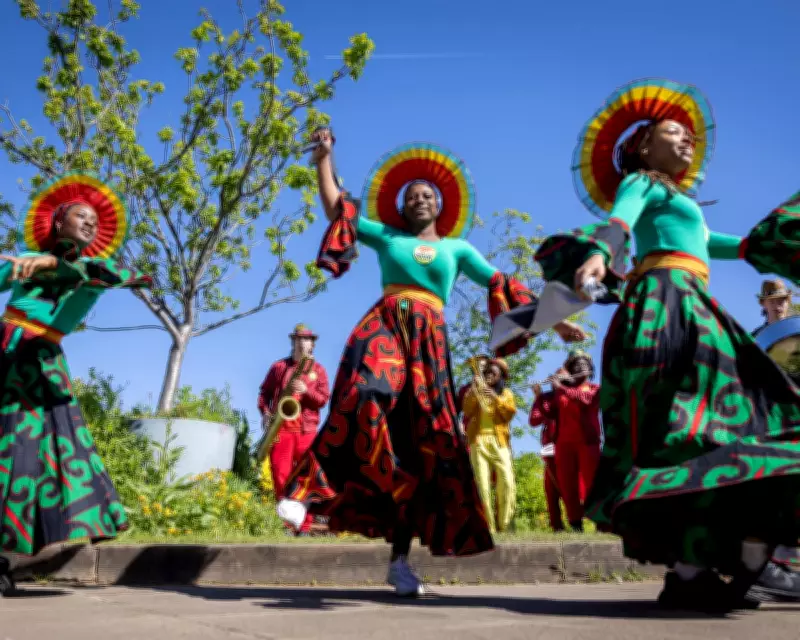
This summer, poems from over 2,000 London schoolchildren will be projected onto the centre's concrete walls as part of the 75th-anniversary commemorations. The festivities begin this weekend with a celebration of British youth culture created by Danny Boyle, who masterminded the 2012 Olympics opening ceremony. A mobile poetry library will also visit 10 coastal towns around the UK, recreating the journey of the Campania, a naval ship repurposed as a floating exhibition space 75 years ago.

Criticism and Triumph
Almost 8.5 million people visited the South Bank site in 1951, marking a triumph for the Labour government. However, the festival faced criticism. Some saw it as a declining-empire bread-and-circuses ploy, while others viewed it as a sign of a changing cultural guard. Evelyn Waugh disapproved, and Noël Coward wrote a satirical song called Don't Make Fun of the Fair. After the festival closed on 1 October, the new Conservative government demolished everything except the Royal Festival Hall.
A Turning Point for British Culture
Despite the demolition, the festival was a turning point. It set the style for the 1960s and 1970s, ushering in an era of mass consumerism and technological optimism. It created a model for cultural spaces open to all, not just the wealthy. The Royal Festival Hall paved the way for venues like the Barbican in London, the Glasshouse in Gateshead, and the Lowry in Salford. Recently, the Schwarzman Centre for the Humanities opened in Oxford, featuring theatres, a cinema, gallery space, and a 500-seat concert hall, thanks to a billionaire American donor.
Current Challenges and Hopes
The Southbank Centre, though one of the best-funded arts institutions in the country, struggles after years of real-terms cuts. The £10 million from the new Arts Everywhere Fund announced last month does not cover the estimated £165 million cost of repairing its ageing buildings. The original 1951 windows remain, a reminder of state-led cultural ambition despite austerity. However, signs of regeneration exist, particularly in the capital. The South Bank has been joined by a new cultural quarter, the East Bank, on the site of the Queen Elizabeth Olympic Park. The recently opened V&A East Museum and V&A Storehouse demonstrate that the blueprint for innovation and architectural ambition laid down by the festival endures.
Above all, the Festival of Britain is a timely reminder of how art can bring people together in the darkest times, and that is something to celebrate today.