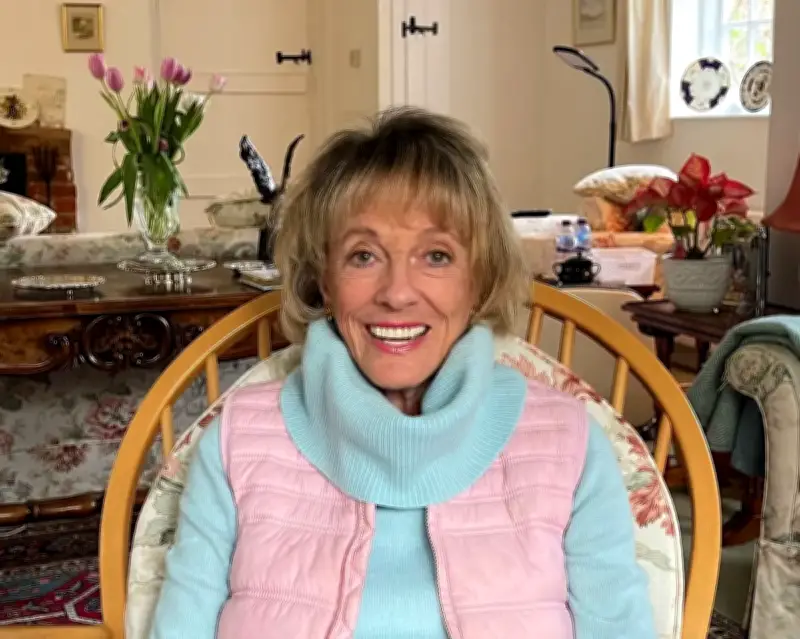
Esther Rantzen, the television presenter and founder of Childline, has died aged 86. She was one of the UK's boldest and bravest campaigners, right to the very end.
That's Life! and its impact
Rantzen's show That's Life! ran for more than 20 years. It was an absurd grab bag of features that at times seemed designed to induce tonal whiplash in viewers. It introduced the nation to Prince, a talking dog who could say the word "sausages", but it also put pressure on the government to introduce mandatory seatbelt use for children.
The show invented a new animal as an April fool's joke, only for coachloads of tourists to arrive at London Zoo to try to spot it. It also embarked on a vigorous three-month investigation into allegations of widespread sexual abuse by teachers at a boys' boarding school, resulting in the school's closure less than two weeks after the feature aired.
Despite its eclectic mix, That's Life! was one of the most popular shows of its time, regularly pulling in close to 20 million viewers. Key to its success was its producer and presenter, Esther Rantzen.
From BBC trainee to TV pioneer
Rantzen started her career as a BBC Radio trainee sound effects assistant. She rose up the ranks as a researcher on shows such as Ned Sherrin's BBC-3 before getting her first shot at presenting on Braden's Week, a magazine show that came to a sticky end when its host, Bernard Braden, was fired for advertising margarine on ITV.
Along with producer John Lloyd, Rantzen devised That's Life!, a series that would encompass every issue and indignity known to man. Fronted by Rantzen, with an ever-changing swirl of co-presenters around her, the show took on everything from dubious advertising to the over-proliferation of crisp flavours. There were vox pops about the share of domestic tasks undertaken by men and genuinely nightmarish features where people would pose as waxworks then burst into song.
Rantzen was the perfect host, maintaining a sense of ease between all these tonal extremes. When That's Life! got serious, it got extremely serious.
Organ donation and the Winton story
In 1984, the show used a story about Ben Hardwick, a two-year-old boy who needed a liver transplant, to push for more widespread organ donation. It worked – MPs noted in parliament in 1988 that it had directly led to a boom in the number of transplants.
The show also revealed the story of Nicholas Winton, dubbed the British Schindler, who assisted in the rescue of 669 children from what was then Czechoslovakia on the eve of the second world war. Winton's acts went unacknowledged for half a century, until a 1988 episode of That's Life! sat him in the studio audience, revealing that he was surrounded by dozens of the children he saved, along with their children and grandchildren. Rantzen was rightly proud of this episode; this year she wrote the Guardian a letter of complaint when its list of the BBC's 100 greatest moments omitted it.
Childline and later campaigns
That's Life! also focused heavily on child abuse, which resulted in Rantzen setting up Childline, the first national helpline for children in danger or distress. According to the NSPCC, Childline has helped six million children since it was established in 1986.
When That's Life! ended in 1994, Rantzen continued to embody the spirit of the series in all her ventures. She hosted her own talkshow, named Esther, which ran for eight years. Hearts of Gold, inspired by Winton, shone a light on members of the public who had done good deeds. She continued to champion consumer rights with the shows Old Dogs New Tricks and Esther Rantzen's House Trap. She also had stints on Strictly, I'm a Celebrity and Celebrity First Dates.
Following the death of her husband, Desmond Wilcox, in 2000, Rantzen increasingly turned her focus towards end of life care. BBC Two's How to Have a Good Death was a landmark programme about palliative care, and she built on this further after her cancer diagnosis in 2023. When she found out her cancer had reached stage four, she publicly announced that she had joined Dignitas, and used her final stretch of time to campaign heavily for assisted dying. Three weeks ago, MPs voted against an attempt to legalise it in England and Wales. But Rantzen's relentless campaigning means that the conversation is unlikely to go away. Even in death, she may yet prove to be one of this country's greatest campaigners.