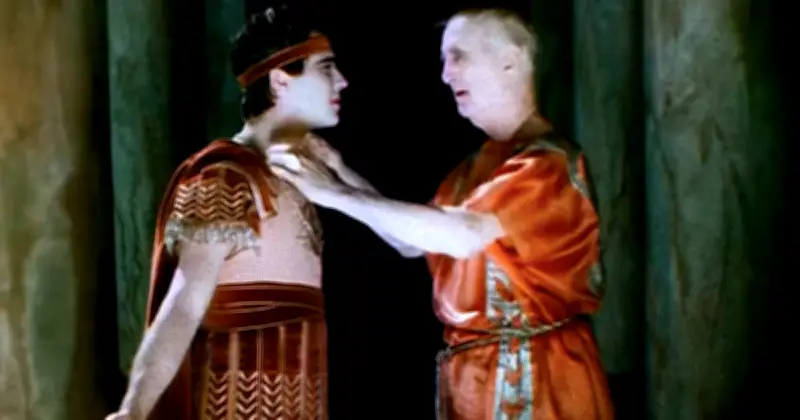
An actor died from internal injuries after being thrown from his chariot during filming of the original 1925 Ben-Hur movie. The deadly and enormously expensive production also claimed the lives of more than 100 horses. Nevertheless, the adaptation of the 1880 Lew Wallace novel about ancient Rome proved a box office triumph.
The troubled production history
The story behind the original Ben-Hur - which also involves fire, floods, fascism, and looting - was chronicled by film historian Kevin Brownlow in his 1968 book The Parade's Gone By.
From the outset, producers of the ancient Roman epic found themselves overwhelmed. Months of largely unmonitored filming in Italy in 1923 yielded terrible footage, compelling the studio to dismiss the director and the majority of the principal cast before restarting production.
Political tensions and a deadly naval scene
Replacement director Fred Niblo resumed filming in Rome, which had been under the control of Mussolini's National Fascist Party for approximately a year. Political tensions infiltrated the set during the shooting of the first major action sequence - a naval battle between a Roman war galley and a pirate vessel.
Both were full-scale, seaworthy vessels built expressly to be demolished for the film. The casting director enlisted dozens of Italians to play the ships' crews, and chose to add some realism to the confrontation by placing fascist extras in one crew and anti-fascist extras in the other. Niblo intervened, at which point he uncovered that the ships were equipped with real, sharpened blades.
The weapons were seized before anyone sustained injuries. Nevertheless, events took a horrific turn. At the sequence's peak, the Roman ship was supposed to ignite. While Niblo was filming the spectacle, a sudden gust of wind fanned the flames, causing the inferno to escalate uncontrollably. Extras started throwing themselves into the water - some wearing heavy armour, many unable to swim.
Francis X. Bushman, one of the film's principal stars, claimed he begged the director to rescue the drowning men, to which Niblo reportedly replied, "I can't help it! Those ships cost me $40,000 apiece." Three extras were listed as missing after the scene. Certain crew members insist that either two or three men emerged days afterwards, having been rescued by a fishing vessel; others remain adamant they died. In Brownlow's haunting words, "Opinions differ as to the casualty rate."
The chariot race tragedy
This was not the sole controversy: An elderly performer nearly developed pneumonia after being compelled to film on a raft in the Mediterranean Sea for three days; Niblo became furious and hurled objects at child extras; set building had to pause due to political unrest; and crew members inadvertently excavated into an ancient Roman catacomb, devastating the location and permitting a chaotic looting of 2,000-year-old relics.
Yet the most horrific fatality occurred during the filming of the action sequence for the chariot race, under the direction of B Reeves Eason. The track surface had not been adequately prepared to withstand the demands of horses and chariots. After several laps, deep grooves carved into the ground, with deadly results. "During one take, we went around the curve and the wheel broke on the other fellow's chariot," recalled Bushman, who portrayed Ben-Hur's rival charioteer Messala. "The hub hit the ground and the guy shot up in the air about 30 feet. It was like a slow-motion film. He fell on a pile of lumber and died of internal injuries."
Scores of horses also died, either during chariot collisions - one of which nearly claimed the life of leading man Ramon Novarro - or because Eason ordered them to be shot. "They never had a vet attend any horse," Bushman told Brownlow. "The moment it limped, they shot it."
Re-shooting and the final cut
To compound matters further, all the footage captured during the Roman chariot race proved entirely unusable, as the outdoor location was beset by excessive shadows. The whole sequence was subsequently re-shot on a Culver City soundstage several months later, employing 42 cameramen and 30 assistants strategically positioned throughout the set. This time, proceedings went considerably more smoothly, right up until the scene's climactic chariot crash, when two chariots became accidentally tangled and a catastrophic pile-up ensued. At least five horses died, and pandemonium erupted to such an extent that assistant director Henry Hathaway charged into the arena in an attempt to stop the approaching drivers.
As shown in Brownlow's 1980 documentary series Hollywood, Hathaway's unintentional cameo remained in the finished film. Also kept in the final cut were extras jumping overboard from the burning ship and horses being trampled beneath chariots. All those hazardous moments contributed to the epic spectacle that mesmerised audiences throughout the 1920s.
Ben-Hur proved a sufficient box office success to nearly recover its enormous $3.9 million budget, by far the most costly silent-era production ever created, yet cinema-goers had absolutely no idea just how perilous those action sequences genuinely were.