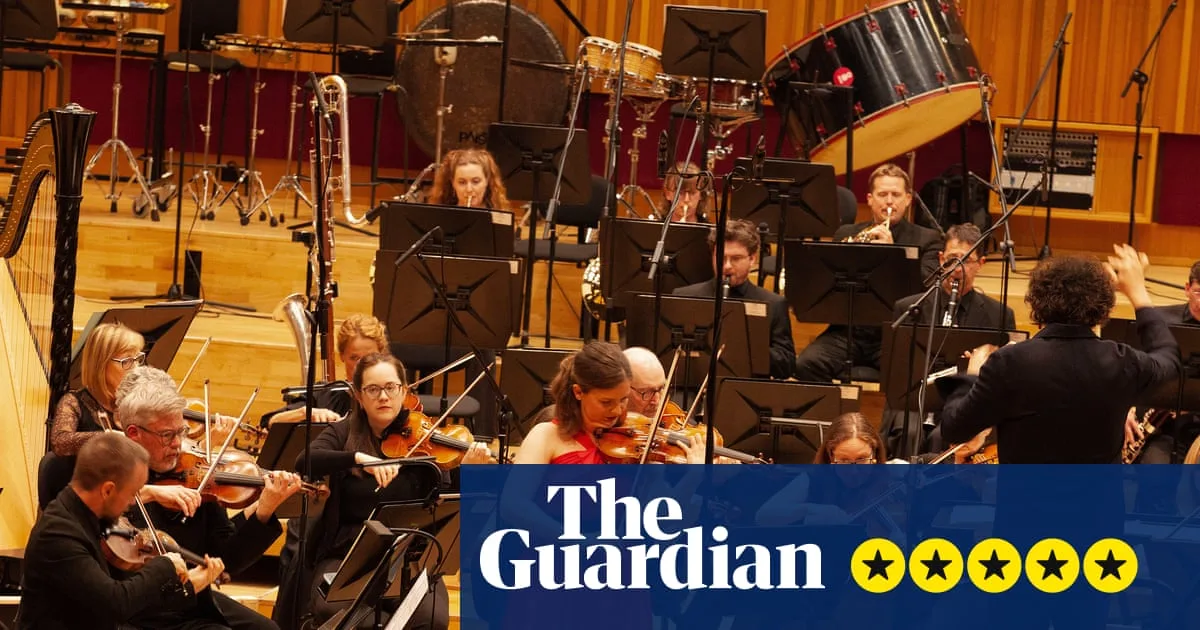
Beethoven's Violin Concerto, the opening work of this BBC National Orchestra of Wales concert at Hoddinott Hall, Cardiff, might have seemed unexceptional on the face of it. Soloist Veronika Eberle immediately proved otherwise with a sweet, pure tone, clarity of line, and an almost reverential approach devoid of bombast. The rapport with conductor Alexandre Bloch was implicit, and in the deeply reflective central Larghetto, the music was imbued with an air of serenity.
What made for a wholly different experience was Eberle's use of new cadenzas in all three movements, boldly commissioned from her fellow German, Jörg Widmann. Widmann realised a balance between expected virtuosity and a highly imaginative, improvisatory feel, with references to key Beethoven motifs tightly embedded. Bringing first the timpanist then the principal double bass to collaborate with the soloist threw further elements into the dynamic mix, with Tom Aldren leading the orchestra in this work also duetting with Eberle. These interventions verged on the subversive but the sheer bravado and vibrancy spelled riveting listening.
The BBCNOW players displayed considerable virtuosity in George Benjamin's Concerto for Orchestra, a heartfelt tribute to the late Oliver Knussen. Originally written for the Mahler Chamber Orchestra, this 18-minute piece saw no compromise on technical brilliance. The ear was beguiled by the finesse and intricacies of the textures, particularly in woodwind and brass, with unusual prominence of solo lines for tuba, two timpanists, and finally the first violins offering teasing, playful elements in the spirit of Knussen.
Richard Strauss's tone poem Tod und Verklärung brought the evening to a thrilling climax. Bloch's energetic conducting style, embracing expressive detail and warmly expansive gestures, inspired a performance that was both sensuous and sumptuous, underlining the remarkable vision of the 25-year-old Strauss. It crowned a fine night for timpanist Steven Barnard, with the players all clearly in their element.