The highly anticipated sequel to The Batman is currently filming in Glasgow, with Scotland's largest city being transformed into Gotham. The film set has overtaken Bothwell Street, but it will be a long time before we get to see it on the big screen, with the blockbuster releasing in February 2028.
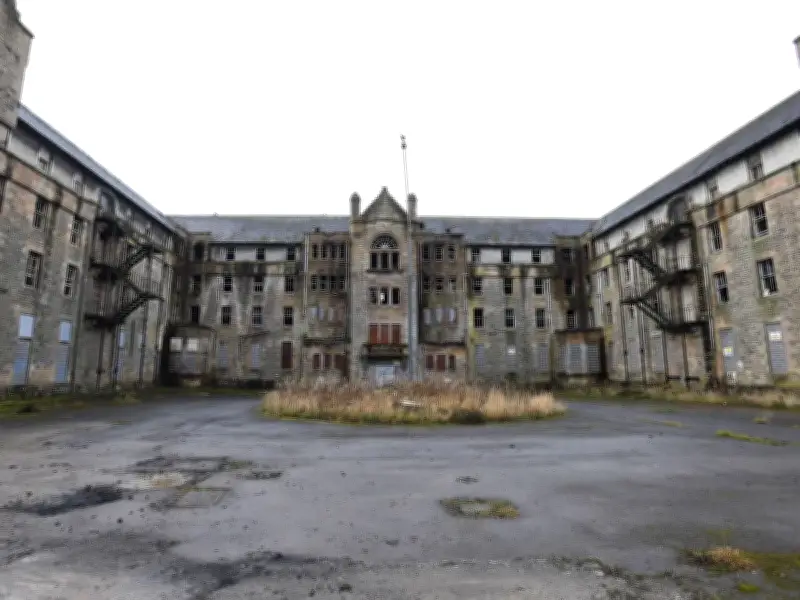
You don't have to wait until then to see Scotland as Gotham City though, as the country was also used as a filming location for the previous Batman movie. Filming took place in 2020 at the abandoned Hartwood Hospital, which was transformed into the fictional Gotham Orphanage.
Hartwood Hospital's History
Hartwood Hospital was a psychiatric hospital situated in the village of Hartwood and was one of the largest in Europe at its peak, housing as many as 2,500 patients. It first opened its doors back in 1895 as the Lanark District Asylum, and was dedicated to the care of the 'mentally deficient'.

The history of the hospital actually goes back further as it was created as a result of the 1857 Lunacy (Scotland) Act. This important piece of legislation required every area of Scotland to build a District Asylum. These asylums were specifically made for people who were mentally ill but unable to afford private treatment.
While understanding of many mental health disorders improved during the 1800s, the way people with these conditions were treated by society largely did not. Hartwood Hospital was specifically built in a remote location so that its patients would be out of sight and out of mind.
Life at the Asylum
When the Lanark District Asylum officially opened in 1895, it was considered advanced and innovative compared to many other asylums at the time. The self-sufficient facility included a farm, a reservoir, a medical surgery, its own shops, and large landscaped gardens to offer therapeutic outdoor space for patients.
One of the most notable features of the psychiatric hospital was its cemetery, which is today looked after by the Friends of Hartwood Paupers Cemetery. The volunteer-led community group aims to care for and commemorate those buried at the site by restoring the cemetery and repairing memorials.
According to the Friends of Hartwood Paupers Cemetery, the ages of patients at the Lanark District Asylum varied from as young as 10 to as old as 100. Residents included people with intellectual disabilities, as well as those with depression and 'hysteria'. The Lanark District Asylum also tended to patients with other conditions such as epilepsy and dementia.
Treatment and Legacy
The first medical superintendent was Dr Campbell Clark, who had a forward-thinking approach to mental health treatment for the time. The Friends of Hartwood Paupers Cemetery states that the doctor saw the value in providing patients with tranquil surroundings and regular mental stimulation, and prioritised kindness and patience.
Despite this, many of the treatments that were used at Hartwood in its early years were cruel and ineffective. These included restraining patients and isolating them from others, as well as administering painful shock therapy to residents without supplying them with an anaesthetic.
Overall, Hartwood marked an important stepping stone in the treatment of people with mental health conditions in Scotland. Later in its life, the facility would evolve into a NHS psychiatric hospital that adopted much more modern approaches to mental health care.
The Friends of Hartwood Paupers Cemetery website states: "By openly acknowledging both the successes and failings of Hartwood’s past, we gain a clearer understanding of how far mental health care has progressed—and the importance of continuing to improve treatment with compassion and respect."
After the country adopted the practice of Care in the Community, which saw people with physical and mental disabilities treated in their homes rather than in an institution, the number of patients at Hartwood dropped dramatically. It eventually closed its doors for good in 1998, and has since fallen into disrepair.
It is always fun to see Scotland represented in big-budget Hollywood blockbusters, and Hartwood Hospital's appearance in The Batman is no different. It is important to remember though that Hartwood was a real hospital with real patients, whose memory should be honoured.