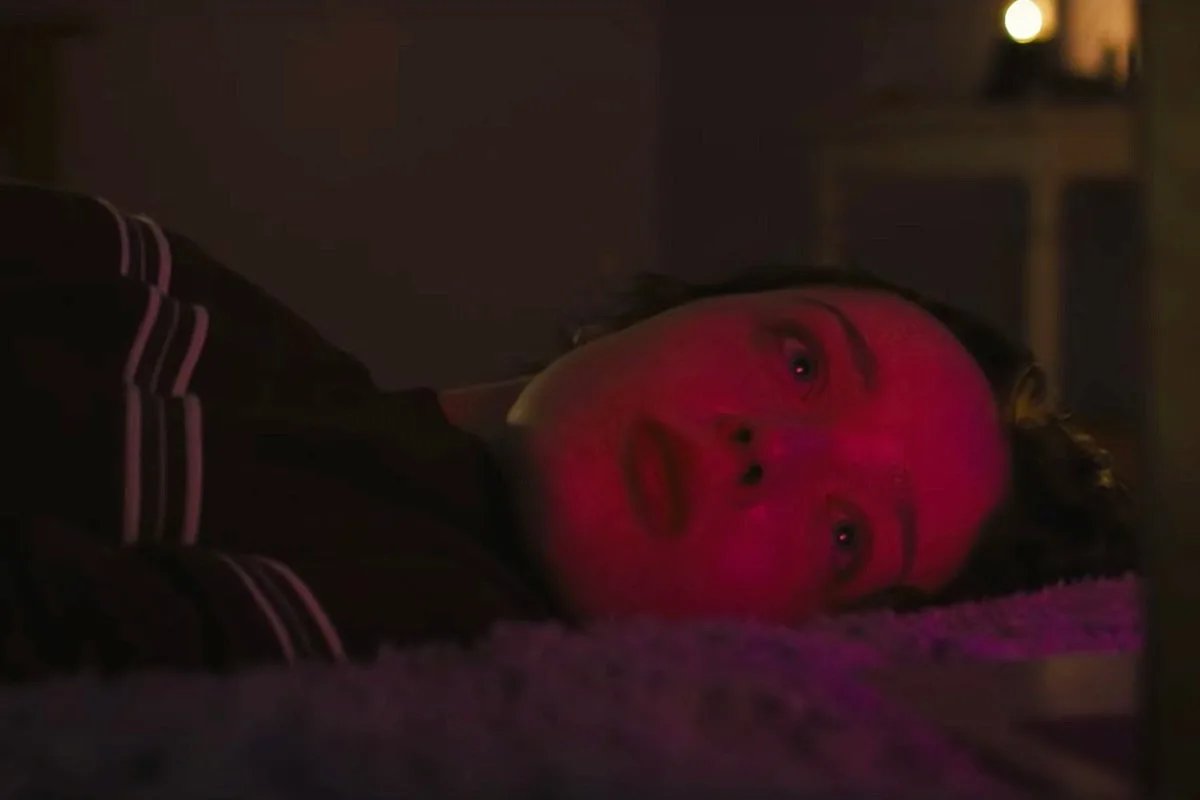
Jane Schoenbrun's debut feature, We're All Going to the World's Fair, blurs the line between reality and fiction in a way that feels like a creepypasta come to life. The film centres on a fictional online challenge called the 'World's Fair', where participants repeat a phrase, prick their fingers, and watch a disturbing video. The story follows Casey (Anna Cobb), a lonely teenage girl who documents her supposed descent into madness via webcam.
Schoenbrun deliberately withholds details about Casey's life outside her computer screen. We never see her school, friends, or family, only the isolated figure she presents online. In one scene, she flees to her room and locks the door when car lights appear in the driveway. An adult voice is heard only once, screaming at her for staying up late. Cobb's performance is inscrutable, leaving the audience uncertain whether Casey's tears are genuine distress or part of a performance.
The film's perspective is mostly limited to Casey's computer screen, but cinematographer Daniel Patrick Carbone occasionally captures her with a voyeuristic quality. The tension escalates when an older man, JLB (Michael J Rogers), contacts Casey via Skype, claiming to be worried about her. The audience is immediately suspicious of his intentions, but the film subverts expectations with a twist that forces a re-examination of what is real.

We're All Going to the World's Fair draws on the creepypasta tradition, exemplified by stories like 'Candle Cove', a fictional children's show that never existed but was elaborated upon by internet users. Schoenbrun's film captures the same unhurried dread, leaving viewers with more questions than answers. It is a chilling exploration of online storytelling and the blurred boundaries between truth and fiction.