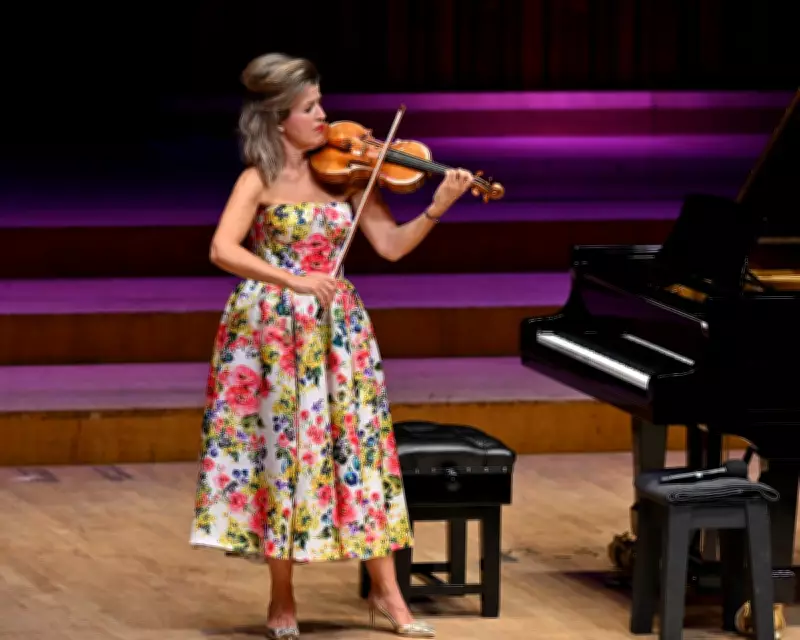
On 23 August 1976, a 13-year-old violinist made her debut at the Lucerne Festival, accompanied by her older brother Christoph at the piano. By the concert's end, Anne-Sophie Mutter was the toast of the festival, invited to perform for none other than Herbert von Karajan. This marked the beginning of a career that has since produced over 50 albums, four Grammy awards, and works by a who's who of 20th-century greats: Krzysztof Penderecki, Henri Dutilleux, Witold Lutosławski, Sofia Gubaidulina, and John Williams.
A Unique Anniversary Celebration
Now aged 62, Mutter is celebrating 50 years on the concert platform, and she is doing it her way. If anyone expected the German star to launch her anniversary tour on Saturday night with a major concerto, they would have been disappointed. A somewhat full Barbican Hall suggested that some fans may have voted with their feet. However, those who attended experienced Mutter in activist mode, using her platform not to revisit past triumphs but to champion new music and young artists.
Premiere of Aftab Darvishi's Likoo
Both were represented in Aftab Darvishi's Likoo, a lament for solo violin whose drooping phrase endings and vibrato-less opening song mourn the women silenced, imprisoned, and killed by the Iranian regime. Grief turns to anger, rhapsodic and insistent, before dropping to a whisper in music that claims the violin's traditional virtuoso gestures—Bach's ghost is present, as is Paganini's—for intimate, confessional expression.

It is a ravishing piece, but its clarity of voice and emotional weight packed into a small frame sat awkwardly between two occasional pieces by Mutter's former husband and longtime collaborator André Previn. Both the piano-violin duo The Fifth Season (a companion to Vivaldi, with changeable weather) and his brittle, jazz-inflected Piano Trio No. 1 are products of, as Mutter put it, "a man without a home": musical magpies, alighting everywhere and settling nowhere.
Beethoven's Archduke Trio Shines
Mutter's brilliance and generosity of tone, her incisive delivery, make an event out of anything she plays, but it was a relief after the interval to have Beethoven doing the heavy lifting. His final "Archduke" Trio gave Mutter, cellist Maximilian Hornung, and pianist Lauma Skride a chance for more sustained interplay. Keenly musical and responsive, it was a joyful collective utterance: a statement of intent from a soloist more interested in the music than the limelight.