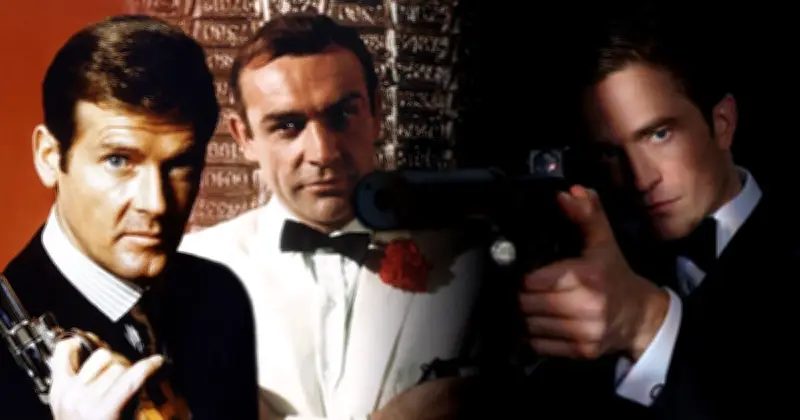
Robert Pattinson has been revealed as the next James Bond, ending five years of speculation. The 40-year-old English actor will replace Daniel Craig and introduce himself as “Bond, James Bond” in the 26th official film, due for release in 2028.
Pattinson, known for starring in The Odyssey and as the current Batman, is an A-list name and arguably a leftfield choice for 007. Bond has typically gone to actors below that level, who are then propelled into a new stratosphere of stardom. Recent speculation had focused on rising stars such as Jack Lowden and Callum Turner.
This is a new era for Bond. EON Productions and the Broccoli family, who have controlled the series since the 1960s, have passed creative control to Amazon MGM Studios. Pattinson’s casting could be the first of numerous shakeups to the Bond formula. He has the looks, the charm, and the aura, but to stay true to the character, here are seven films Pattinson could learn from.
Goldfinger (1964) and Casino Royale (1967)
Sean Connery’s third outing as 007 is the gold standard of Bond films. After the exotic Dr. No (1962) and the espionage thriller From Russia with Love (1963), the series cracked the formula that defined the films for the next six decades. Goldfinger features the gadgets, the girls, the theme song, the cars, and the bowler hat-throwing henchman Oddjob. Connery foils a plot by Auric Goldfinger (Gert Fröbe) to nuke Fort Knox, carrying the film with hyper-masculine cool and sex appeal that every Bond actor has tried to emulate since.
On the other hand, Casino Royale (1967) is a spoof version of Ian Fleming’s original Bond novel that rivaled the EON films. It features many James Bonds, including Peter Sellers and Ursula Andress, but David Niven is the original and true Bond. Niven’s version is brought out of retirement while his villainous nephew, Jimmy (Woody Allen), plots to eliminate all men over 4ft 6in to hoard beautiful women. This ill-judged parody was destined to be a curious footnote in Bond history, a lesson in how not to make a Bond film.
On Her Majesty’s Secret Service (1969) and The Spy Who Loved Me (1977)
George Lazenby only appeared in one Bond film and is often ranked as the least popular Bond actor, but his one-off adventure is a true masterpiece, arguably the greatest Bond film of them all. Lazenby’s Bond hunts down arch nemesis Blofeld (Telly Savalas) in the Swiss Alps and marries Tracy (Diana Rigg), but Blofeld kills his new bride just minutes after the wedding. The ghost of Tracy’s murder gave subsequent Bonds a flash of inner emotional turmoil.
Roger Moore’s third Bond adventure, The Spy Who Loved Me, is his biggest hit as 007, with the metal-toothed henchman Jaws, the Carly Simon theme, and the Lotus Esprit that turns into a submarine. It also has the greatest pre-titles stunt – Bond skiing off a 7,000ft mountain and opening a Union Flag parachute. Pattinson can learn from Roger’s lighter touch, as the series is crying out for fun after 20 years of super-serious Daniel Craig. Moore’s brilliance is that he’s all charisma and eyebrow-raising cheekiness, outweighing the fact he was never a truly believable action man.
Licence to Kill (1989) and GoldenEye (1995)
Timothy Dalton made just two Bond films, but his second effort, Licence to Kill, is near perfect and years ahead of its time, a darker-edged adventure that feels like a precursor to Craig’s gritty realism. It begins with Bond’s CIA pal Felix Leiter being fed to sharks, prompting Bond to go rogue and get revenge against drug lord Sanchez (Robert Davi). Dalton steered the character out of campy territory and back towards the Ian Fleming books, though it proved too dark for audiences at the time. Pattinson’s tenure would benefit from a back-to-basics approach to the Fleming novels.
Pierce Brosnan might be the closest to Pattinson, as he was already well-known when cast and linked to the character for years. GoldenEye was a crucial cultural update for 007, reimagined for a post-Cold War world and branded a “sexist, misogynist dinosaur”. It includes the dam bungee jump, a Russian tank chase, and the henchwoman Xenia Onatopp (Famke Janssen). Craig’s Bond gave the series a similar update for the 2000s – now it’s time for Pattinson’s Bond to do the same for the 2020s.
Skyfall (2012)
While some fans point to Craig’s 2006 debut, Casino Royale, as his best film, Skyfall was the commercial and critical highpoint of his tenure. Marking the series’ 50th anniversary, it asks if 007 still has a place in the world. With Bond facing off against MI6 agent-turned-villain Silva (Javier Bardem), Skyfall realigns the classic elements by bringing back Moneypenny (Naomie Harris), Q (Ben Whishaw), and the classic Goldfinger Aston Martin DB5. It’s a film steeped in Bond history, a reminder that Bond works because it’s Bond. Pattinson’s casting has played with the formula, but the new movie shouldn’t stray too far – Bond isn’t just any action film, and there’s a reason that nobody does it better.