William Shakespeare's "Hamlet" is experiencing a remarkable resurgence, captivating audiences across multiple platforms and formats. From Taylor Swift's chart-topping single to an Oscar-winning film, the 400-year-old tragedy about a brooding Danish prince is more alive than ever.
A Wave of New Adaptations
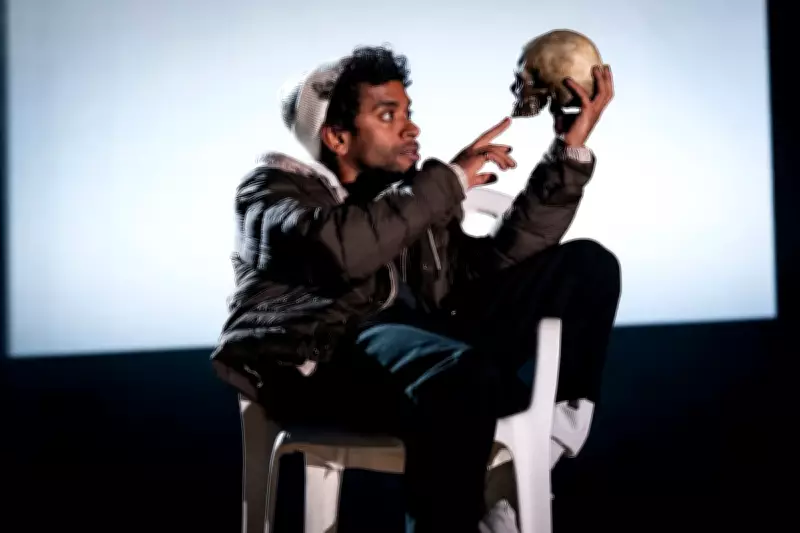
The National Theatre's production, starring Hiran Abeysekera, has landed at the Brooklyn Academy of Music. A film adaptation set in London's South Asian community features Riz Ahmed. At 88, Anthony Hopkins delights fans on TikTok with his rendition of Hamlet's "To be, or not to be" soliloquy. The movie "Hamnet," a fictionalized account of the loss that inspired "Hamlet," earned Jessie Buckley an Oscar. Taylor Swift's "The Fate of Ophelia" reached No. 1 on the Billboard singles chart. Eddie Izzard is taking her one-person production on a worldwide tour.
Further expanding the Hamlet universe, a stage adaptation of "Hamnet" is touring the UK with the Royal Shakespeare Company. Shakespeare & Company plans a northeastern US tour, while a Canadian production offers a queer, contemporary lens. The Acting Company in New York will feature a modern-verse version led by a woman. Peruvian theater company Teatro La Plaza presented a version off-Broadway starring eight Spanish-speaking actors with Down syndrome.

Why Hamlet Now?
Harvard Shakespeare scholar Jeffrey R. Wilson suggests the play resonates deeply in an era of constant bad news. "People are exhausted from the onslaught of awfulness in the world," he says, "and 'Hamlet' gives audiences both permission to 'go there' to explore those emotions and a tool kit of ideas to help us process angst."
Neurodiverse and Inclusive Interpretations
Director Chela De Ferrari of Teatro La Plaza explains that working with actors with Down syndrome and cognitive disabilities brought her back to the essence of Hamlet: a human being asking how to exist in a world that misreads him. In one powerful moment, an actor mimics Laurence Olivier's delivery of the soliloquy while his image is projected, lending new urgency to lines spoken by someone often excluded from cultural spaces.
A Modern, Stripped-Down Retelling
Filmmaker Aneil Karia, who teamed up with Riz Ahmed and screenwriter Michael Lesslie, created a contemporary version where Hamlet parties in a neon nightclub and delivers his soliloquy while speeding through London in a BMW. Karia believes this approach opens Shakespeare to new audiences: "The best-case scenario here is that it's opening up Shakespeare to audiences who didn't think it was for them."
A Clownish Prince in Brooklyn
Director Robert Hastie's production leans into humor, with Abeysekera's Hamlet addressing the audience directly and finding physical comedy. "It's a very self-aware play," Hastie says, comparing Hamlet to Deadpool. Abeysekera approaches the famous soliloquy as an errant thought rather than a grand declaration, making it feel more relatable.
Shakespeare in the Digital Age
Caitlin Cardile and her Mad Spirits Theatre Company are bringing Shakespeare to TikTok and Instagram by pairing trending audio with Shakespearean characters. "We wanted to bring Shakespeare to a modern audience and make it understandable," Cardile says. Their videos, featuring lip-synced lines from shows like "The Office" and songs by Lady Gaga, have made the bard accessible and fun.
As these diverse adaptations show, "Hamlet" continues to evolve, proving that a classic is defined by its ability to speak anew to each generation.