Manchester music's best kept secret? WU LYF return. The band are fond of a religious metaphor, and tonight’s show feels like the culmination of their resurrection.
WU LYF at Albert Hall
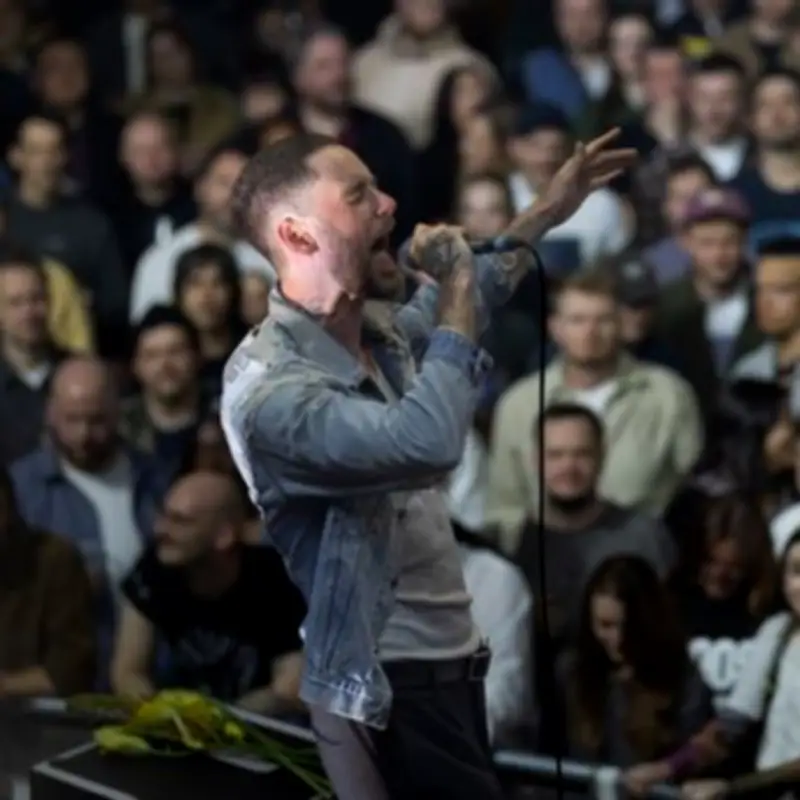
"We’re playing every song we’ve ever written tonight," says Ellery Roberts, a couple of tracks into WU LYF’s second set of the evening at the Albert Hall. "That’s bang for your buck. That’s entertainment."
For the brief moment that they were a going concern, fifteen years ago, WU LYF were nothing if not entertaining. They were a Manchester band who appeared to operate entirely on their own terms, generating huge buzz with pop-up shows at An Outlet on Dale Street (now North Star deli), as well as through elliptical online communications that claimed, amongst other things, that the band’s name was an acronym, standing for World Unite Lucifer Youth Foundation.
Then, in 2011, their debut album - recorded in an Ancoats church - arrived and, incredibly, lived up to the hype. Go Tell Fire to the Mountain was a stately, sweeping art rock suite that, for all its grandiosity, was anchored by frontman Ellery Roberts’s soulful vocals and heartfelt lyricism, the latter of which, however obliquely, focused on community, compassion and belonging.
The record was critically adored and propelled WU LYF to indie darling status. They played Late Night with David Letterman and looked ready to crack America.
Then, one day in 2012, it was all over
Roberts abruptly walked away from the group, leaving us with the unshakable sense that the next great Manchester band had burned out before they’d really gotten going. Last year, after over a decade of radio silence, they returned, and on their own terms; they played three nights in the tiny upstairs space at the King’s Arms in Salford, debuting a clutch of new tunes.
Those songs would form the basis of A Wave That Will Never Break, their second album. Tonight, in what has been billed as a triumphant one-off homecoming, they cap a year-long redemption arc by playing both the new record and their cult classic debut in full at the Albert Hall.
The room is maybe half-full at a push; the band eschew streaming services, instead offering online access to their records via a bespoke £4-a-month subscription, and whilst their maverick approach is hugely admirable in an industry that pays artists a pittance, it has also likely played a part in keeping them - and their outstanding new album - under the radar.
Still, what that does mean is that the show - and the two records they fire through - feel like well-kept secrets, to be cherished by a select few. Boldly, they play Go Tell Fire to the Mountain first; it is the bigger draw, with anthemic singles like ‘We Bros’ and the tortured hymnal of ‘Heavy Pop’. These songs have aged beautifully; the likes of ‘Summas Bliss’ and ‘Cave Song’ remain artful, but have never felt this danceable, powered by spry guitar melodies and thumping, almost tribal percussion.
Occasionally, there’s a reminder that this most idiosyncratic of albums was crafted locally; ahead of fan favourite ‘Concrete Gold’, Roberts gestures to drummer Joe Manning, telling us the track was written in his Prestwich basement.
The second half is rooted in the now
If the first set feels like a bloodletting, the crowd howling back lyrics they’d waited fifteen years to sing along to, the second half of the show is rooted in the now. After a short interval, the band return with the soaring non-album single ‘A New Life Is Coming’, before running through A Wave That Will Never Break in full.
These songs are sharper and tighter than those written by the old WU LYF, and simmer with the kind of atmospheric portent of influences like The Waterboys and Echo and the Bunnymen, running the gamut from broiling, angry proto-punk (‘Robe of Glory’) to soft rumination (‘Wave’).
Roberts is the consummate frontman - fizzing with feral energy on the noisier tracks, and convincingly bluesy on the quieter ones - but the whole band are impressively tight, something particularly clear on ‘Tib St. Tabernacle’, the epic ten-minute set highlight that sounds like the band rediscovering their passion for songwriting in real time, set against the lyrical backdrop of a hedonistic night in the Northern Quarter.
The album is scored through with references to regret and rebirth, and after they close with the appropriately-titled ‘At the End of the Day (It Is What It Is)’, Roberts returns to the stage to set the record straight ahead of the encore. “Fourteen years ago, I left this band, and I’ve regretted it many times,” he says, before apologising to both band and audience for “the pain I’ve caused.”
Then, the band play the raw, nervy ‘Triumph’ for the first time, the same song Roberts posted in demo form along with his statement of resignation in 2012. Tonight, like the rest of the WU LYF catalogue, it is cast in a totally different light; it sounds like the beginning of something, rather than the end.
The band are fond of a religious metaphor, and tonight’s show feels like the culmination of their resurrection. The stone is now rolled away; what comes next is up to them, but on this evidence, the future looks bright.
Star rating: 4/5