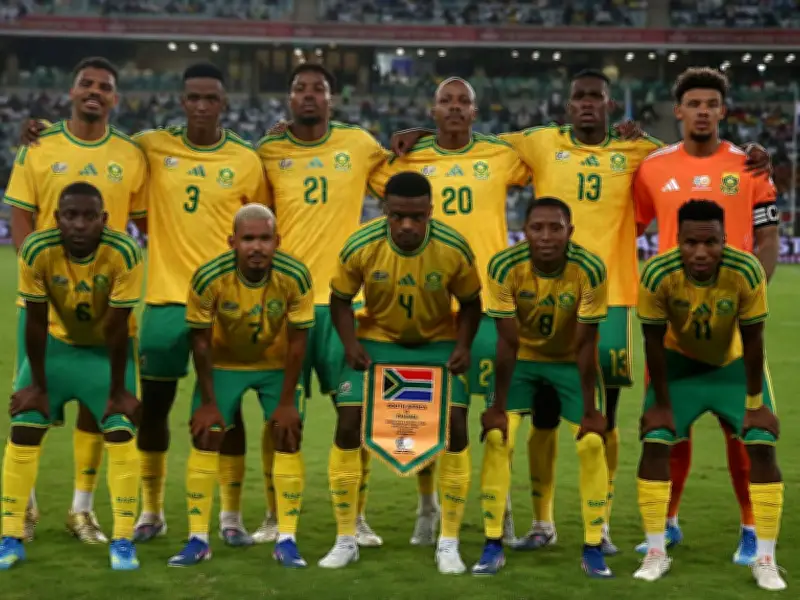
South Africa have the honour of kicking off the 2026 World Cup against co-host Mexico in Mexico City. Their kit features two badges, a unique tradition rooted in governance and history.
Why Two Badges?
The prominent King Protea emblem on the right chest represents South Africa's broader sporting identity. It is a unifying post-apartheid symbol used by various sports codes to show they represent the government's official national sporting body.
The official logo of the South African Football Association (SAFA) is placed on the left side of the jersey, representing the sport's governing body. This ensures compliance with international soccer standards while retaining their football identity.
Historical Significance
Above the SAFA badge is a single star commemorating Bafana Bafana's 1996 Africa Cup of Nations triumph on home soil. Government regulations have historically encouraged national sports teams to carry the country's official emblem. While rugby has moved away from multiple badges, football maintains both to satisfy corporate, political and sporting ties.
Having both badges side by side honours political reconciliation and athletic pride, serving as a powerful visual reminder of how sport unites a diverse nation.
World Cup History
Due to apartheid-era isolation, South Africa was banned by FIFA from 1961 until 1992. This is their fourth World Cup appearance after 1998, 2002 and 2010.
Qualification and Manager
After a 16-year absence, South Africa topped their qualification group for the expanded 48-team tournament. They are in a group with Mexico, South Korea and the Czech Republic. Manager Hugo Broos, a veteran Belgian coach, has been in charge since May 2021, leading them to a bronze medal at the 2023 Africa Cup of Nations.