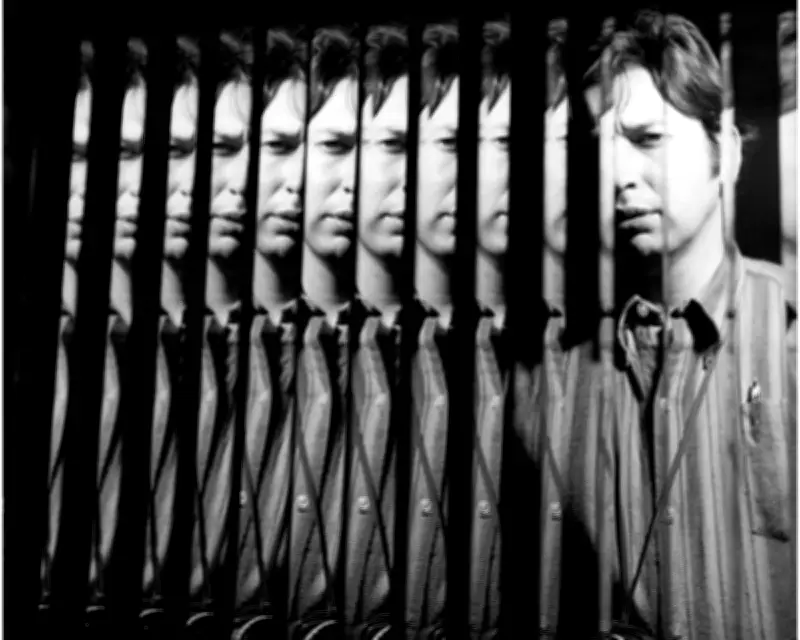
Julio Le Parc, the radical Argentinian artist who insisted on viewer participation in his kinetic works, has died at the age of 97. Known for his political activism, he sought to jolt audiences out of passive acceptance of art and society.
Early Life and Political Awakening
Born in Palmira, a suburb of Mendoza near the Andes, Le Parc was the son of Angelina Andino, a seamstress, and Juan Le Parc, a French railway worker. He left school at 13 to support his family, repairing bicycles and working in a fruit crate factory. When his parents separated, he moved with his mother and brothers to Buenos Aires, where he took evening art classes while working at a handbag factory. His family's poverty shaped his leftist politics, which influenced his entire career.
At 19, he abandoned his studies and family in what he called a 'total and confused rebellion against submission and obedience,' traveling across Argentina and engaging with anarchist and Marxist circles. He returned to art school in 1954, marrying textile artist Martha Boto the same year. After the 1955 coup that ousted President Juan Perón, the couple sought to leave Argentina, and Le Parc secured a French government travel grant.
Move to Paris and Artistic Breakthrough
Arriving in Paris in 1958, Le Parc began creating systematic black-and-white abstract paintings called Surfaces, which used optical illusions to create a sense of movement. In 1963, he published a manifesto declaring, 'Art today is nothing but a tremendous bluff,' criticizing the distance between art and the public. He co-founded Grav (Groupe de Recherche d'Art Visuel) with five other French and Argentine artists, aiming to demystify art and challenge bourgeois sensibilities.
Le Parc's early works included large-scale mobiles with metal and plastic fragments that moved as viewers walked around them, light bouncing off shiny surfaces. He saw these not as spectacle but as a way to break viewers from 'apathetic dependency.' He later created labyrinths, sensory installations, and interactive games, calling them 'quasi-coproductions' with the spectator.
Major Works and Exhibitions
His Lumières Alternées series (1963-93) featured moving lights that viewers had to navigate. In Ensemble of Eleven Surprise Movements (1965) and Pattern to Manipulate (1967), viewers activated mechanized elements by pressing buttons. Le Parc's manifesto commanded: 'It is prohibited not to participate. It is prohibited not to touch. It is prohibited not to break.'
Grav participated in the 1963 Paris Biennale with Labyrinth, a compendium of 20 environmental experiences. Le Parc won the painting prize at the 1966 Venice Biennale and had his first solo show at Howard Wise Gallery in New York that year. In 1966, Grav organized A Day in the Street, planting balloons in Paris fountains, a giant kaleidoscope in the Jardin des Tuileries, and offering kinetic sculptures to passersby, ending with a light show along the Seine.
Political Activism and Later Career
During the 1968 protests, Le Parc was instrumental in the Atelier Populaire, producing posters for the student movement, leading to his brief expulsion from France. He boycotted the 1969 São Paulo Biennial in protest of Brazil's military regime. In 1970, he traveled to Cuba, Puerto Rico, and Colombia. He turned down a retrospective at the Musée d'Art Moderne in Paris in 1972, leaving it to a coin toss. However, retrospectives followed in Mexico City (1975), Barcelona (1978), and a major show at the Palais de Tokyo in 2013, which became the institution's most successful exhibition with 220,000 visitors. The Serpentine Galleries in London held his first UK solo exhibition in 2014.
Le Parc's popularity waned in the 1990s but revived with a homecoming tour in Argentina and a US tour from 2010 to 2011. He and Martha separated but remained close until her death in 2025. He is survived by his sons, Juan, Gabriel, and Yamil, and five grandchildren.