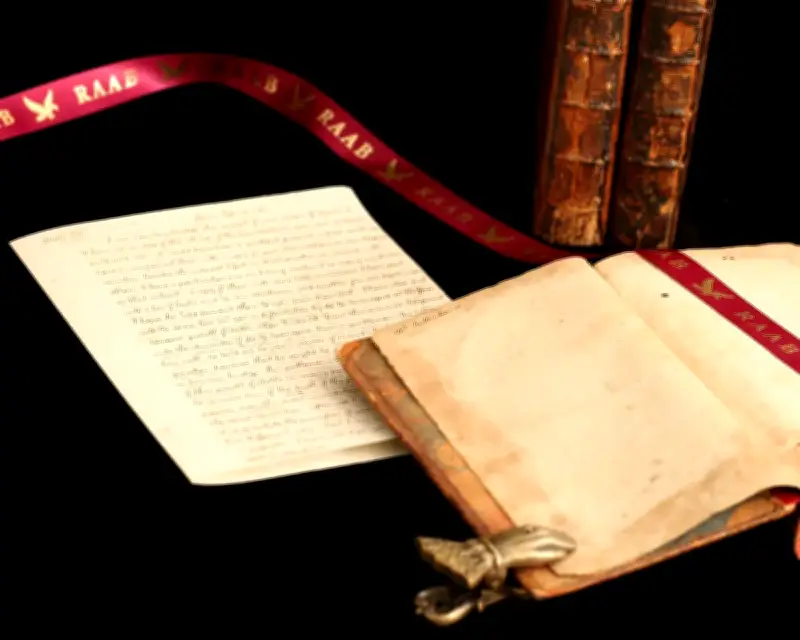
A handwritten letter by Thomas Jefferson, the third US president, advising how the newly created country could prosper, has been put up for sale by a private collector. The 1787 document warns specifically against many of the missteps Donald Trump has taken to drag down his own second term of office.
Written in Paris, where Jefferson was the fledgling government's minister to France, the note to David Rittenhouse, a friend and fellow member of the American Philosophical Society, muses on the priorities and principles he believed future presidents should follow.
Letter and book priced at $285,000
Previously on display at Texas A&M University, the letter and a book described as "a major European scientific work", an accompanying gift from Jefferson to Rittenhouse, have a guide price of $285,000 through the Raab Collection, a Pennsylvania-based dealer in historical artifacts and documents.
"Peace should be our plan, and the payment of our debts, improvement of our constitutions and extension of agriculture our principal objects," Jefferson wrote, sharing his thoughts about that year's landmark federal convention in Philadelphia, later known as the constitutional convention, which debated and signed the US constitution.
Parallels with Trump's presidency
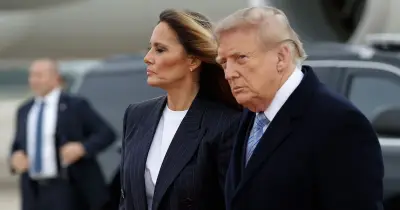
Almost 240 years later, Trump, who has frequently hailed Jefferson as one of his political heroes, and installed a lifesize bronze statue of him in the White House Rose Garden in July to mark the US semiquincentennial, appears to have eschewed every element of his predecessor's advice. His hugely unpopular war in Iran endures; the national debt has surpassed $40tn for the first time; Trump's "blitzkrieg" on the constitution continues; and he is at odds with American farmers over his administration's treatment of the agricultural sector.
Nathan Raab, president of the Raab Collection, said it was difficult not to draw parallels between Jefferson's caution contained in a highly personal document drafted barely a decade after the dawn of the new nation, and the volatility of politics in 2026.
Enduring relevance of Jefferson's words
"Leaving out the various partisan positions, the prescience here is that the same issues that the founding fathers were dealing with during the constitutional convention of the founding of our country are issues that still make headlines today," he said. "Things change, yet things stay the same, and here we are confronting many of the same issues that were on the lips of our founding fathers, or the tip of their quills, back in 1787."
Jefferson's letter covers more ground than only his thoughts on the nation's future direction. He shares with Rittenhouse, a fellow scientist and avid astronomer who built precision telescopes and early models of the solar system, his love of "the west", and fear of another conflict with England four years after the end of the revolutionary war.
"Digging out of a hole of debt, funding not only the war debts but also the creation of this new country, was something that was very much an issue," Raab said. "What I love about this letter is it's kind of a general warning. He's not saying, 'So and so said this, and therefore we must counter with this message.' He's giving in one broad stroke what he feels should be the priorities of the convention and the country."
Raab's company has handled numerous Jefferson documents previously, including the sale in 2024 of a letter written in 1802 revealing his precarious financial situation, and last year's uncovering of a note he wrote to Virginia's then governor Benjamin Harrison in 1783 expounding the rights of citizens to bear arms in revolutionary causes. But Raab said he has never seen anything as impressive as the letter and book given to Rittenhouse.