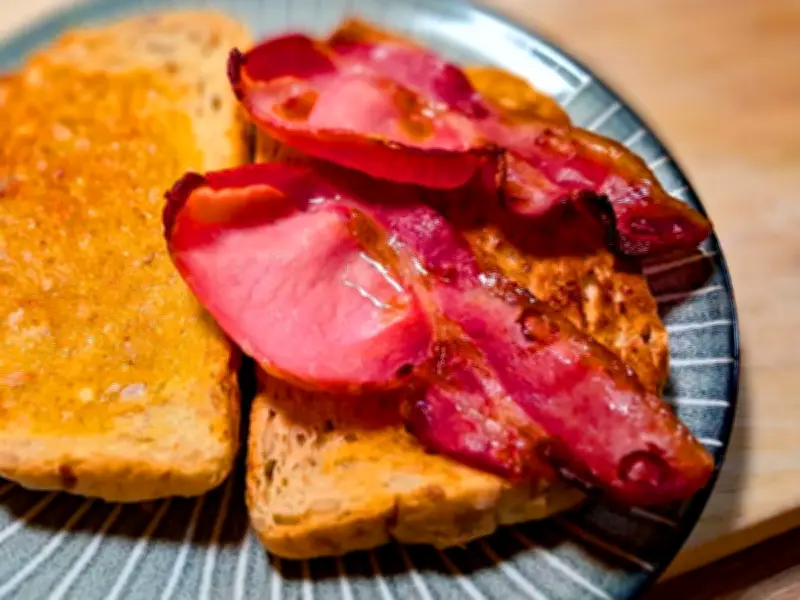
Katherine McPhillips put four popular bacon cooking methods to the test: frying pan, microwave, air fryer and oven. The oven emerged as the clear winner, delivering consistently crispy strips with a rich, savoury depth of flavour that outshone the others.
Frying Pan: Quick but Greasy and Smelly
Cooking bacon on the hob in a frying pan is the most traditional method, but McPhillips found it unpleasant. She added a small amount of oil to a pan, heated it for a minute, then cooked the bacon for about two minutes until golden.
While quick and straightforward, the bacon turned out excessively greasy, which dulled the overall flavour. The edges were noticeably charred, and the surplus grease left the meat tasting overly oily. Worse, the smell lingered in her kitchen all morning, and scrubbing the burnt residue off the pan took considerable time and effort.
Microwave: Edible but Not Recommended
McPhillips tried the microwave purely to exhaust every appliance in her kitchen and was surprised it worked — the bacon was perfectly acceptable to eat. However, there was little more to recommend about this method.
The bacon left burnt marks on the plate that required two rounds of scrubbing to remove. Bacon fat splattered across the interior of the microwave, which proved thoroughly irritating to clean, and it produced a smoky odour that persisted for hours. The microwave produced mediocre-tasting bacon and generated such a significant amount of clearing up that McPhillips strongly advises choosing an alternative method wherever possible.
Air Fryer: Convenient but Uneven
Cooking bacon in the air fryer is remarkably simple and convenient — no monitoring, no flipping, virtually no effort. McPhillips lined the basket with baking paper, placed the bacon inside, and set the machine to 200°C for five minutes. She made a cup of tea while waiting, and once the air fryer chimed, the bacon was ready.
Several strips were golden-brown and wonderfully crispy, almost crunchy, which she thoroughly enjoyed. However, some strips had caught at the edges while other sections were chewier, meaning each strip was notably unevenly cooked. The air fryer can only handle small batches, which is fine for one person but would become tiresome for a whole family. McPhillips would use this method again because the bacon was enjoyable and required no clearing up, but the inconsistent results were a drawback.
Oven: The Clear Winner
McPhillips had never previously considered cooking bacon in the oven, but she wholeheartedly confirms it is without doubt the most delicious way to prepare it. Every strip came out consistently crisp, and the meat had a richer, more savoury depth of flavour compared to all the other methods.
To cook bacon in the oven, she lined a baking tray with baking paper, preheated the oven to 200°C, laid the bacon rashers across the tray, and waited 20 minutes — considerably longer than all the other methods. But the wait proved entirely worthwhile, as the bacon emerged perfectly cooked and sizzling. Preparing bacon in the oven proved to be the most lengthy process, taking roughly twice as long as the alternative methods, but it was straightforward to do and produced the most impressive results.
McPhillips highly recommends giving the oven method a try and says it is the only way she will be making bacon from now on.