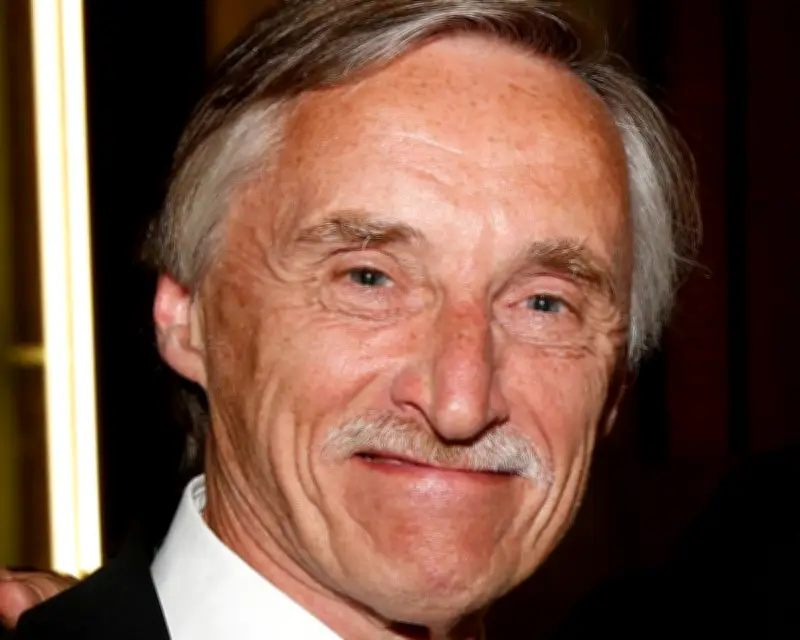
Geoff Wadge, a pioneer in using radar remote sensing to monitor and study active volcanoes, has died aged 76. He was renowned for applying radar to detect ground movements before eruptions begin, using radar's ability to see through clouds and detect surface changes caused by underground magma movements that sometimes indicate an impending explosion. This reduced the need for scientists to visit dangerous areas near volcanoes.
Early Life and Education
Born in Burnley, Lancashire, to John Wadge and his wife Doris (née Owen), who ran a corner shop, Geoff attended Burnley grammar school. Inspired by teenage interests in pot-holing and the outdoors, he studied geology at Imperial College London in 1968, followed by a PhD there, for which he studied Mount Etna in Sicily.
Career and Contributions
In 1975, he became a lecturer in geology at the University of the West Indies in Kingston, Jamaica. After four years, he moved to the Lunar and Planetary Institute in Houston, Texas, to research Caribbean tectonics and begin his work on remote sensing for active volcanoes. In 1982, he joined the Seismic Research Unit of the University of the West Indies in Trinidad, monitoring eastern Caribbean volcanoes, before returning to the UK as a senior research fellow in meteorology at the University of Reading.
In 1985, the Natural Environment Research Council funded him to assess the Soufrière Hills volcano on Montserrat in collaboration with the Seismic Research Unit in Trinidad. The resulting report, written with colleague Michael Isaacs, was delivered to the Montserrat government in 1987, warning that the volcano could soon become active again. It indeed began erupting in 1995 and continued until 2010. Geoff later chaired the Scientific Advisory Committee for Montserrat from 2003 to 2014, responsible for hazard and risk assessment of the Soufrière Hills volcano.
Later Career and Recognition
Geoff worked at Reading University until his retirement in 2020, serving the last eight years as director of its Environmental Systems Science Centre, focusing on environmental data, remote sensing, and Earth observation. In 2015, he was awarded the Murchison Medal by the Geological Society of London.
Personal Life and Interests
Geoff had a passion for Morris dancing, which he taught to staff at the Montserrat Volcano Observatory. He also loved Caribbean music and once accompanied Montserratian singer Arrow in a rendition of his global hit "Hot, Hot, Hot" at a conference. In 1982, he married Linda Grace, a bookkeeper. She survives him, along with their children Hester and Sam, and grandson Alfred.