Anthony Steel, once one of Britain's highest-paid film stars, spent his final years living in a tiny council flat in Northolt, West London, largely cut off from the outside world after a dramatic fall from fame. He died from lung cancer in March 2001, aged 80.
Wartime Service and Rise to Stardom
During World War II, Steel joined the Grenadier Guards at age 19, was evacuated from Dunkirk, and served in the Middle East, finishing the conflict with the rank of major. After the war, he turned to acting, taking whatever work he could find.
His big break came in 1950 when he was cast as one of three British prisoners of war attempting to escape in The Wooden Horse. The film became one of the biggest box-office hits of the year and established him as a leading man. Rank Studios promoted him as a home-grown rival to American heartthrobs such as Gregory Peck and Rock Hudson.
Peak Career and Frustrations
He appeared in a string of popular films, including Where No Vultures Fly, The Malta Story, Albert RN and The Sea Shall Not Have Them. By 1954, he and Dirk Bogarde were the highest-paid actors at Rank Studios, reportedly earning £15,000 per film each.
Despite this, he was frustrated with his roles, often cast in adventure films alongside wildlife. "In America, they build their male stars by starring them opposite exciting women. What do they give me? Elephants, crocodiles and giraffes," he complained.
He eventually got his wish when cast opposite Diane Cilento in Passage Home. "At last I can prove that I have blood in my veins and can make love to a woman," he declared at the time. He added: "You know how the public identify themselves with the stars. Well, they think that an actor who gets the girl all the time - especially if she is very glamorous - must really have something."
Marriage to Anita Ekberg and Decline
Not everyone was charmed. Michael Craig, who appeared alongside him in Passage Home, later recalled that Anthony "treated everyone with casual arrogance" on set. Diane Cilento described him in her memoir as "an ex-army hunk" whose bulging biceps and carefully cultivated appearance seemed to matter more than his acting.
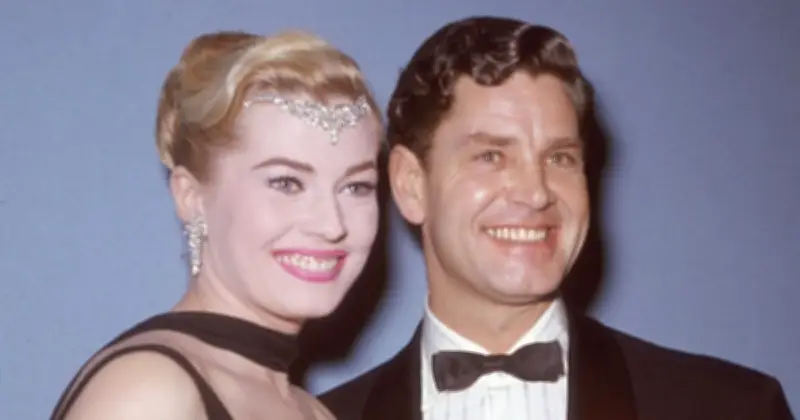
After a brief marriage to Juanita Forbes from 1949 until 1954, he became romantically involved with Swedish actress Anita Ekberg, star of La Dolce Vita. They married in 1956 and moved to Hollywood, but it proved disastrous. He broke his contract with Rank, struggled to find the right roles in America, and became increasingly known as Mr Ekberg. The union ended in divorce in 1959.
Ekberg later spoke of his drinking and violent behaviour, saying: "When he wasn't drunk he was charming and cultured, intelligent, a sense of humour. Too bad he got on that road. He would start arguments with anybody after one drink too much, and then he would get violent."
Final Years and Legacy
His career never recovered. By 1974, he was appearing in pantomime as Baron Hardup in Cinderella. He did land roles in stage productions and television dramas including The Professionals, Bergerac and Robin of Sherwood, but by the end of the 1980s he had largely withdrawn from public life.
He spent several years living in a modest hotel in Earl's Court before moving into sheltered accommodation in a tiny council flat in Northolt, where the walls were reportedly covered in graffiti and he lived in near-poverty. In a revealing 1997 interview, he said: "I know a lot of people are trying to find out where I am, but to be honest that's how I want it. I want to be left alone. I don't want to see any of my old friends from my old life."
When his former agent, David Daly, discovered the actor was owed £1,500 in television residuals and other fees, he tracked him down. Steel initially refused to answer the door but eventually appeared at a window and recognised his former agent. David gave him £500 in cash, arranged for him to move to Denville Hall, the retirement home for actors, and helped secure him a final television role in The Broker's Man.