Will Self's Latest Novel Delivers a Pummelling Vision of Modern Morality
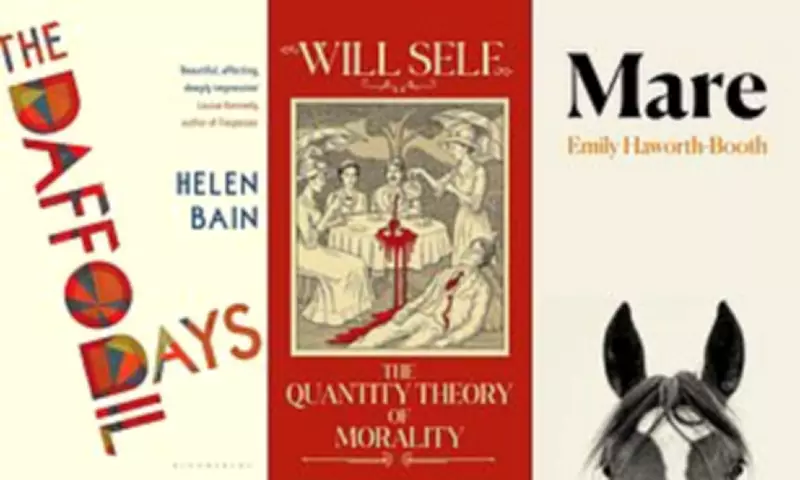
The Quantity Theory of Morality by Will Self (Atlantic, £18.99, 368 pages) is now available from the Mail Bookshop. This testing new work circles around a group of floundering, boozy, and self-obsessed Londoners, including a character named Will, who endure a relentless carousel of lunches, opera trips, villa holidays, weekend parties, bed-hopping, and even a funeral, all on repeat.
A Multi-Perspective Narrative with Provocative Twists
The story is told five times from different perspectives, offering varied insights into the same events. In one iteration, all the characters are female, while another provides a running commentary on each male character's penis size, adding a layer of puerile wit to the narrative. The novel also reintroduces Zack Busner, who shares his thoughts on the current crisis in morality, and features an AI bot called Margaret, named after both Margaret Thatcher and Margaret Atwood.
Meanwhile, England is depicted as hurtling towards an anti-Semitic dystopia, amplifying the sense of societal decay. Self's Rabelaisian rush of baleful invective and immature humour remains as pummelling as ever, but there is no mistaking the novel's overarching mood of irrevocable decline, painting a stark picture of modern life.

Helen Bain Reimagines Sylvia Plath and Ted Hughes in 'The Daffodil Days'
The Daffodil Days by Helen Bain (Bloomsbury, £18.99, 256 pages) is also available now from the Mail Bookshop. This ambitious novel asks what more can possibly be said about Sylvia Plath and Ted Hughes, suggesting that it depends on how the story is told.
A Backwards Tale from a Small-Town Perspective
Bain recounts the couple's by turns idyllic and tumultuous stay in a Devon town—a few months before Plath would take her own life in London—backwards in time. Moreover, she tells it entirely from the perspective of the townsfolk, whose lives occasionally intersect with Sylvia, who is at home with children Frieda and newborn Nicholas while Ted spends increasing amounts of time in the city.
Bain's style is both old-fashioned and radical, immersing readers fully into the humdrum rhythms of small-town rural life while offering only elliptical glimpses of the couple themselves. Yet, Plath emerges in dazzling life nonetheless—difficult and brilliant, maternal and tragic. This is a cleverly quiet, unassuming novel about two people who were anything but ordinary.
Emily Haworth-Booth Explores Non-Motherhood in 'Mare'
Mare by Emily Haworth-Booth (Granta, £16.99, 288 pages) is available from the Mail Bookshop as well. While there are many novels about new motherhood, there are considerably fewer about non-motherhood, making this a unique addition to contemporary literature.
A Portrait of Love and Care in Unexpected Forms
The story follows a married 39-year-old childless woman who strikes up an arrangement at a local stable to co-parent a mare two days a week. Soon, she is taking riding lessons and dreaming of the horse, with her growing obsession throwing into sharp relief her own maternal ambivalence and occasional yearning. The plot takes a turn when she discovers she is unable to become pregnant.
Haworth-Booth writes in staccato, limpid yet self-conscious paragraphs that can't disguise the autobiographical underpinnings—to the extent that one wonders why she didn't simply write a memoir. However, this is an affecting portrait of love and care in its many forms, written with a calm, incantatory beauty that resonates deeply with readers.