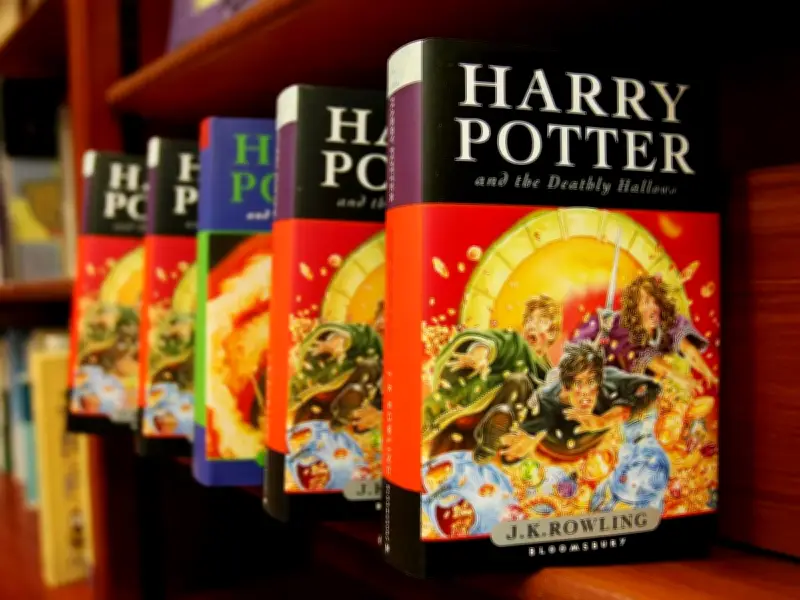
Certain old Harry Potter books, often left to gather dust on shelves, may be worth significant sums. According to a Sotheby's explainer video, a rare copy of Harry Potter and the Philosopher's Stone could be valued at $100,000. The key lies not in the story but in specific identifiers such as the print run, edition details, and production errors.
Check the Edition and Print Run
First editions are often especially prized, particularly for books that become hugely popular or culturally significant. A first edition refers to the very first print run produced when the book was originally published. In the Sotheby's video, an expert points to a valuable copy and explains: "This was J.K. Rowling's debut and the first Harry Potter book. Because she was completely unknown at the time, only 500 copies were produced in this first edition."
However, copies not from that very first run are not automatically worthless. Limited releases, signed editions, and unusual printings can all sell for impressive sums at auction. Some early copies have even been found with handwritten notes or markings from J.K. Rowling herself.
Consider How Many Copies Were Released
When only a small number of copies are in circulation, demand often rises, and collectors are typically willing to pay more. The Sotheby's example is considered highly valuable because only 200 copies were released to sellers. The video explains: "The initial print run of 500 copies: 300 were sent to libraries and 200 to bookstores. This is from a bookstore."
Look for the Number Line on the Imprint Page
A quick look at the codes printed inside the book can reveal whether it has details collectors pay for. On the copyright (imprint) page, there is usually a "number line" that indicates the print run. If the sequence runs all the way down to 1—for example, 10 9 8 7 6 5 4 3 2 1—it often suggests a first printing. With later reprints, the lowest number is typically dropped, so the smallest number still showing is a good guide to which printing you have.
The Sotheby's expert explained: "This is a first edition, first printing of Harry Potter and the Philosopher's Stone. And we know this by going to the publisher's imprint page because this is a first printing; this number line will go down from 10 to 1. In later printings, this will change. For example, for a third printing it would go down from 10 to 3."
Spot Printing Mistakes
Printing errors might seem like they would reduce a book's value, but for collectors it is often the opposite—the rarer and more distinctive a copy is, the more desirable it can become. Sotheby's said: "Mistakes are often prized when collecting rare books. In later editions, they're corrected. For example, on page 53 listing Harry's school equipment, 1 wand is on there twice."
Checking these details before discarding or donating old Harry Potter books could reveal a valuable collectible worth far more than expected.