Melvyn Bragg's Oxford Odyssey: A Working-Class Journey Through Love and Loss
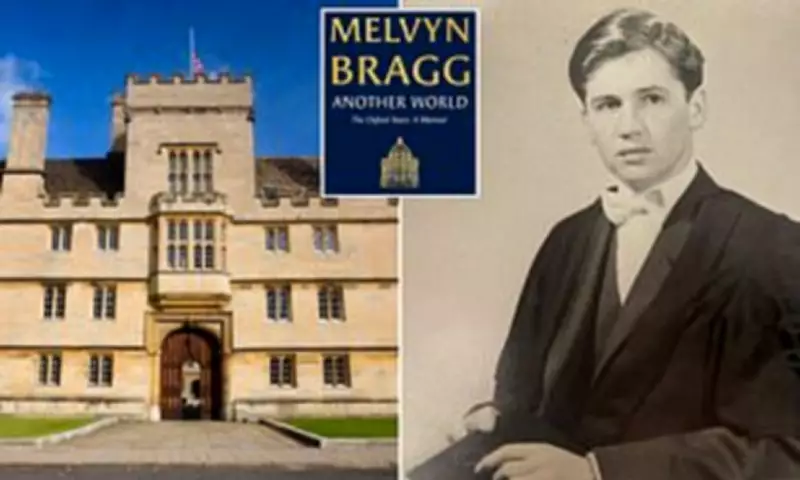
When Melvyn Bragg first sat down to dine in Wadham College's medieval hall in 1958, wearing his undergraduate gown, he was struck by an unexpected comparison. The only previous occasion where he had eaten at long tables surrounded by scores of strangers was at Butlin's holiday camp in Ayr, Scotland. This poignant contrast highlighted the cultural chasm the working-class grammar-school boy from Wigton, Cumbria, had crossed to enter Oxford's predominantly middle and upper-class environment.
A World Apart: The Working-Class Experience at Oxford
Bragg felt profoundly out of place among the rows of young men—all male students in that era—who populated Oxford's historic colleges. His sense of isolation was captured in a memorable exchange with fellow undergraduate Dennis Potter, who would later become a renowned screenwriter. Potter remarked to Bragg in the street one day: "They say there's three working-class men here. There's me. And you. Where's the other bugger?"
This working-class connection even determined Bragg's living arrangements. He was assigned to share rooms on Staircase Two with Gerald, another grammar-school boy, who committed what Bragg considered minor crimes of brushing his hair and fastening his pyjama top button before bed. More significantly, Gerald failed to make himself scarce when Bragg's girlfriend Sarah visited, creating awkward constraints on their relationship.

Sarah: The Love That Shaped His Oxford Years
Readers of Bragg's previous memoir, Back In The Day, will remember Sarah as the dark-haired, intellectually vibrant girlfriend who, despite being equally well-educated as Bragg, was expected by her father to work at a local bank rather than attend university. Bragg's homesickness and longing for Sarah grew so intense that he once hitchhiked to Wigton on a whim, needing to return for a tutorial within three days.
Upon arrival, he was overwhelmed with affection for his hometown, thinking "You could not think of a better place to spend a life." His publican father, who had left school at fourteen without university opportunities, greeted him "as if I was a messenger from Mount Olympus." Bragg seriously considered abandoning Oxford, which seemed "more of a theatre than a city," but his former headmaster advised him to persevere.
Intellectual Awakening and Social Challenges
Gradually, Oxford became more welcoming. Bragg developed what would become his trademark skill—celebrating other minds—honed through friendships with staircase mates and encounters like meeting Michael Wolfers after climbing through his ground-floor window when the college was locked. History tutorials, though beginning with essay critiques, fostered intellectual camaraderie.
When Sarah visited, Bragg's new friends threw a party in her honor, but Gerald's presence and B&B restrictions prevented proper intimacy. Their closest approximation was watching an Ingmar Bergman film in a cinema's back row. When Bragg mentioned becoming film critic for the university newspaper, Sarah's response—"You mean you want to be a reporter? You could have done that by getting a start in Carlisle with The Cumberland News"—hinted at diverging aspirations.
The Heartbreaking End of First Love
Despite this subtle tension, Bragg remained devoted. They vacationed on Lindisfarne, registering as "Mr and Mrs Marrs," and laughed together in pouring rain. Bragg purchased an engagement ring at Carlisle's covered market and proposed on a bridge over Bassenthwaite Lake, with Sarah accepting.
Then, abruptly, in a freezing Bath hotel room, Sarah declared: "I don't think we should go on." Bragg was stunned when she explained, "I can't. I just can't," citing "the dinner parties, the women with opinions and flowery dresses" as reasons. Bragg writes that she had simply "gone off me," noting "It was not her words that wounded. It was the flinching away from me, not dramatic but noticeable."

Transformation Through Tragedy
The breakup devastated Bragg: "A trap door opened and I fell." He plunged into depression, describing how "My body, the thing I was, that made me live, was simply dead. I humped it around, longing, even praying to get rid of this me..." He channeled his anguish into solitary study, achieving such an excellent second-class history degree that he was invited to stay at Oxford.
Instead, he applied for a BBC traineeship, secured when drama producer Martin Esslin championed him during selection. At a Ruskin School of Art party, Bragg met French aristocratic artist Elisabeth (Lisa), who seemed "enwrapped in sadness" like himself after being abandoned by her American boyfriend. "We were both losers with, it seemed, nowhere else to go... we had an equality of uncertainty and unhappiness," Bragg recalls.
New Beginnings and Lasting Legacy
Lisa, lodging in a don's attic, introduced Bragg to new artistic worlds. Though not detailed in this memoir, Bragg has previously shared the tragedy of Lisa taking her own life in 1971, a decade into their marriage. This evocative account, despite occasional grammatical looseness, makes readers feel they know Bragg's companions and care about them nearly as deeply as he did—and still does. His Oxford journey, from working-class outsider to cultural icon through In Our Time and beyond, remains a testament to resilience forged through love, loss, and intellectual discovery.