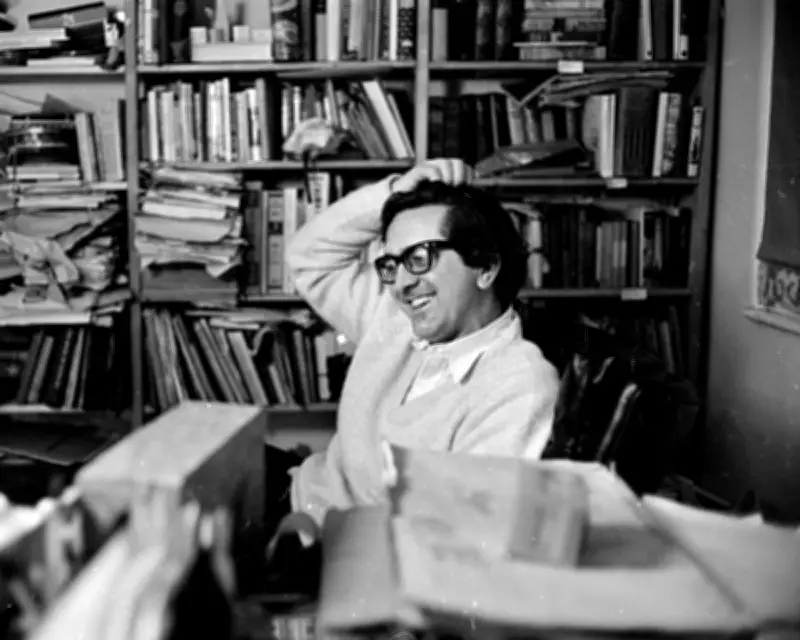
Spy Novelist Len Deighton, Author of The Ipcress File, Dies at Age 97
Len Deighton, the renowned British author whose subversive spy novels helped redefine the genre in the 1960s, has died at the age of 97. Best known for his debut work, The Ipcress File, Deighton produced over 30 books across a career spanning four decades, establishing himself as one of the most distinctive voices in postwar fiction.
Early Life and Varied Career
Born Leonard Cyril Deighton in Marylebone, London, in 1929, his father worked as a chauffeur and mechanic, while his mother was a hotel cook. Growing up in wartime London, Deighton witnessed the arrest of his neighbour, the pro-Nazi spy Anna Wolkoff, a real-life drama that may have inspired his later fictional plots.
His education was disrupted by the second world war, leading him to an emergency school. After leaving school, he worked as a railway clerk before serving in the Royal Air Force during national service. Following demobilisation, he used a grant to study at Saint Martin's School of Art and later the Royal College of Art, graduating in 1955.

Before turning to fiction, Deighton pursued a diverse career. He worked as a flight attendant for British Overseas Airways Corporation and later as an illustrator in London and New York, producing advertising and designing more than 200 book covers, including the first UK edition of Jack Kerouac's On the Road.
Literary Success and Impact
Published in 1962, The Ipcress File was an immediate success, selling millions of copies worldwide. It introduced readers to an unnamed sardonic working-class intelligence officer, a stark contrast to the glamorous archetype embodied by Ian Fleming's James Bond. The novel's success led to a film adaptation in 1965 starring Michael Caine, who reprised the character, named Harry Palmer, in subsequent films. Decades later, the story was revisited in a 2022 television adaptation featuring Joe Cole.
Deighton started writing The Ipcress File during an extended stay in the Dordogne region of France in 1960. His work, often compared to that of John le Carré, combined meticulous research with wit and sharp observations about class and bureaucracy. When he first submitted the manuscript to Jonathan Cape, the publisher of Ian Fleming, he was encouraged to simplify it; instead, he took it to Hodder & Stoughton.
His fiction stood apart for its realism, emphasising bureaucracy, institutional rivalries, and the moral ambiguities of intelligence work, often including footnotes on spycraft details. As Jeremy Duns wrote in the Guardian in 2009, "Deighton reinvented the spy thriller, bringing in a new air of authenticity and playing with its form."
Other Interests and Personal Life
Deighton's interest in food became a significant part of his career. He worked as a sous chef at the Royal Festival Hall and later developed the "cookstrip," a cartoon-style guide to cooking published in the Observer, which helped popularise Mediterranean cuisine in Britain. These were anthologised in books like Action Cook Book (1965) and Où Est Le Garlic? (1965).
He became increasingly private towards the end of his career. Deighton was married twice, first to illustrator Shirley Thompson and later to Ysabelle de Ranitz, with whom he had two sons.