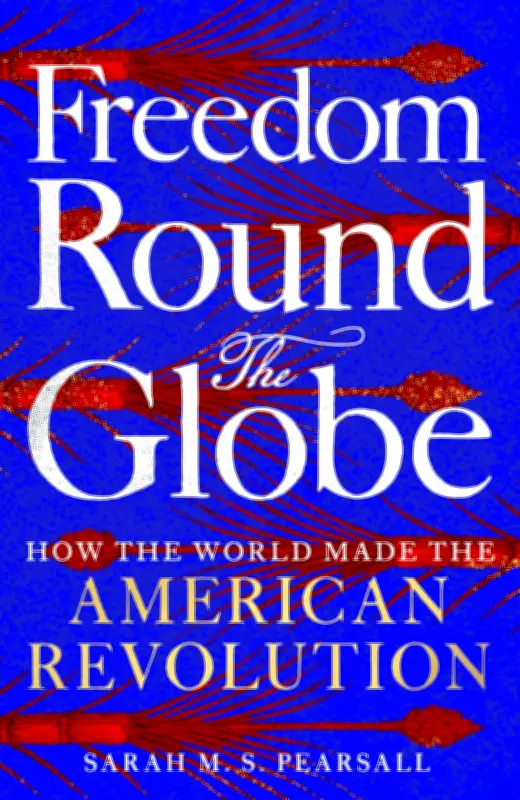
In a sweeping reinterpretation of the American Revolution, historian Sarah M S Pearsall reveals that the struggle for freedom was never confined to the 13 colonies. Her new book, Freedom Round the Globe, places the American founding within a mass international movement of resistance that spanned the 18th-century world.
Global Revolt and the Birth of American Ideals
Pearsall shows that the revolutionary ideals later celebrated in the Declaration of Independence emerged from a much broader and more contested world. The American colonists were only one group among many confronting empire, inequality, taxation, enslavement and war. Each chapter traces a revolutionary idea to a different corner of the globe.
In Connecticut and the Caribbean, for instance, she examines how slavery transformed the meaning of liberty, giving rise to new political language and radical demands for freedom. The book is a litany of revolt, a kind of world tour of grievances, from Edinburgh to Guangzhou to Kolkata, and from St Kitts to Sierra Leone.
Parallel Struggles Across Continents
One particularly compelling chapter explores how Indian resistance to aggressive taxation and the monopolistic power of the East India Company helped crystallise American fears about imperial corruption and unaccountable government. The same tea system that angered the Bengalis also fuelled the outrage leading up to the Boston Tea Party.
According to reviewer Dylan Jones, "The narrative fair barrels along. It is, in fact, a cracking read." The book offers a fresh perspective on the 250th anniversary of the United States, appealing to both history enthusiasts and general readers.
A New Lens on Revolutionary History
Published by Pan Macmillan at £22, Freedom Round the Globe reframes the American Revolution as part of a global wave of resistance. Pearsall, an acclaimed historian, argues that the struggle for freedom was a planet-wide phenomenon that shaped modern America.
Jones notes that history has become a "hot vertical" for publishers, often outselling thrillers. This book contributes to that trend, offering a spiffing new take on a familiar story.