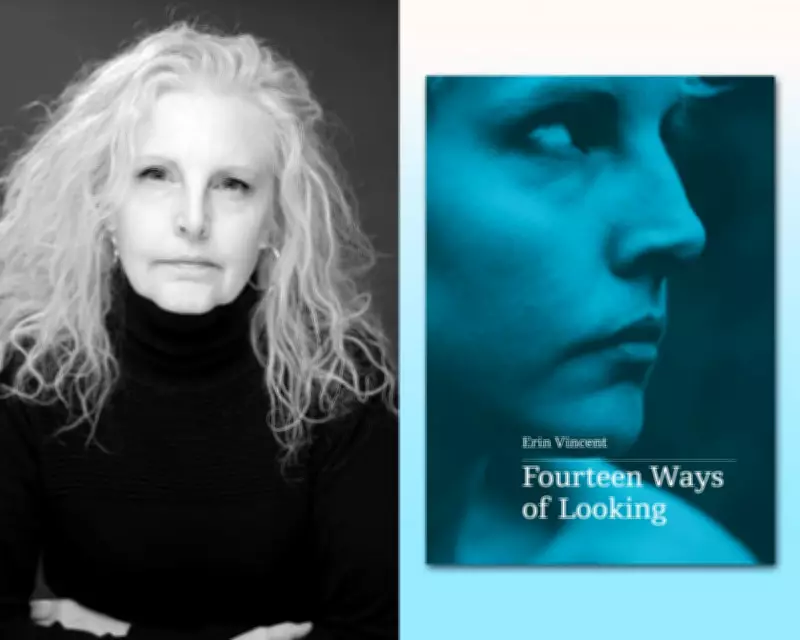
Erin Vincent's Fourteen Ways of Looking: A Poetic Reckoning with Grief
In her acclaimed 2007 memoir, Grief Girl, Erin Vincent presented her story in a straightforward narrative. Now, with Fourteen Ways of Looking, she delivers a more poetic and audacious reckoning with grief, transforming personal trauma into a literary masterpiece.
From Tragedy to Artistic Expression
When Erin Vincent was just fourteen years old, her parents were struck by a speeding tow truck while crossing the road. Her mother died instantly, and her father passed away a month later. This devastating event forms the core of Fourteen Ways of Looking, but Vincent's aim here is not merely to recount the facts. Instead, she grapples with the relentless, circular process of making sense of trauma.
Unlike Grief Girl, which narrated events in the present tense from a teenage perspective, Fourteen Ways of Looking adopts a fragmented structure. The book consists of short, often single-sentence fragments, with the word fourteen appearing in nearly every one. Vincent explains that in adulthood, she became preoccupied with this number, noticing it repeatedly in texts and unable to ignore its significance.

The Power of Fragmentation and Repetition
Vincent's work loops and repeats itself as she seeks to exhaust her subject, inspired by writers like Georges Perec, who also used formal constraints after being orphaned as a child. She recalls Perec's goal to write exhaustively about a fragment of the world and wonders if she can achieve the same. The refrains at fourteen and when I was fourteen introduce slivers of memoir, ranging from the banal to the deeply shocking.
These personal snippets are interspersed with quotations, aphorisms, and other texts that seem disconnected except for the recurring word fourteen. Examples include medical advice on suture removal, missing numbers in book credits, and Vincent's own youthful resolutions. This method shatters the raw life material of Grief Girl, forcing both author and reader to piece together the fragments like a complex jigsaw puzzle.
Literary Influences and Minimalist Style
Vincent aligns with a literary minimalism familiar to readers of Jenny Offill, Kate Zambreno, Maggie Nelson, and Patricia Lockwood, whose works also assemble found texts. However, through her omnivorous use of quotation and allusion, she acknowledges a broader lineage of modernist experimentalists, from Gertrude Stein and Walter Benjamin to Oulipo, Samuel Beckett, Andy Warhol, David Wojnarowicz, and WG Sebald.
The white space on the page surrounding Vincent's text fragments symbolizes what is absent, unsayable, and forever lost. This technique allows her to take a tiger's leap into the past, salvaging elements from the trauma scene. The process is exhilarating and surprising as Vincent sorts through pieces, creating dazzling chains of associations and shifting registers and tones.
Transforming Trauma into Art
Vincent writes, Sometimes I imagine what it would look like if I could cut the number fourteen from my life and create a whole new story. This sentence reflects a dual desire: the child's wish for the trauma never to have happened and the adult's urge to forget it. Yet, Vincent transforms these impulses into a generous artistic credo.
In Fourteen Ways of Looking, she literally cuts fourteen from her life, snipping it from texts and memories and splicing the pieces together. The result is not a narrative of smooth redemption but a wrenching and true reckoning with the lifelong work of grief. This book is a testament to how a mature artist can confront trauma, creating a new story that resonates with authenticity and emotional depth.
Fourteen Ways of Looking by Erin Vincent is published by Upswell, offering readers a profound exploration of bereavement, family, and the human condition through innovative literary form.