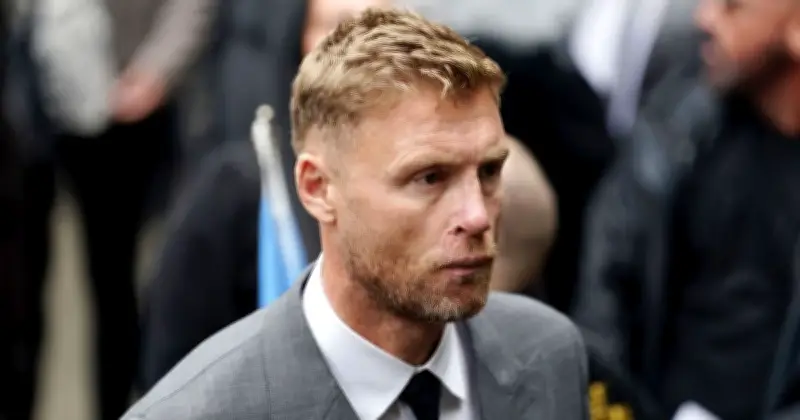
Andrew 'Freddie' Flintoff says he would never have been diagnosed with depression if it weren't for Ricky Hatton. The ex-England cricketer has paid tribute to his friend and former boxer, who died almost exactly 12 months ago.
On September 14, 2025, British sport entered a period of mourning when Hatton, a two-weight former world champion, was found unresponsive in his Manchester home aged 46. Hatton, nicknamed The Hitman, had struggled with depression and alcohol abuse during his life and an open verdict was recorded by the coroner.
Funeral and tribute book
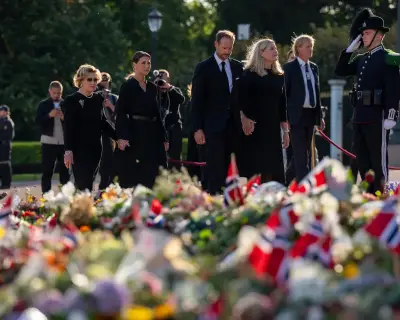
Almost 1,000 people attended Hatton's funeral and the procession that preceded it saw thousands pay their respects. Hatton's coffin passed by some of his local haunts, from his hometown of Hyde to Manchester Cathedral and later, his beloved Manchester City's Etihad Stadium.

Flintoff, who made a total of 227 appearances for England across all international cricket formats, was in attendance as he was close to Hatton. In a book written to commemorate the legendary fighter, Flintoff was tasked with the foreword and divulged that Hatton helped him immensely with his own mental health issues.
Ricky Hatton: The Light That Never Goes Out has been penned by broadcaster and former head of boxing at Sky Sports, Adam Smith, a friend of the Hatton family. Smith delivered the eulogy at Hatton's funeral and asked Flintoff for a foreword.
Flintoff's words on Hatton
Recalling his memories of the boxer, Flintoff admits he could relate to Hatton's struggles, as he too had battled his own demons, some of which left him unable to get out of bed. He wrote: "I can tell you when I was batting and got out, but not on the days I did well. I don't believe in redemption.
"With time it gets better, with good family and friends around you, but still you struggle to be totally at peace. Ricky had a compulsive personality like me. Whatever you do – gym, golf, cricket, boxing – it never goes away and it's hard to explain to people. I got so much inspiration from Rick on dealing with it and talking about it.
"He was the first person I'd ever met who was so honest. He opened right up to me at his house and he was the very first to encourage me to speak up. This led to my diagnosis for depression. I have huge respect and am so thankful to him. What he did was far braver than to fight Mayweather or Pacquiao. Laying his soul bare."
He also recalled some revelries shared with his peer. Flintoff said: "Nights out in Manchester might end at 5am in the Press Club and often with some good old karaoke. Rick and I would be there doing Suspicious Minds when the theatre bus arrived with proper singers and there's Ricky and me floundering around! Thinking we were okay! We loved it!"
Shared struggles and final tribute
The former cricketer continued: "I identified with him. I wasn't sure I wanted to carry on at one point. The big problem with sport is that you try to finish on your terms. But it doesn't work like that. I was thirty-one, injured, and you have to deal with it.
"The trouble too is that we are so young. We peak in our mid-to-late twenties. Other industries peak in their forties and fifties. We are thrust into this world, a world where you are going to get hurt.
"However, I reckon he was the only sportsman in his position not to change – he was just Ricky Hatton. Your head turns with a bit of success; it did for me and for everyone. It's inevitable. But it never did with Rick. And I can't think of one other sportsman I can say that of.
"It's hard to explain to people. We were two of the same, Rick and me. He would put a face, a mask on. He told me that he was crying before the Pacquiao fight and still went out there. That is so brave. I would sometimes put my helmet on and go out to bat like I owned it, but it never felt like that.
"Sport gives you a routine and yet we would rebel against that routine. We need structure. Talking to Rick about his depression and struggles, I identified so much in me, learned so much about myself. This lad who has taken on the world saying it is all right to talk about it. I am so thankful to him."