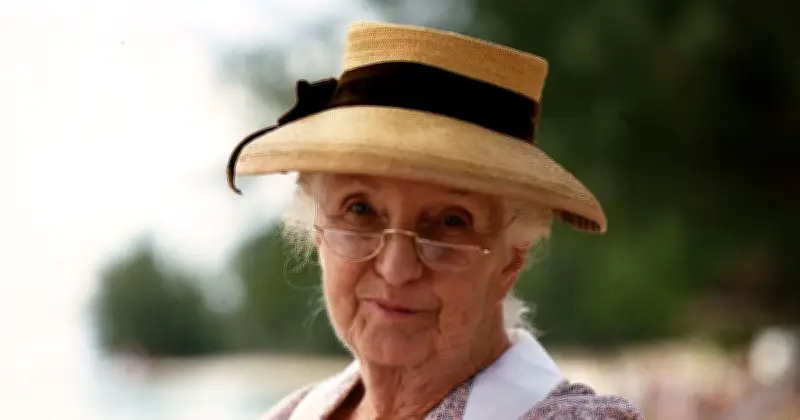
Author Lucy Foley has revealed there were two cast iron rules she was told not to break when writing the first new Miss Marple novel for 50 years – she could not make the sleuth younger or give her a love interest.
The bestselling writer of modern 'locked room' thrillers The Hunting Party and The Guest List was entrusted by the estate of her creator, the late Agatha Christie, to dust off the elderly spinster best known for solving devious crimes in the fictional village of St Mary Mead.
A New Mystery in the Swiss Alps
The result is Murder at the Grand Alpine Hotel, which is the place to be seen for the rich and famous in a ski resort in the Swiss Alps in 1950, and is out now. It sees World War Two hero-turned-politician Anthony Narracott board an otherwise empty gondola at the bottom of a mountain only to be found dead when it arrives at the top.
But thankfully Jane Marple – played most famously on the big screen by Margaret Rutherford and Angela Lansbury and on TV by the likes of Joan Hickson and, more recently, Geraldine McEwan and Julia McKenzie – is also staying at the hotel with a friend, quietly watching and listening to piece together the clues.
How the Book Came About
Foley, 40, says she was approached out of the blue by the Agatha Christie estate to write a full length novel about 18 months after penning a Miss Marple short story for a 2022 collection of 12 stories by modern day female writers, which also included tales by Ruth Ware and Kate Mosse. And from this experience, she remembered the unbreakable rules about the character they were given.
During a special guest appearance at the recent Bloody Scotland International Crime Writing Festival in Stirling, Foley says: “I said yes to doing a Miss Marple novel and then panicked. And then James Prichard, who is Agatha Christie's great grandson and the CEO of Agatha Christie Limited, sent me a lovely letter saying I want your take on Miss Marple, I don't want you to write a paint-by-numbers Agatha Christie Miss Marple, and creatively that was very liberating.
“He did not actually say, 'These are the things you are not allowed to do', but I remembered some of them from writing the short story. So I was allowed to make Miss Marple young, I wasn't allowed to give her a love interest.”
She adds: “It's one of those things where you think it's a huge honour, so exciting, I wish I could tell granny because she also a huge Miss Marple fan, and then the fear hit, thinking, 'I don't know if I can do this, I can do it for a short story but I don't know if I can do it for a full-length novel'.”
Taking Miss Marple on Holiday
After initially thinking of setting her Miss Marple story in an insular English village where the curtains twitch, similar to St Mary Mead, deciding to send the sleuth on holiday was liberating. Foley says: “It was actually when I had the idea of taking her somewhere else that the book opened up for me. In my preliminary reading I discovered that Death On The Nile was actually conceived as a Miss Marple book and then Christie, perhaps with pressure from her publisher, it's all a bit mysterious, decided to make it a Poirot book.
“I felt for Miss Marple with that and felt like she needed a holiday!” She adds: “I think Death On The Nile was felt to be more brand Poirot and also Miss Marple is so associated with the St Mary Mead setting. I did wrestle with that as that setting hasn't really changed much in 50 years.
“I really wanted to do that but I also wanted this book to feel new and additive in some way, and doing that with Miss Marple in a village setting would be difficult.”
Research and Writing Process
The mother-of-two relished taking her young children with her and her husband on research trips to the Swiss Alps, particularly as their baby was not allowed on a gondola to a hotel above Chamonix that provided inspiration for the Grand Alpine Hotel.
“Research for the book included a couple of trips to the Alps, which was a hardship!” she smiles. “My husband and I had our baby with us who wasn't allowed in the gondola, so we had to take it in turns with one of us staying with the baby.
Foley also immersed herself in the fashion and films of the 1950s while writing her novel. “I love the fashion of the 1950s, everything was just a bit more stylish back then, so that was great fun. Having written historical fiction before writing thrillers I had not realised how much I missed that attention to detail. So I did a lot of reading, looked at a lot of pictures and I went a bit method. While I was writing it I only watched films from the 1950s, lots of Alfred Hitchcock, to see the way that people moved and interacted with each other.”
And she also learnt a different way to write: “I was intimidated by Christie's plotting, she is a perfectionist for this, so I actually thought about this novel in full more than any of my other books. I have always said plotting takes away the creativity, but I so want to get that right that I sketched this one all out.. and it turns out that is a much easier way of writing a book!”
Miss Marple's Legacy and Future
Miss Marple first appeared in a short story written by Christie, titled The Tuesday Night Club, which later helped inspire Richard Osman's Thursday Murder Club series. Her first appearance in a full length novel was in The Murder in the Vicarage in 1930 and her last was in Sleeping Murder in 1976.
“I first came across Christie aged 12 when I found a copy of Murder On The Orient Express in our holiday cottage and was immediately addicted,” Foley recalls. “I think the darkness passed me by, I just loved the puzzle of it all and trying to solve the mystery before the end. I remember putting it down and thinking, 'I wonder if she's written any other books?' Luckily she had.”
Christie died in 1976 aged 85 having written 12 novels and 20 short stories featuring her amateur sleuth. As a lifelong fan of Christie's books and particularly Miss Marple, Foley would love to write another continuation novel, with a few conditions.
“I would write another one, as long as it is a standalone. I loved the characters in this one and there are some I would like to revisit,” she says. “And I think it would have to be Miss Marple on her travels again, as that's how I felt I could bring something new to the series, whereas St Mary Mead is Christie's territory.”
Murder at the Grand Alpine Hotel by Lucy Foley (HarperCollins, £22) is out now.