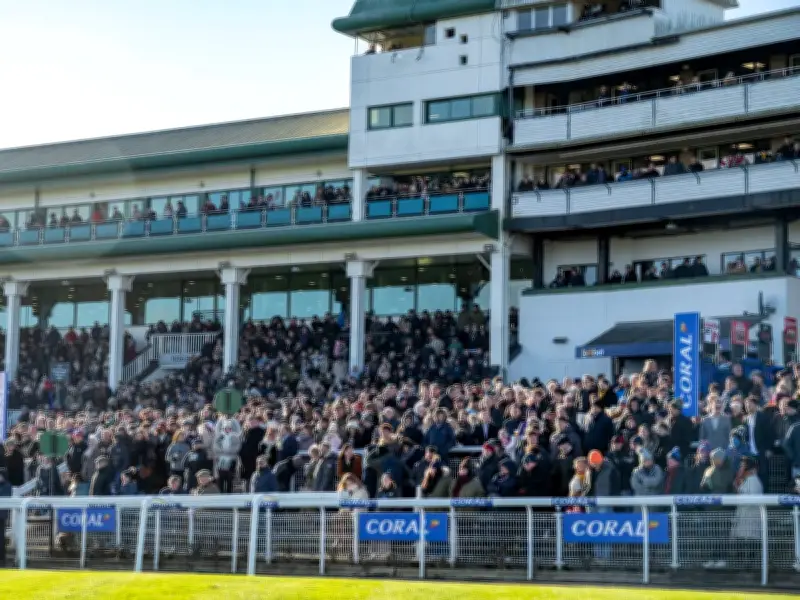
Chepstow Racecourse reaches a significant milestone this weekend as it celebrates its centenary, marking 100 years since its opening on August 6, 1926.
A Century of Welsh Sporting Heritage
Mention the great sporting citadels of Wales and you might think of the Principality Stadium, Cardiff Arms Park, or The Racecourse Ground in Wrexham. But Chepstow Racecourse deserves its place on any short list, thanks to both its popularity and longevity.
The folk that now run the racecourse, Arena Racing, are so smitten they decided to throw two birthday parties rather than just one. The first was held on Thursday, August 6, the day of the centenary, and included a grand centenary dinner in The View Restaurant, as well as an evening race meeting. The other is on Sunday, August 9, when they will pull out all the stops for a race meeting titled “Centenary Raceday”, with heritage displays around the location.
Bangor-on-Dee Racecourse near Wrexham is older, having held horse racing since 1859, but it is smaller and not as plush as Chepstow. Ffos Las in Carmarthenshire has more modern facilities, as it was only constructed 17 years ago, but it lacks the reassuring old-world charm of Chepstow.
The Vision and the Gamble
It was on August 6, 1926, that a new sporting venue opened in the heart of the Wye Valley. A century later, Chepstow Racecourse remains one of the most recognisable and cherished locations in Welsh sport. For 100 years, the undulating acres of Piercefield Park have provided the backdrop for some of the most memorable moments in Welsh racing history.
But the story of Chepstow is about far more than horses, jockeys and winners’ enclosures. It is a story of ambition, perseverance, continuity and community. It is the tale of a place that has evolved from a bold gamble by a group of Welsh visionaries into one of the country’s great sporting, cultural and social venues.
Current executive director Luke Admans describes it as a “hidden gem”. “The backdrop's just stunning and the environment is amazing,” says Admans, who used to work at Lingfield Park in Surrey. “Jumps racing has such a committed, hugely passionate crowd here. And there's some amazing stories around the horses, the jockeys and the trainers who have all raced here.”
That natural setting was central to the vision of the racecourse’s founders. By the early 20th century, Welsh racing was struggling, and by the end of the First World War there was a feeling that Wales needed a venue capable of restoring its place on the national racing map. In 1925, a group of South Wales businessmen and dignitaries, led by Courtney Morgan, first Viscount Tredegar, and Lord Queensborough, created the Chepstow Racecourse Company.
Around 80 workers spent three years transforming the 370 acres of parkland into a racing venue. The scale of the ambition was reflected in the plans, with significant spending on grandstands and facilities. When the gates finally opened, around 20,000 racegoers attended the inaugural meeting. The first race was won by Lord Harewood’s horse Conca D’Oro.
Survival and Growth
After the first meeting, there were genuine fears the racecourse might not last. Financial pressures were severe, and the directors were forced to provide personal loans to keep the business operating. But the founders’ determination ensured Chepstow survived. Within a year, jump racing had arrived, with the first National Hunt meeting taking place in March 1927.
The course quickly established a reputation for quality. The Welsh Derby was a major fixture during the early decades, while in 1933 legendary jockey Gordon Richards won 11 races during one meeting. Then came the Second World War, when racing was suspended and Chepstow took on a completely different role, becoming part of RAF St Athan’s operations with aircraft using a grass runway laid out on the course itself.
Perhaps the biggest chapter in Chepstow’s story began in 1949 when the Welsh Grand National moved permanently to the course. Held every year between Christmas and New Year, the race has become one of the defining sporting occasions in Wales. For many, the Welsh National is not simply a race meeting, it is an annual tradition.
Admans points to the atmosphere surrounding Haiti Couleurs’ victory in the Welsh National last year as a perfect example of what Chepstow means to its supporters. Trained in Pembrokeshire by Rebecca Curtis and ridden by Welsh jockey Sean Bowen, the current champion jockey, it was a purely Welsh triumph. “I still feel quite lucky that I was here for Haiti Couleurs winning the Welsh National last year, because the atmosphere was just something else, something unbelievable,” says Admans.
Beyond Racing
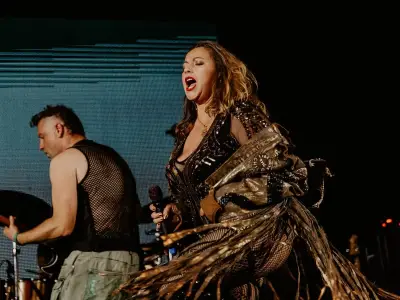
Chepstow has also developed another reputation — as one of Wales’ leading outdoor event venues. The 370 acres has become a stage for sport, music, business, community and entertainment. The racecourse has become a regular destination for live music, hosting performances from Sir Tom Jones, Shania Twain, George Ezra, Madness, UB40, Simply Red, Feeder, Billy Ocean, Gabrielle, Peter Andre and Hozier.
It famously hosted the IAAF World Cross Country Championships on February 28, 1976, won by Portugal's Carlos Lopes. The grounds have also hosted the Chepstow Agricultural Show, classic car gatherings, markets, fairs, charity events and outdoor cinema screenings. The venue has become a popular choice for business events, conferences and private functions.
Admans believes that cross-border appeal is one of the reasons the racecourse continues to flourish. “There's a vast number of racegoers who live an hour away, or within an hour, who actually live in England,” he says. “You’ve got people living 20 minutes away in Bristol. They come to most meetings.”
Looking to the Future
The centenary celebrations reflect a balance between honouring the past and looking towards the future. A 100-year timeline charting Chepstow’s journey has been created for visitors. A time capsule will allow racegoers, members and staff to leave messages for future generations. A guest book featuring photographs and personal memories will preserve the stories of those who have helped make the racecourse what it is today.
The racecourse has enjoyed a significant rise in attendances, with numbers increasing by 29 per cent this year compared to last. The challenge for any historic venue is balancing tradition with modern expectations. Chepstow’s past is one of its greatest strengths, but its future depends on continuing to evolve.
“It’s not just the public, it’s those industry people,” says Admans. “It’s all of the stable lads and lasses. It’s all of the jockeys, the trainers, the owners that support the game so well, the bookmakers, everyone that goes racing day in, day out.” People that have been coming here for 30, 40, 50 years to watch some of the best jumps racing there’s been.
As Chepstow celebrates its centenary, the greatest tribute to those pioneers is not simply that the racecourse still exists. It is that it still matters. A hundred years on and there is still a very special corner of the Wye Valley that has many more stories left to tell.