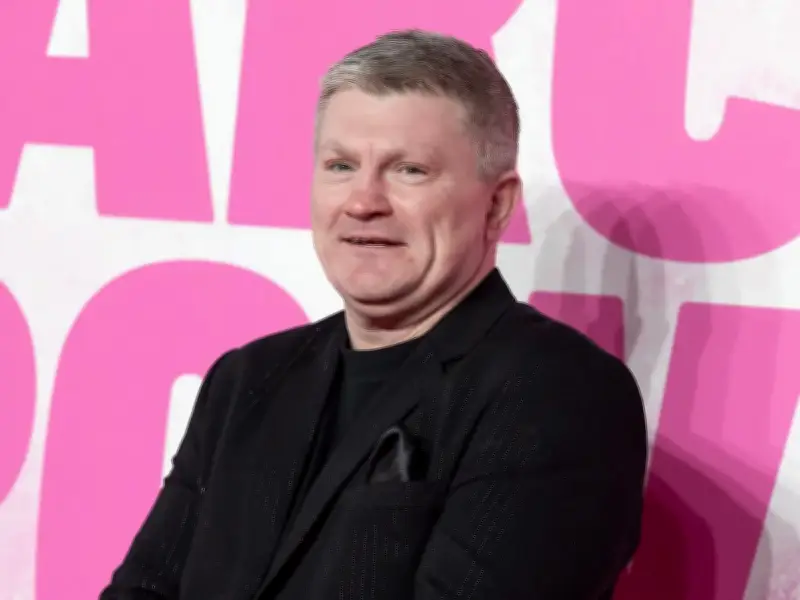
Boxing broadcaster Adam Smith has opened up about his final conversation with the late Ricky Hatton, describing it as the best he had seen the fighter in a while. Smith, who became a close friend of Hatton while covering his rise in boxing, has written a book in memory of the two-weight world champion titled Ricky Hatton: The Light That Never Goes Out.
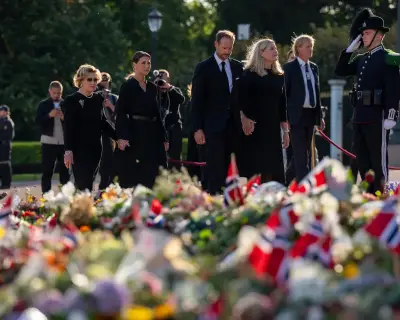
Hatton, from Greater Manchester, died suddenly on September 14, 2025, at the age of 46. He was found unresponsive at his home, and an inquest later ruled that his death could not be considered a suicide, with intent unclear. He was laid to rest at Manchester Cathedral on October 10, with thousands lining the streets as his procession passed through his gym, a local pub, and ended at the Etihad Stadium, home of his beloved Manchester City.
Last conversation in Manchester
Smith, who delivered the main eulogy at Hatton's funeral, recalled in his book the last real chat he had with the boxing legend. It took place in Manchester a few weeks before Hatton's death, at the Manchester Arena, near the steps of the iconic ring walk where 'Blue Moon' and boxing had often come together.

"Rick seemed really calm, enjoying spending time with his young daughters and granddaughter and he talked a great deal about [son] Campbell too and what lay ahead in and out of boxing," Smith wrote. "I remember thinking that was the best I had seen Ricky in a while. That's my abiding memory. Not of an encroaching darkness."
Reflective final months
Smith also noted that Hatton's former partner, actress Claire Sweeney, had observed that the fighter had become reflective in the time before his death. Smith agreed, noting that Hatton mentioned some of his big nights with a euphoric recall of what had been and was now gone.
Recalling the moment he learned of Hatton's death, Smith wrote: "My initial response was that this was a wind-up. But that feeling quickly morphed into shock and a feeling of numbness, which I don't think has ever gone away."
Grief and lasting memory
Smith described the pain of seeing Hatton's coffin, saying he was waiting for reality to catch up with what he could see. "We had stood at that iconic entrance chatting as old mates; the next time I saw Ricky was at the exit of his world," he wrote. "He'd seemed in great form, so content, so vibrantly alive. Now, in front of me was an unbearable stillness. It was eerie. Surreal. The world had slipped off its axis."
"Our hearts were broken; my mind, and all minds, just not computing that Ricky Hatton – the giant of a human being that he was – was gone," Smith added.