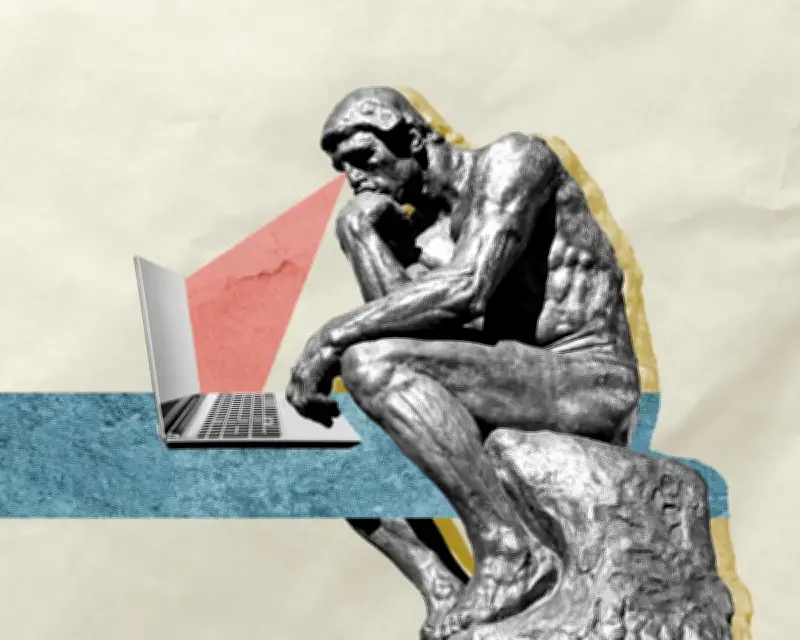
In an age where information is instantly available, uncertainty has become profoundly uncomfortable. A delayed email causes anxiety, a medical symptom is immediately searched online, and news feeds are refreshed constantly. People ask AI for instant explanations and expect answers to life’s biggest questions to arrive as quickly as food deliveries.
Modernity has conditioned people to believe that uncertainty is a dilemma to be solved. One of the Qur’an’s most remarkable stories, involving Prophet Moses and al-Khidr, feels unexpectedly relevant today.
The story of Moses and al-Khidr
In the story, Prophet Moses embarks on a journey to learn from a mysterious servant of God known as al-Khidr, the “Green One” or “Green Man”. Before the journey begins, al-Khidr warns him: “You will never be able to remain patient with me.” Moses is one of the greatest prophets, a man of extraordinary faith and wisdom, yet the warning stands.
The lesson is not about Moses’s character but about the limits of human understanding. As they travel, Moses witnesses troubling events. Al-Khidr deliberately damages a boat belonging to poor fishers and repairs a crumbling wall for a town whose people had refused them hospitality, without asking for payment.
Each time, Moses objects, judging what he sees according to justice, compassion and reason. Each time, he is reminded that he does not yet possess understanding of the whole story. Only at the end are the hidden reasons revealed: the damaged boat was saved from confiscation by a tyrannical king, and the wall protected an inheritance belonging to orphaned children.
Understanding arrives after patience
The story does not ask people to suspend thinking or rational inquiry. Instead, it exposes the tendency to mistake partial knowledge for complete understanding. That tendency feels familiar today.
Life is increasingly shaped by technologies that promise certainty. Artificial intelligence summarises complex subjects instantly, and people have become accustomed to immediate explanations, diagnoses and conclusions. The great paradox is that although information has become ubiquitous, tolerance for uncertainty has never been lower. Life is expected to function like a search engine, with immediate output in response to input.
The Quranic story suggests that reality does not work that way. One of its most overlooked aspects is that understanding arrives only after patience. The explanations are deliberately delayed. Had al-Khidr explained each event before it occurred, there would have been no lesson at all. The transformation lies in learning to remain faithful before understanding appears.
Peace beyond answers
This challenges modernity’s deepest assumption that peace comes from having all the answers. The Islamic spiritual tradition proposes something different: peace is not born from eliminating uncertainty but from learning how to inhabit it without despair.
The story offers humility about the limits of one’s own knowledge and perspective, not an invitation to passive resignation or to explain away suffering. Most people are living somewhere in the middle of their own stories, judging their lives from chapter three without knowing chapter 20. Delays are interpreted as failures and endings as defeats, without considering that the full picture may simply be out of view.
That is why the story continues to resonate across centuries. It reminds people of the difference between something that is meaningless and something whose meaning has not yet become apparent. In a culture that rewards instant opinions and relentless certainty, one of the most radical spiritual practices is learning to say “I do not yet understand” – not because reason has failed, but because wisdom sometimes arrives more slowly than information. Faith begins, not when every question has been answered, but when people discover the courage to keep walking before the explanation arrives.