Rory Kinnear delivers a magnetic performance as John Maynard Keynes in James Graham's joyfully Stoppardian if overstuffed new play about economics, art, sexuality and how to live a good life. The production, directed by Nicholas Hytner at Theatre Royal Haymarket, opens with Kinnear's Keynes addressing the audience: "Many of you are feeling daunted by this subject matter…"
The play crunches complex 20th century financial theories and Bloomsbury aesthetics in a way that speaks to Britain today, featuring a lot of exposition and narrative shortcuts. One line notes: "This report, Beveridge… I don't know what to say." Yet the critic praises the sweep and brio of the piece, its epigrammatic wit and the zing of ideas, underpinned by compassion and love of human life in a play about worth rather than value.
A Stealthily Compelling Central Performance
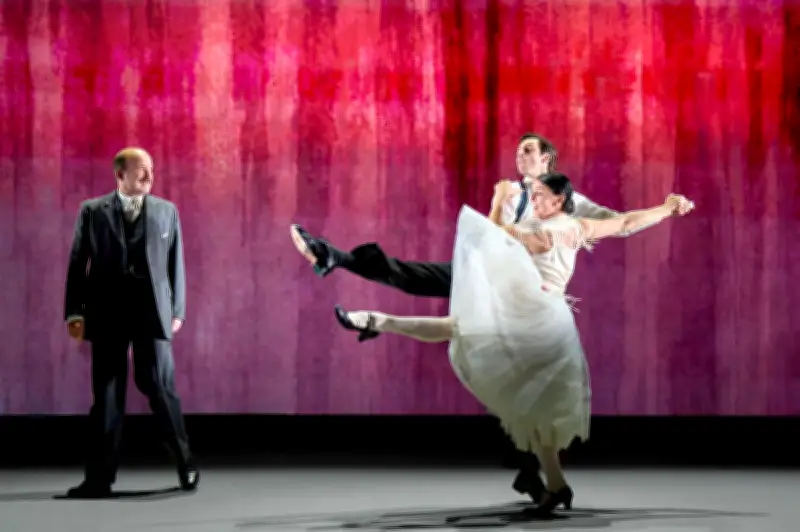
Kinnear's Keynes is magnetic though socially awkward and stiffly academic. Former Royal Ballet principal Natalia Osipova reveals ravishing comic timing, along with faultless turns and leaps in dance interludes, as Lydia Lopokova, the Russian ballerina he improbably married.
Keynes radically proposed that the UK government should borrow and invest in its own populace and defeated nations after both world wars rather than scrimp and punish. This seemingly dry-as-dust moneyman also befriended and bankrolled Virginia Woolf, Duncan Grant, Vanessa and Clive Bell and others, sleeping with most of the male members of their artistic circle, along with every sailor, gardener or diplomat who caught his eye: he even "had a bit of a flirt" with Einstein.
Keynes vs Hayek and the Bloomsbury Set
Graham puts the establishment of the welfare state, the NHS and the Arts Council broadly down to Keynes, as well as Britain's post-WWII dependence on America. Never one to present only one side of an argument, he sets him up against his admirer turned rival, the Austrian libertarian Friedrich Hayek, played by Laurie Kynaston, Margaret Thatcher's favoured economist. The debate over whether the state or the market should steer capitalism still rages today, but the play is about much more than this.
Chiefly it's about delight and imagination. Keynes learns from fey, glamorous painter Duncan Grant (Thomas Flynn) how to present his ideas as stories that will involve and enthral. Relegated to Cambridge after criticising his masters in government, he builds the Cambridge Arts Theatre solely so that Osipova can move – unwisely, it turns out - from dance into acting. When war breaks out again, he and Hayek both end up as fire-watchers on the roof of King's College, their friendship and their great battle of ideas potentially to be vaporised by an incendiary.
Dialogue, Design and a Final Appeal
The dialogue is both deftly intelligent and blissfully funny, hence the comparison with Stoppard. "We must tighten our belts!" says Hayek. "Buy a new belt!" ripostes Keynes, succinctly distilling their worldviews. Emboldened as he proposes to end 200 years of laissez-faire policy, Keynes suggests: "Why not pull down the whole of south London. Who would miss it?"
Hytner directs with his customary felicity, and Bob Crowley supplies a set of dangling oblong panels onto which street scenes and paintings are projected. These neatly recall the aphorism that the Bloomsbury group "lived in squares, painted in circles and loved in triangles". The dance sequences express the pure pleasure of making and witnessing art.
Here, as in many recent openings, performers weren't entirely sure of their words on opening night. Straitened finances across the board are clearly eating into rehearsal times. Graham's Keynes makes the case for investing in the health and wellbeing of humans, and in "culture as a public good". The production runs to 12 Dec at trh.co.uk.