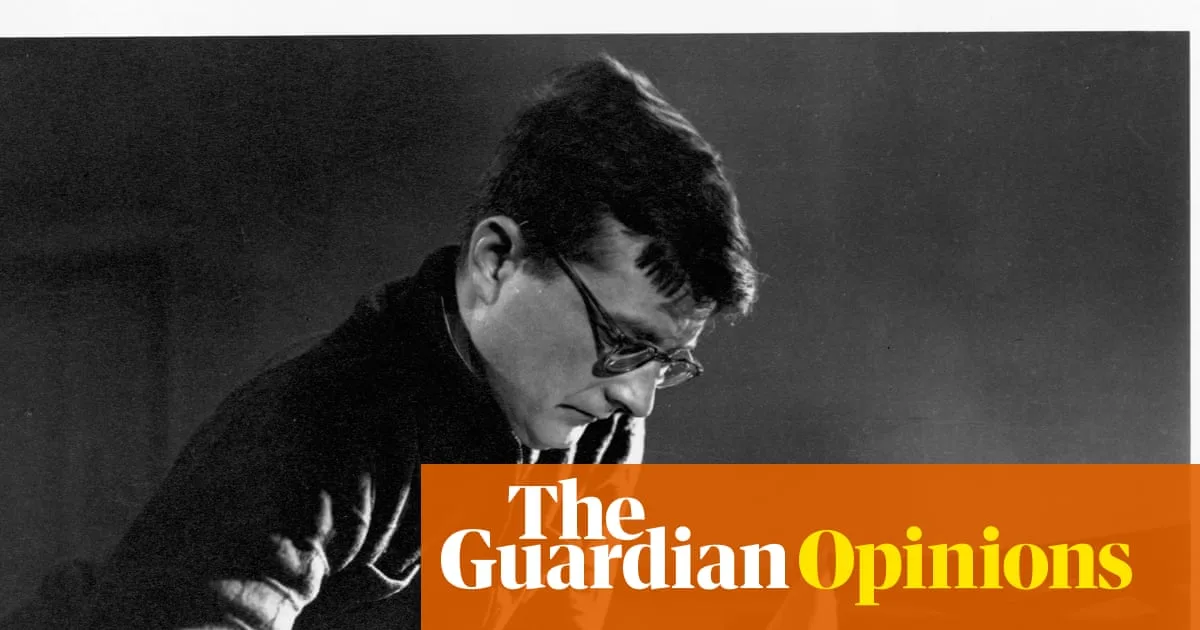
This week marks two extraordinary centenaries: Sir David Attenborough’s birthday, and the premiere of Dmitri Shostakovich’s First Symphony, first performed in Leningrad on 12 May 1926. The 19-year-old composer’s work was played by the Leningrad Philharmonic under conductor Nicolai Malko.
The symphony’s four-movement structure is its only conventional feature. Shostakovich had absorbed all the lessons of orchestral music and boldly subverted them. From the distorted trumpet call that opens the work—a dissonant question mark rather than an affirmative flourish—the first movement unfolds like a circus, with characters appearing and exiting as if pursued by a cartoon bear. The momentum continues in the second movement, where a piano part added to the orchestral texture reveals the influence of Shostakovich’s teenage work playing for silent cinema screenings.
The scherzo builds to a climax both terrifying and bathetic, as the cartoon suddenly shudders into real life. The slow movement that follows is one of the most unironically passionate Shostakovich ever wrote, with solo oboe and cello inspiring a melodic outpouring reminiscent of Shakespearean drama. The final movement brings all these worlds together, ending in a torrent of irresistible energy and pure sentiment.
This is arguably the most creatively confident first symphony by any teenager in musical history, announcing a world of possibility where conventions are gleefully overturned. Yet these are the sounds of what might have been: in Shostakovich’s later symphonies, especially from the mid-1930s, one hears the chilling of that freedom under Stalin’s terror. The confidence and joy of the First Symphony remain strikingly new a century on.