Shaun Tan, one of Australia's most celebrated picture book illustrators, is known for surreal suburban fantasy and hybrid creatures. His 2006 wordless graphic novel The Arrival won the New South Wales premier's literary award, and he received an Oscar for the film adaptation of his picture book The Lost Thing.
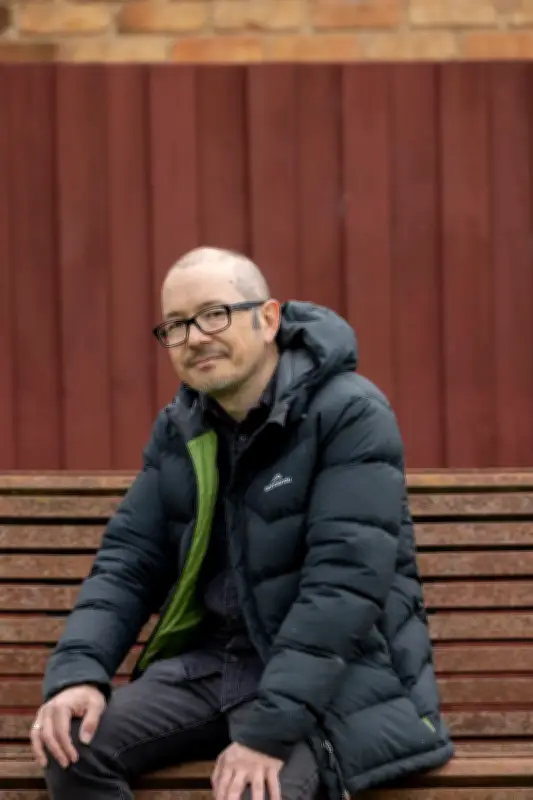
In person, Tan presents as a softly spoken middle-aged man in a puffer jacket and faded black denim jeans, far from the fantastical worlds he creates. "In my day-to-day life, I'm not creative at all," he says, walking his French bulldog Reuben in a Brunswick West dog park near his home. "But when I sit down to draw, it's like a moment to pause and question: what does all this mean? And how come I live like this and not another way?"
Existential Themes and Creative Philosophy
Tan's books often explore alienation, diaspora, and the boundary between utopia and dystopia. He believes a good painting should resonate emotionally, even with a five-year-old. "A good painting should hit you in an emotional way," he explains, sometimes testing works on his children to gauge their reactions.
Born in Perth to a Chinese Malaysian father and Australian mother, Tan developed his artistic skills at a specialist art high school in Balcatta. "I learned most of my basic artistic skills that I use today in high school," he notes, crediting his parents' encouragement rather than innate talent. He won the L Ron Hubbard Illustrators of the Future award and the Hugo award early in his career.
New Work and the Nature of Reality
His newest book, Hometown, follows a teenage girl whose normal life is disrupted by a stranger from a distant world. Tan values unresolved endings: "Sometimes I'll finish a picture and it's so resolved it's no good. Everything is landing, [but] it leaves no residual echo in your mind because it's so wrapped up."
Tan sees reality as "arbitrary," influenced by an early interest in quantum physics. Observing the park, he remarks, "Look at those trees, they're like lungs coming out of the ground. And there's all this stuff going underground. Then all these paths are like organs in the body. The world is a collective organism. It works. I don't know how, but it does."
He finds beauty in unplanned urban details, such as the backs of buildings, and describes his workspaces as "like dungeons," adding, "It doesn't bother me because I'm not in the real world when I'm painting; I'm in another world. So the window is already in front of me."