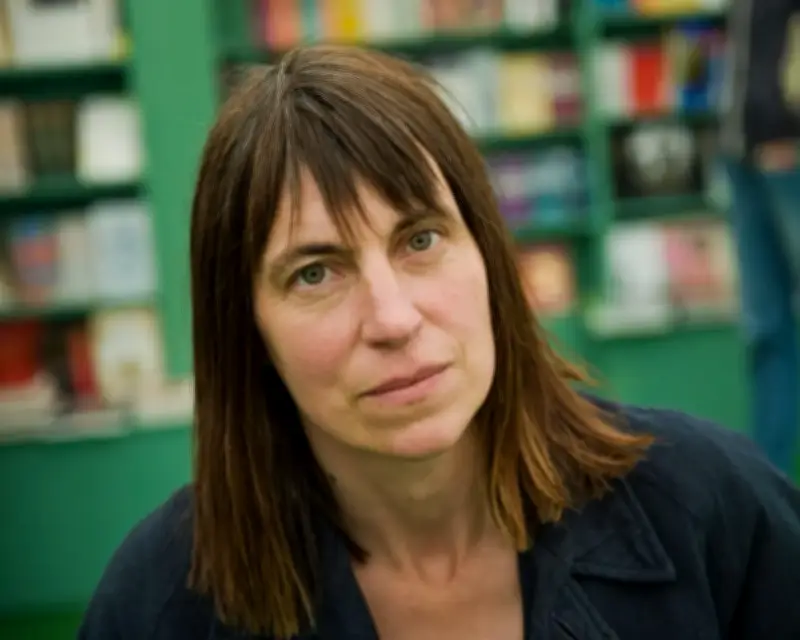
Alice Oswald's first full-length book, Rhapsody: A Manifesto, is an exploration of the oral tradition that culminates in a call to arms on behalf of the natural world. The former Oxford professor of poetry, who held the post until 2023, delivers a work that is part prose, part poetry, and part manifesto.
A genre-defying exploration
The book, billed as “genre-defying,” contains a significant amount of poetry, much of it translated or composed by Oswald herself. Shakespeare, Donne, Shelley, and Ted Hughes all feature, alongside retellings of Homer and Aeschylus. The subtitle, A Manifesto, points to the contemporary world and its pressing realities.
The opening chapter invokes Homer and the spoken word as a living phenomenon, through Oswald's encounter with a Ukrainian heart transplant recipient, references to David Bowie and Nat King Cole, Catalan folksong, and Badia Obaid, “a still-breathing Mesopotamian storyteller who was born in Baghdad.”
Revelatory lines and historical definitions
The following nine chapters take readers on a path through poetry, filled with revelatory lines such as “woodland at night, when every tree gives off an applause of frightened birds” and reflections in water as a “liquid, impermanent, unstable gift of similarity.”
The final chapter offers historical definitions of “rhapsody,” from “exalted expression” (1639) to “literary … miscellaneous or disconnected” (1764) and, by 1880, “an instrumental composition enthusiastic in character but of indefinite form.” In classical Greece, the rhapsode was the performer of oral poetry, often peripatetic.
In search of poetry's essence
Oswald is searching for moments beyond fashion, bluster, or rhetoric where poetry truly happens. She finds it in the space between two lines of Shakespeare's Sonnet 87, in the tiny breath implied by a full stop and line break. “An apparition floats up, the same shape as the original speaker's lungs,” she says.
Oswald, a virtuosic performer, understands that something takes place when an audience is present that is about more than just words. She frequently declares disdain for “scholars” and “academics,” though they are all present in 40 pages of endnotes.
A call to arms
The book's final pages turn into a call to arms on behalf of the natural world, which Oswald sees as the true source of poetry and of physical existence. Ted Hughes, whose work Oswald has edited, came to the same conclusion decades ago. The book is published by Jonathan Cape (£20).