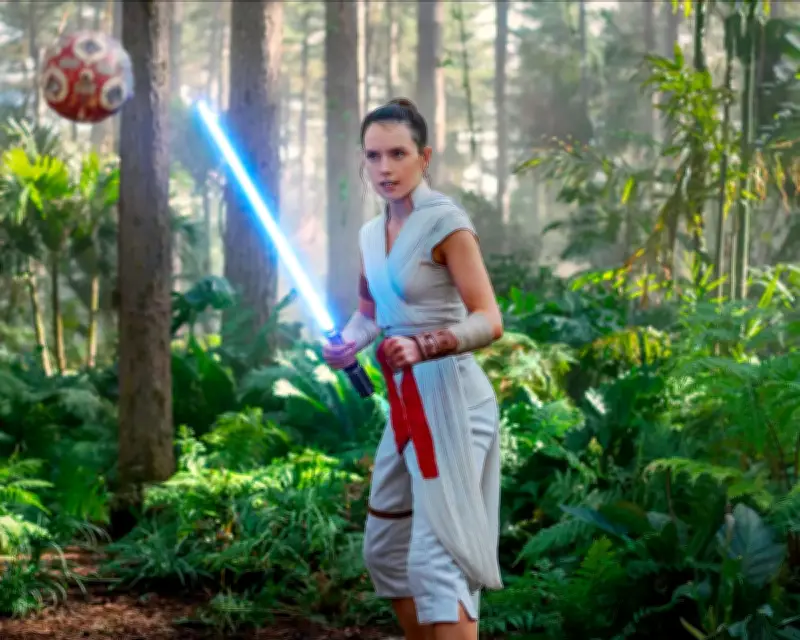
Lucasfilm has reportedly hired Jon Watts to direct the first instalment of a new trilogy continuing the Skywalker saga, written by Simon Kinberg, with Daisy Ridley reportedly being eyed to return as Rey. The films have not yet been greenlit, and there are precious few other details, but Watts does seem an inspired choice, if for no other reason than that he has previously overseen a film – Spider-Man: No Way Home – that was built around the idea that nobody in a long-running franchise needs to remain dead.
A family that defines the galaxy
The Skywalkers are a family that has moulded the entire Star Wars galaxy in their image, to the extent that nobody can really imagine the long-running space opera without them. For nearly half a century they have blown up Death Stars, built Death Stars, destroyed Jedi orders, rebuilt Jedi orders, fallen to the dark side, risen from the dark side, died heroically, come back as ghosts.
Star Wars has occasionally attempted to escape them. It has made films and TV shows about stolen Death Star plans, bounty hunters, smugglers and rebels from entirely different corners of the galaxy. Ryan Gosling will soon appear in a Star Wars movie that, as far as we know, has absolutely nothing to do with them. But they have never really gone away, and now they are back, possibly because Disney has run out of ideas for how to take the franchise forward without them.
The problem with Rey
This, surely, is the essence of the Skywalker saga. There must be someone from the history of the franchise that can be dug up and wheeled out to make us care about this thing again. Because it cannot – cannot – be Rey we are supposed to be getting excited about. For a start, she is only a member of the esteemed, Force-sensitive royal family if you accept the premise of a movie, The Rise of Skywalker, that most self-respecting fans would never sit through again.
And what even is a Skywalker at this point? Rey is a Palpatine by blood, was trained for approximately five minutes by Luke, spent considerably longer hanging around with his sister, and then simply announced at the end of the film that she had joined the clan.
Who else could return?
All of which raises an important question: if this really is the Skywalker saga continued, who else can Watts dig up from the original films? Darth Vader, Jabba the Hutt, Uncle Owen and Aunt Beru? Is Greedo still out there somewhere, primed and ready? Is Grand Moff Tarkin waiting to stride back on to the bridge of another Death Star? Is Mace Windu still clinging to a Coruscant windowsill somewhere?
The obvious answer here is that much as we love all these characters, nobody wants to see them resurrected. Because they are supposed to be dead and long gone. Star Wars is not Marvel. Luke and Leia cannot just be recast. And most of the genuinely intriguing corners of Star Wars over the past decade – Rogue One, Andor and, before it inevitably succumbed to a digitally de-aged Luke Skywalker, The Mandalorian – have been those that found ways to step outside the family melodrama.
A backward-looking idea
That is what makes the idea of a new trilogy feel so strangely backward-looking. We have already watched the Skywalkers save the galaxy, destroy the galaxy, save it again, almost destroy it again. The saga effectively ended in 1983, with Vader redeemed, Palpatine dead and Luke looking out over a galaxy apparently saved for good; then it ended all over again in 2019, when The Rise of Skywalker was sold as the conclusion to the entire nine-film story.
Perhaps that is the real challenge for Watts. No Way Home proved he could bring past heroes back with enough affection and spectacle to make audiences cheer rather than groan, but that is not the job he has been handed here. The real trick would be to convince us that some people can stay dead, other stories can simply end, and somewhere among all those star systems there may even be a family whose surname is not Skywalker.