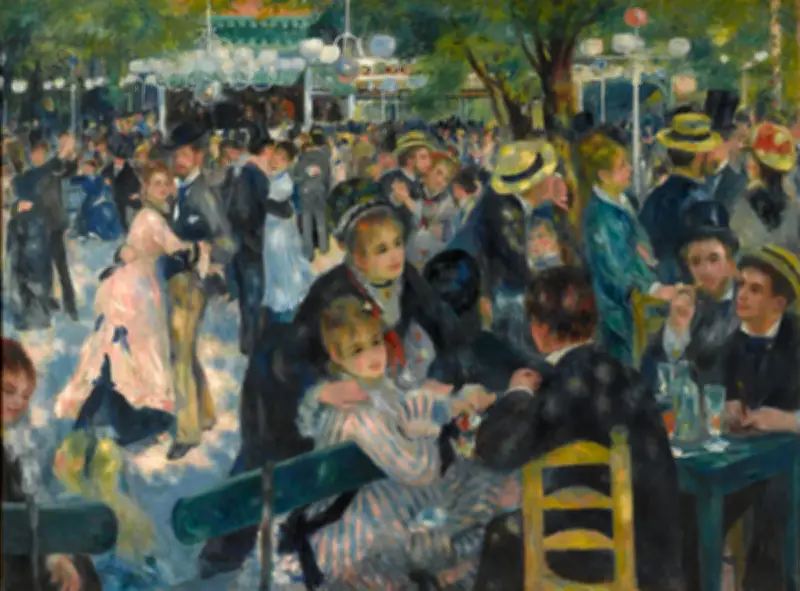
The National Gallery's Renoir and Love exhibition, opening 3 October, presents the artist as the most radical of the impressionists, celebrating life's pleasures from picnics to dances. The show features masterpieces such as Dance at the Moulin de la Galette, lent by the Musée d'Orsay, which is described as both grand as a history painting and light as a souffle.
A Celebration of Life's Joys
Pierre-Auguste Renoir, born in 1841 and living until 1919, saw the height and fall of French bourgeois civilisation whose pleasures he infectiously celebrates. His son, film director Jean Renoir, revisits his father's world with the sadness of hindsight in his screen recreation of an impressionist picnic, Partie de Campagne, where happiness is fragile. But in Pierre-Auguste's paintings, there's no punishment—nobody gets syphilis or drowns in the Seine.
The exhibition, called Renoir and Love, shows love everywhere. In Dance at Bougival, a couple brings their faces close, placing arms around each other and pirouetting in a soft, airy space, with broken clay-pipes and cigarette butts littering the ground under the dancers. Works like After the Luncheon and The Lunch at the Restaurant Fournaise capture the slow French lunch, with a woman sipping a liqueur and a man savouring a cigarette.
Radical Impressionism
Impressionism started as a pejorative label for a loose group of artists in 1870s France who tried to capture modern life in motion. Renoir most enthusiastically embraces this as a philosophy of life itself, urging viewers to live in the changing light of the passing moment. The exhibition also includes The Skiff, where curators cite a story by Maupassant to suggest a possible lesbian scene, and Place Clichy, a cinematic close-up of a woman in a furry coat.
Renoir is also a storyteller, with almost every lunch, rowing party and stroll in the park feeling like a languid set-up for what follows. The Promenade, painted in 1876, recreates 18th-century love scenes as a man leads a woman into the bushes. The National Gallery acknowledges Renoir's later anti-impressionist work with The Great Bathers, but it's the early Renoir who shines as a truly great modern artist.