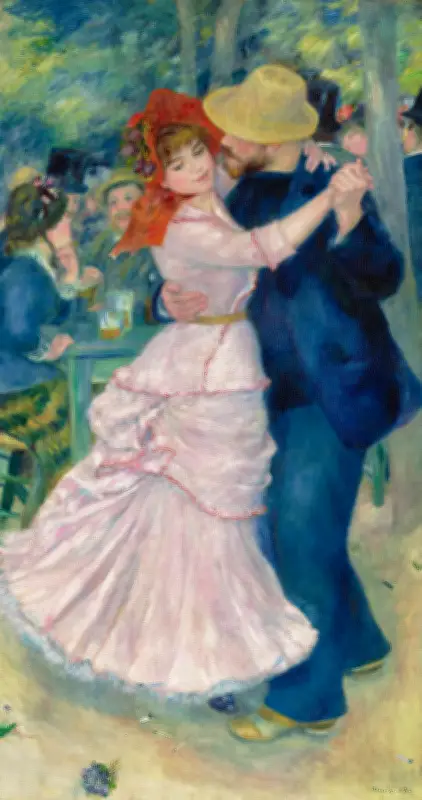
The National Gallery in London opens Renoir and Love from 3 October until 31 January, an immaculate exhibition of the impressionist's joyful and sumptuous yet realist and raw paintings.
90s Brit Art and Fashion at Tate Britain
The Tate Britain in London presents The 90s: Art and Fashion from 8 October until 14 February, a fresh look at the fin de siècle decade that puts fashion alongside art to revisit when Britannia thought it was cool.
Aphrodite and Other Exhibitions
The Ashmolean Museum in Oxford shows Aphrodite: The Making of a Goddess from 8 October until 11 April, with the ancient goddess of love and desire, often known by her Latin name Venus, returning on her shell in works by Botticelli, Michelangelo Pistoletto and more.
Modern Art Oxford presents Mike Nelson's Double Negative (The Clown) from 3 October until 11 April, another soul-harrowing installation by the sculptor of urban labyrinths.
The Royal Academy in London runs Painting the French Riviera until 31 January, with masterpieces by Cézanne, Picasso and Matisse, though it is described as a weary slog with the beach miles away.
Image of the Week and Art News
David Hockney's Dog Painting 17 from 1995, featuring his adored dachshund Stanley, is estimated at £1.5m-£2.5m. It will be sold at auction on 14 October during the Frieze art fair, but can be seen for free at Christie's in London from Thursday.
Other art news includes a row over a Cairo mural depicting Tutankhamun with dark skin, and a Van Gogh going up for grabs alongside a Cézanne and a Monet as an 'almost mythical' private collection goes on sale.
Masterpiece of the Week
The masterpiece of the week is Fête Galante by Jean-Baptiste Pater, probably about 1721-5, at the National Gallery in London. People picnic on the grass in a woody parkland given extra mystery by classical sculptures and urns, with a view through the trees revealing ordinary rural buildings rather than a great house. This is the ambiguous pleasure-world of the fête galante, a genre invented by Pater's teacher Antoine Watteau, in which lovers dance and talk and sometimes go off together into the woods in an enigmatic, timeless and softly brushed fantasy realm. Pater is not as poetic as Watteau, but the idea is clear in this typical example: women in silk dresses that catch the light and men in archaic, Renaissance-style costumes escape the cares of the city to gather and celebrate love in the clearing under gentle, feathery trees. Renoir revives this suggestive yet delicate genre in the more material and solid setting of 19th-century Paris in his impressionist paintings.