The Northumberland town of Prudhoe has origins dating back to ancient times, with several different tales of how its name came to be. The town, located within the Tyne Valley, is often mispronounced by those outside the area.
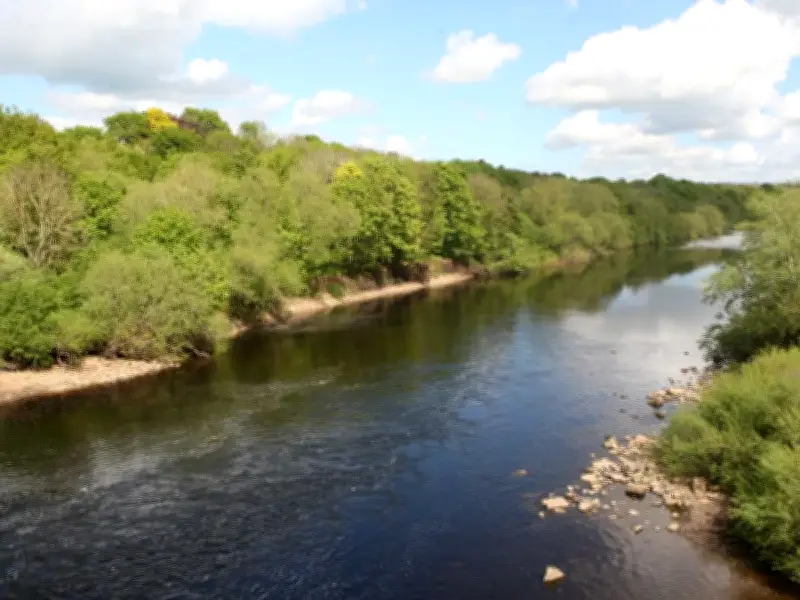
Prudhoe lies 11 miles west of Newcastle on the south bank of the River Tyne, sitting on a steep north-facing hill. Locals pronounce the name as "Prud-ah" or "Prudd-er", rhyming with "Udder", in two syllables, with the ending compressed into a soft schwa sound. Those unfamiliar with the place sometimes pronounce it "Prud-hoe", rhyming with "toe".
TV show sparks pronunciation uproar
In July 2022, Come Dine with Me narrator Dave Lamb caused a stir among Geordie viewers by repeatedly referring to the town as "Prood-hoe". Lamb exaggerated the 'u' as 'ooo', calling it "Proo-doh", in stark contrast to how residents say it.
Ancient documents show the town's name has been written in a variety of ways, including 'Proudo', 'Pruddo', 'Proudehowe' and 'Prudho'. It is thought the name derives from the Anglo-Saxon personal name Prud, from prūd meaning 'proud', and hoe or haugh meaning 'a spur of land'. This is believed to be because of the position of the castle commanding above the river.
Castle history and other name theories
The Norman castle was built in the late 11th century and originally owned by the d'Umfraville family. The medieval fortress was for a long time involved in the border between Scotland and England and is famous for being the only one to withstand attacks by the Scottish army. Later additions were added in the 14th and 15th centuries, with the majority of the surviving building work dating from the 12th century.
A legend of an underground secret passage is said to link Prudhoe with Bywell Castle, three miles away, though no archaeological evidence of such has been found. Others suggest the name Prudhoe derived from an ancient settler, Prudha, with the Old English meaning being Prudha's place or Prudha's ridge.
By the 18th century, Prudhoe was established as a small hamlet of farms, and towards the late 1800s a coal mine was running in West Wylam. There is still evidence of the old coal mine today, signified by a miner's cart when driving into Castlefields up Cockshot Dean.