The latest collections from five poets are reviewed, spanning punk-inflected satire, migration and inheritance, village life, Black Atlantic identity and geopolitical witness.
John Cooper Clarke: Have It
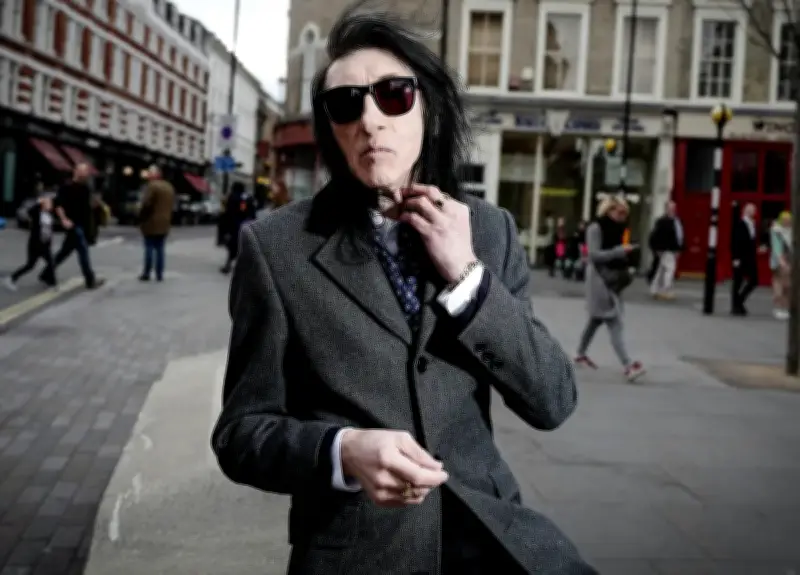
John Cooper Clarke's latest collection, Have It (Picador, £16.99), displays his characteristic swagger, delivered with a distinctively northern humour. Merging blistering social satire and brash wit, Cooper Clarke irreverently tackles themes from the ridiculous to the sublime, including the malaise of contemporary urban life, the erosion of nature, money and a cashless society, death and ageing, fascism, bachelorhood, popular culture and the NHS.
His punk rock values caustically underpin the collection: “Me and my shrinking crowd / Each under our own personal cloud”; “We wish you no serious harm / However, everybody sucks but us”. Heavy use of doggerel and jokes accompanies his strident proclamation of his passion for writing: “It’s a meaningless job but someone’s got to do it / Thank God it’s me”.
Mary Mulholland: The Dodo Stories
Mary Mulholland's compelling debut, The Dodo Stories (Nine Arches, £11.99), explores complex questions of inheritance, migration and colonialism. She delves into personal and public archives, memory, dreams and the unconscious to uncover family histories stretching back to her great grandparents and the silenced stories of Portuguese indenture to the Caribbean.
Her descriptions of wildlife and landscapes are skilfully rendered: “the three-night flower smells of pineapple and banana, scarab beetles hurry to the feast and stay like lovers”; “purpleheart, greenheart, spiny fiddleheart, and palms that walk by themselves, shift-shape”. At the heart of the book is a moving tribute to her “exotic morpho mother”, the eponymous Dodo, and a desire for healing from intergenerational trauma.
Ian McMillan: Red River Valley
Ian McMillan's latest, Red River Valley (Carcanet, £12.99), is inspired by his family life, living in a village near Barnsley as a poet and broadcaster. These clear, accessible poems blend the surreal with the quotidian, as in the opening poem, Sudden Memory of My Dad Wearing Shorts, which reimagines his father singing his favourite song, “Red River Valley”.
The book explores encounters with people and familiar places such as the barber's, a cricket club, a train station, the motorway and a bookshop. McMillan often engages in wry commentary on societal inequalities and austerity in Britain, finding solace and the possibility of transformation in the everyday: “It’s moments like this when all the stars align. / Evening games in winter; a touch of the sublime”.
Roger Robinson: Some Sacred Harbour
Roger Robinson's Some Sacred Harbour: New and Selected Poems (Bloomsbury, £12.99) is a testament to a lifetime's work from the prize-winning poet, educator, performer and musician. The title piece is an artistic manifesto on survival and the vital importance of creativity in society, described as “creating a platform where sacred stories – the moments that define a life and its joys, traumatic hurts and recoveries – could be told. Something about bringing the margins to the centre”.
These exquisitely crafted and dextrously lyrical poems centre around Black Atlantic and Black British identity, grief, migration, racial tragedies and injustices, family and music. Robinson emphasises a shared communal consciousness: “praise for these moments of quick recognition, / miracles of synchronicity and signalled kinship”.
Carolyn Forché: Otherwhere
Carolyn Forché's Otherwhere: New and Selected Poems, 1976-2026 (Bloodaxe, £14.99) is a landmark retrospective spanning five collections across five decades. The volume opens with an eloquent preface, Older Than Glass, Younger Than Music, which delineates her poetics. Her work merges poems of personal intimacy with geopolitical realities, distinguishing her as a “poet of witness”.
War, displacement and genocide are juxtaposed with elegiac meditations: “The word for wind is, in another language, the word for soul”. The collection includes a new sequence, If There is Ink, addressing contemporary global crises. The title poem focuses on the 2022 Russian invasion of Ukraine and questions the limits of language: “if there is something to write that would raise the cities / from the ruins the apartment blocks hospitals schools / that would put the cities back as they were / I would give everything to fill this pen with it”.