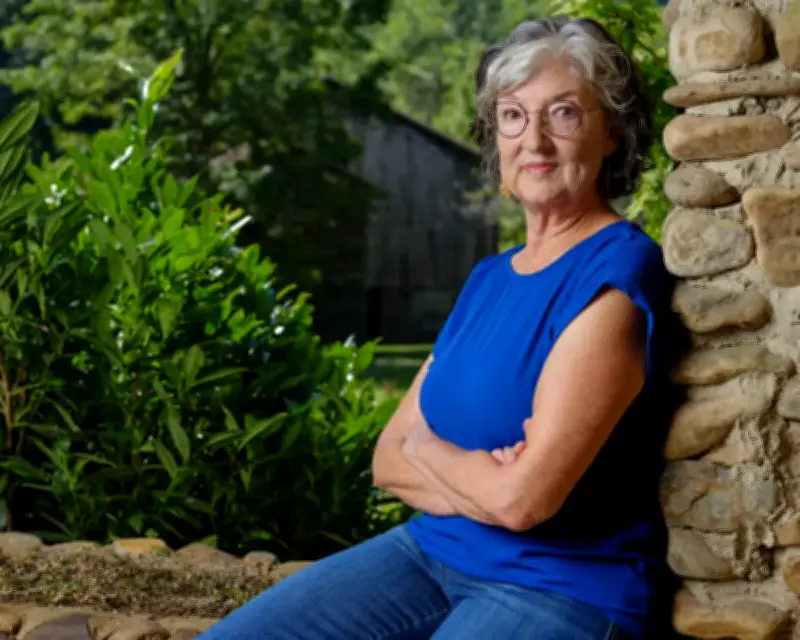
Barbara Kingsolver's new novel Partita follows Livia, a piano prodigy turned school music teacher in rural Tennessee, as she confronts her past after a phone call from Sigurd, a man she had a destructive love affair with at college. The novel shifts between the present and Livia's youth, including her brother's suicide when she was 11 and her escape on a music scholarship to Indiana. Her dreams of becoming a world-class pianist were shattered by an accident that damaged her hand, and Sigurd played a part in this.
Two timeframes, two visions of music and love
The present-day Livia appears content as an inspirational local music teacher, but the 20-year-old Livia would have considered such a life a failure. Her current relationship offers sex as comfort, yet she still relies on memories of sex with Sigurd, which she describes in musical terms: “harmonic tension, dynamic tension, oh my dear lord, the rubato, his movements slowing, slowing, robbing me of the truth of the beat until I begged for justice … Sometimes we both shed tears.”
The breathless, overwrought prose of these passages threatens to throw the novel off-kilter, but Kingsolver commits to her protagonists' language more fervently than most novelists. Livia's voice is more literary than Demon's in Demon Copperhead, making it harder to distinguish from Kingsolver's own, but sentences such as “this wasn't proper by a long shot: fingers craving to know the sandpaper of his jaw” are surely Livia's, showing she is carried away by memories of the erotic apex of her life.
Music as a vehicle for grief and growth
Livia's voice is subtler when it comes to music. Kingsolver, who herself studied classical piano on a music scholarship at college, is fascinated by how to write about music. Injured and learning to play again, Livia tries Chopin's B minor Prelude, slowly and tentatively, and finds her own sadness reflected and transformed: “The sadness is all in the melody line the left hand keeps bringing up from below, a slow arpeggio trying to climb up out of the dark, but after a few notes of rising, it falls back down … It's the God's honest truth of grief. It doesn't resolve.”
Livia comes to understand that a piece of music can enrich the performer and her audience even if the performance might be judged second-rate. Kingsolver, a committed social novelist who has set up a prize to honour the socially engaged novel, offers Partita as a testament to the need for art in ordinary communities and the need for ordinariness in art. This means communities must put aside suspicions about artistic elitism and honour the talents of artists in their midst by sending them away to study if necessary.
Livia says early on that when you have a gift, “it feels like there's a rule that you have to keep doing it. Not just that you owe it to yourself, you owe it to the world. Maybe to God. As payback on the borrowed gift.” Her sister-in-law, a gifted scholar of literature now happy to teach English, helps her see that “the point of art is to help you like your life better” and that this can mean being a local piano teacher rather than an international soloist. “This was all I needed, back then,” Livia thinks sadly, “Somebody to tell me this.”
Partita is a quieter book than Demon Copperhead, slower to get going and to make its world enticing, but it is a rich novel that opens up a dialogue with the reader long after finishing. Kingsolver does not make light of what Livia has lost, and so she is all the more convincing in her insistence that there is as much to be gained in the compromises of middle age, and that artists may be following their calling most fully when they find ways to make their art part of a vibrant, loving collective life within communities.