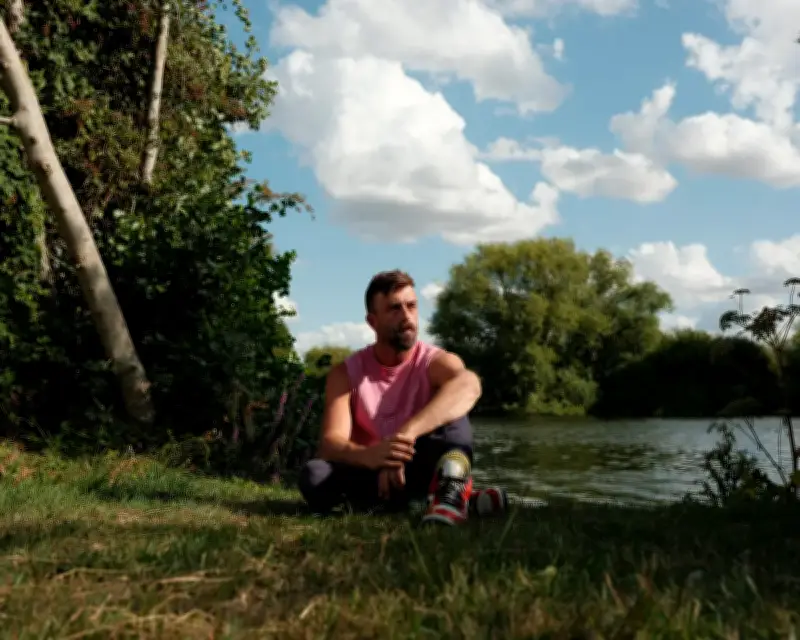
Nick Hayes, artist, writer and co-founder of the Right to Roam campaign, has lived on a barge on the Thames in South Oxfordshire and become the artist-in-residence at the Hardwick estate. He has witnessed the estate being gradually turned into a charity that will be run by the tenants and the alternative community that has grown up in its shelter. This peaceful revolution is the subject of his new book, The Medicine Tree.
A peaceful revolution at Toad Hall
The Hardwick estate has been owned by the Rose family for generations. Sir Charles Rose, a banker, sportsman, yachtsman and aviator, inspired Kenneth Grahame to create Mr Toad in The Wind in the Willows. Now, the heirs are, in effect, disinheriting themselves, and the estate is set to become England's first community-owned estate.
Dispossession and land culture
Hayes argues that English people have been dispossessed, losing community and ecology. He cites epidemics of loneliness and one in six species going extinct as signs that England is in desperate need of repair. He attributes the loss of land culture to a steady process over 2,000 years, including Christianity taking away animism and the loss of myth and folklore through enclosure and industrial revolutions.
Restorying the landscape
Inspired by poet and storyteller Hugh Lupton's idea of "restorying the landscape," Hayes uses a local tree, a hybrid of a black poplar and an eastern cottonwood, as a symbol. He notes that in both Indigenous and old European societies, the poplar stood for community.
Hayes grew up near Pangbourne in the 80s and 90s. He describes the Thames as having sewage discharged into it by privatised water companies and notes that a local privately owned toll bridge causes traffic jams as motorists queue to pay 60p to cross. He estimates the bridge enriches the company by more than £1m each year.
The Right to Roam campaign
In 2020, Hayes and Guy Shrubsole founded the Right to Roam campaign, seeking responsible access to the 92% of land in England and Wales from which people are excluded. The campaign has held more than 15 peaceful mass trespasses and defended attempts to restrict access by major landowners.
Hayes's community at Hardwick includes around 90 tenants. In The Medicine Tree, members are named only after their occupations, such as the Dyer, the Head Grower, and the Heiress. Hayes says he wanted to lean into the whole story as a fairytale, a folk-tale.
Hayes opposes "unfair or pointless rules" and points to a sign warning "Danger! Adders in this area" as a trophy that ornaments his boat, suggesting its purpose is to keep people out of the land rather than warn of adders. He also tells of his community's attempts to stop the eviction of the Carver and his family, saying that eviction is not just an action against one family but against a community.
On how to reforge a culture of connection with the land, Hayes suggests more land rights and more time on the land. "Put people together with a certain amount of freedom, rights and responsibilities – work, duties, stuff to do on the land. People are going to start talking. People are going to start singing."