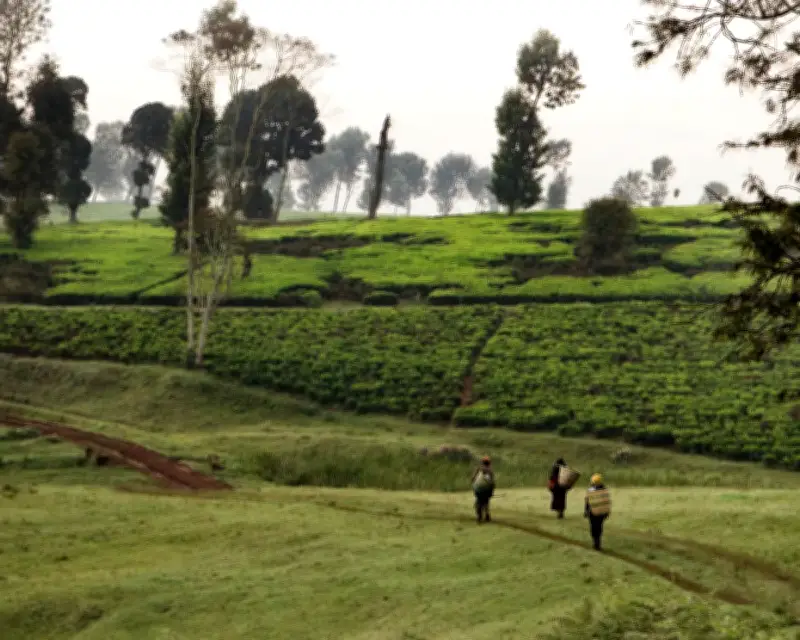
Kikuyu Land, a documentary directed by Kenyan film-maker Bea Wangondu and her American counterpart Andrew H Brown, explores the fight for restitution of ancestral land in Kenya's highlands, much of which remains occupied by multinational tea companies and large corporations. The film is released in the UK on Friday.
Colonial legacy and displacement
During the British colonial era, the fertile uplands of central Kenya were designated the “White Highlands”, reserved exclusively for European settlers. Local communities were forcibly displaced, and their land was converted into plantations for tea and other crops. In recent decades, descendants of the displaced have fought to reclaim their ancestral land.
“Colonial structures didn’t just shape land and labour in Kenya. They created patterns of power that thrive today globally,” said Brown. “This isn’t just a Kenyan story. This could be told sadly in almost every part of the world.”
Land redistribution and its limits
In 1902, under Sir Charles Eliot, then commissioner of the East Africa Protectorate, a law was passed making vast tracts of fertile ancestral land “Crown land”, allowing the government to sell and lease land to white settlers, ignoring African communal land ownership systems. This policy led to the violent displacement of local communities to marginalised, crowded “native reserves”.
In 1962, a year before independence, the colonial administration initiated a redistribution programme to transfer farms in the highlands from departing white settlers to landless Kenyans. By the time it ended in 1971, about 1.15m acres of land had been bought from 780 white farmers and sold to approximately 35,000 Kenyan families. However, much of the land remained with the political elite and foreign corporate interests, including companies with huge plantations.
Personal journeys and wider investigation
The film follows Wangondu’s search for answers about her family’s land, interspersed with a wider investigation into tea plantations and the story of Mungai, a man fighting to reclaim his family’s ancestral land. “They raped our country, they displaced us, they took our land and they did the unfairness they did to us,” Mungai tells Wangondu in the film.
In one scene, Mungai crouches under a tree and grieves after his aunt shows him a spot, now inside the fence of the tea farm whose land his family is claiming, where their patriarch was buried. Kenya was under British rule from 1895 to 1963, first as a protectorate then as a colony, a period marked by racial discrimination, forced displacement and labour, and brutal suppression of resistance.
Members of the Kipsigis and Talai communities have made calls for redress in recent years over the violent eviction of their ancestors from their lands in the Rift Valley to make way for tea plantations owned by white settlers. In 2021, UN special rapporteurs expressed concern about the British government’s failure to provide “effective remedies and reparations” to the two communities.
Festival screenings and release
Kikuyu Land premiered at the Sundance film festival in the US in January and had its UK festival premiere in June at the Sheffield DocFest. It will screen at the NBO film festival in Nairobi in October. Joseph Njenga, one of its producers, said hearing stories while making the film of people who suffered pain and atrocities caused by the colonial administration had left an emotional imprint. “My head could not contextualise and process the pain that was brought upon us – and for no reason,” he said. Kikuyu Land is in UK cinemas from 2 October.