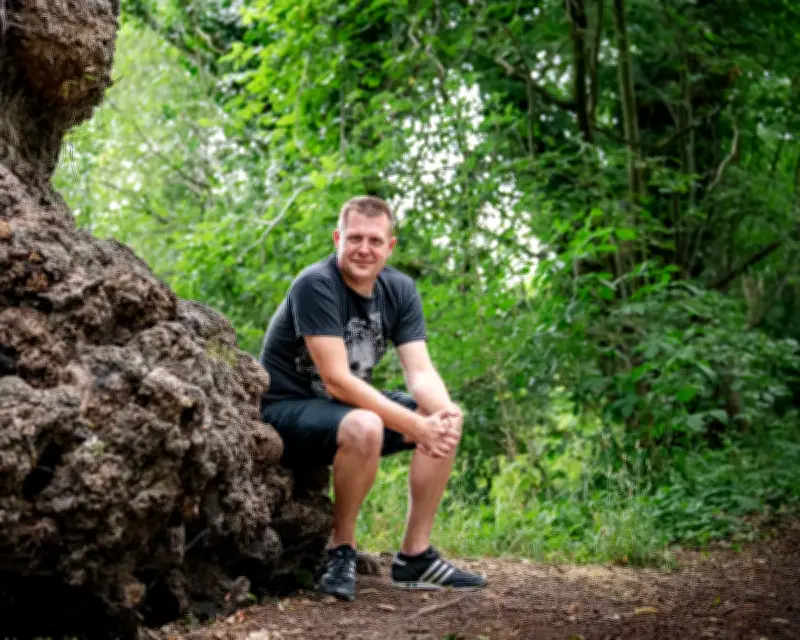
Joe Harkness, the writer, teacher and naturalist whose work explored how nature can help neurodivergent minds, has died aged 39. His first book, Bird Therapy (2018), told the story of his own breakdown, near-suicide and recovery through birdwatching near his home in rural Norfolk. The book was a notable success from a new generation of authors who found readers online and crowdfunded their publication via Unbound.
Bird Therapy and its impact
Readers responded to Harkness's honesty and practical advice. In the book, he wrote: "In that moment, watching the flock of finches, I was allowing myself to become lost and absorbed in the sights in front of me." He described how being outside, observing birds, slowed his breathing and closed his mind to repetitive thoughts. "I was losing myself in birds, in a positive way," he wrote.
The book's success in the UK led to translations into five languages. Harkness was told by readers that they owed their life to him. Bill Bailey donated £1,000 to the crowdfunding campaign, and Chris Packham wrote a foreword predicting the book would save lives. It was also endorsed by Stephen Fry and novelist Melissa Harrison, who called his writing "inclusive, unpretentious and evangelical in the best way".
Neurodivergency and nature
Following the book's success, Harkness continued his day job teaching pupils with significant learning disabilities. In 2025, he published Neurodivergent, By Nature, a deeply researched exploration of neurodivergency and the natural world, sparked by a belated diagnosis of attention deficit hyperactivity disorder (ADHD). The book was also inspired by a new obsession with moths, in which he rapidly surpassed his naturalist friends in identifying obscure micro-moths.
The book featured interviews with neurodivergent conservationists and was a plea for embracing neurodivergency to restore biodiversity. It was shortlisted for the East Anglian Book Awards and the 2026 Wainwright prize for conservation writing. Harkness, a devoted father who continued to wrestle with depression, took his own life two weeks before the prize ceremony.
Early life and career
Born in King's Lynn, Norfolk, Harkness was raised from age four by his single working mother, who worked as an administrator. He credited his maternal grandad's quiet passion for the natural world with his later rediscovery of it. His mother described him as a young boy as "very talkative, very bright, very intelligent, very inquisitive, had boundless energy, a keen eye for detail, loved nature, and was very good at reading, especially the Argos catalogue".
Harkness called himself "a proper nightmare" at school, but reflected on the obviousness of his ADHD behaviours and the failure of school and health professionals in the early 2000s to offer a diagnosis. He wrote: "I just flew under the radar, like so many other children in my generation." During his teenage years, he self-medicated with drugs, which he later said contributed to his chronic anxiety. He dropped out of sixth form and did not pursue further education.
In his 20s, Harkness drank heavily and took drugs, but built a career as a development worker for the Prince's Trust and a support worker at Mencap. In 2013, he was stopped from a suicide attempt, had a breakdown, and took three weeks off work. During a country walk with Emma, his future wife, he saw a pair of common buzzards displaying over a tree-line. The buzzards became a gateway into birdwatching. He quit all drink and illegal drugs permanently.
Teaching and legacy
Harkness began teaching teenagers excluded from mainstream education and attracted a following on his Bird Therapy blog and Twitter. When a follower suggested he publish the blog as a book via Unbound, the publisher wanted him to raise £18,500. "It really scared me," he later said. The sum was raised in five weeks.
Despite the book's success, Harkness found the nature writing world disillusioning, describing fellow writers as competitive and self-obsessed. Social media contributed to growing anxiety. "The more open I was on social media, the less people engaged with me. If you're already struggling with self-esteem, it is hell to be on it," he said in 2020. He closed his accounts.
He was more comfortable devoting time to his family and his work as a special needs teacher at Cromer academy and later as senior teacher at Parkside, Norwich, where he worked with pupils with autism, ADHD, Down's syndrome and learning disabilities. In 2023 he wrote Inside/Outside, a teachers' nature-themed resource book for promoting emotional literacy. His pupils found him warm, inclusive, enthusiastic, empathic and a lover of bad jokes. He made a point of talking about mental health with his students every day.
A mental health nurse at work once asked Harkness if he had considered he might have ADHD. It took more than three years to obtain a formal diagnosis, in 2022. When it came, it was a relief. "The whole idea completes me," he wrote. It enabled him to access drug treatment and set him on the path to write Neurodivergent, By Nature.
Before his death, Harkness had just finished an extensively revised edition of Bird Therapy, due to be published by Bloomsbury next year. He is survived by Emma and their two daughters. Joe Harkness was born on 23 December 1986 and died on 4 September 2026.