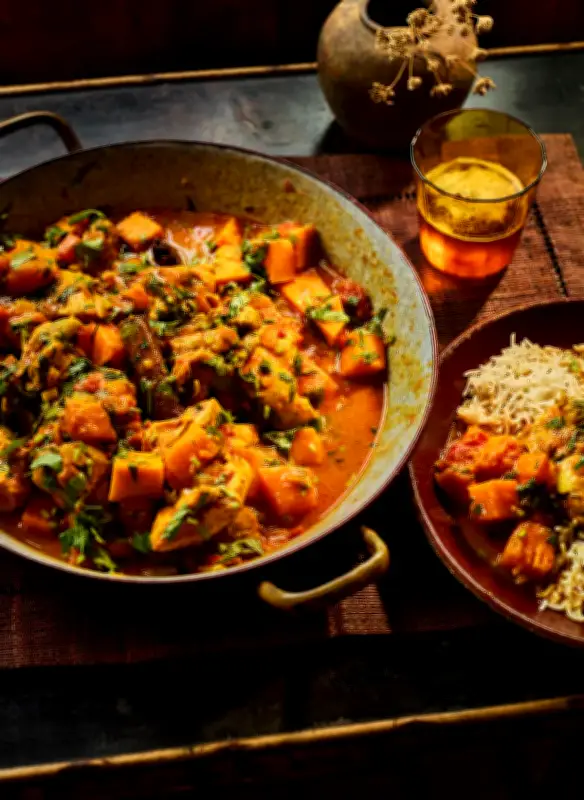
From a Malaysian chicken and squash curry to a Caribbean curry crab, these four recipes showcase the diversity of curry across the globe. Each dish brings its own regional twist, from the aromatic spices of Malaysia to the rich, comforting flavors of Japan.
Malaysian Chicken and Squash Curry
Mandy Yin's chicken and squash curry is a testament to the importance of curry in Malaysian cuisine. Curry is ubiquitous in Malaysia, found in every kitchen and at every food stall, regardless of whether they are run by Malays, Chinese, or Indians. Typically, curries are made using a wet spice paste (rempah) from the morning market or a good curry powder, with every household keeping a pack of Adabi or Baba's as a fallback. Building a rempah from scratch is reserved for when you have time or are cooking to impress.
Yin's favorite curries come from the Mamak Tamil Muslim cooks behind Malaysia's all-night kopitiams, who make the best roti canai. She recommends pairing the roti with meat curries and teh tarik, a strong black tea sweetened with condensed milk and pulled until frothy. In her cookbook Simply Malaysian, she included her take on Dad's Mamak lamb and potato curry, which starts with a whole leg, boned and trimmed by hand, with a heavy hand of curry powder and the aromatics Malaysians call empat sekawan (the four friends): star anise, cassia, cloves, and cardamom. Here, she swaps the lamb for bone-in chicken thighs, which are cheaper and quicker, and the potatoes for butternut squash, a staple in Malay cooking that holds its shape and absorbs the sauce.
In Malaysia, meat is cooked in the curry it will be served in, not seared or simmered separately, so the two season each other throughout. Cooking on the bone gives a richer, glossier sauce. The curry tastes even better the next day; if not eating immediately, reduce the cooking time in the penultimate step to 10 minutes. Leftover sauce with rice and a fried egg is one of life's simple pleasures.
Caribbean Curry Crab with Roasted Corn and Dumplings
Keshia Sakarah's curry crab, roasted corn, and cassava dumplings highlight the Caribbean's relationship with curry. While curry may not be the first thing associated with the Caribbean, many dishes incorporate spices introduced by indentured labourers from the Indian subcontinent. Their use of spices transformed the cuisine, using ground spices to flavour slow-cooked meat and fish or toasting whole ones in oil to finish vegetables.
Sakarah's travels across the Caribbean inspired this dish. In Guadeloupe, she tried colombo, a classic French Caribbean curry with toasted, ground rice and lime juice, more acidic and paler than anglophone island curries. In Trinidad, curry is a staple, found in homes and roti shops, with some of the best in central Trinidad where Indian communities have settled for generations.
The recipe includes cassava dumplings, a green seasoning blend, and a curry base with roasted corn and coconut milk. The dumplings are made from cassava flour and plain flour, rested, then boiled before being simmered in the curry. The curry is blitzed smooth, then finished with crab meat and grilled corn.
Japanese Garlic Mushroom Curry Doria
Tim Anderson's garlic mushroom curry doria, or yaki-curry, is a baked rice gratin. It features Japanese short-grain rice smothered in smooth Japanese curry sauce, topped with molten cheese, making it a masterclass in comfort cookery. The format is versatile, working with any vegetables or protein, but Anderson leans into heartiness with mushrooms, greens, garlic, and butter, inspired by old-school baked mushroom starters.
The dish is prepared by packing cooked rice into a baking dish, sautéing mushrooms and greens with garlic, then making a curry sauce from a roux packet. The sauce is poured over the mushrooms and rice, topped with a blend of mozzarella, cheddar, and Emmental, and baked until browned. It's garnished with parsley and a crunchy onion product like crisps or fried shallots.
Rajasthani Papad Ki Sabji
Maunika Gowardhan's Rajasthani papad ki sabji is a staple in homes across north-west India. Made with turmeric, coriander, and fenugreek in a rich gravy simmered with cooked papad (poppadum), it's often served in a Rajasthani thali or as a weekday curry with plain rice. The yoghurt in the curry adds cooling richness, and while the papad is traditionally deep-fried, Gowardhan's recipe uses roasted papads, which can be done in the microwave in seconds, lending charred edges that add flavour.
The recipe involves blending garlic, ginger, and green chilli into a paste, cooking it with tomatoes and spices, then adding whisked Greek yoghurt and water to create a gravy. Roasted papads are added at the end with dried fenugreek leaves, and the dish is garnished with fresh coriander. It's a robust, hearty curry that reflects the ingredients and climate of Rajasthan.