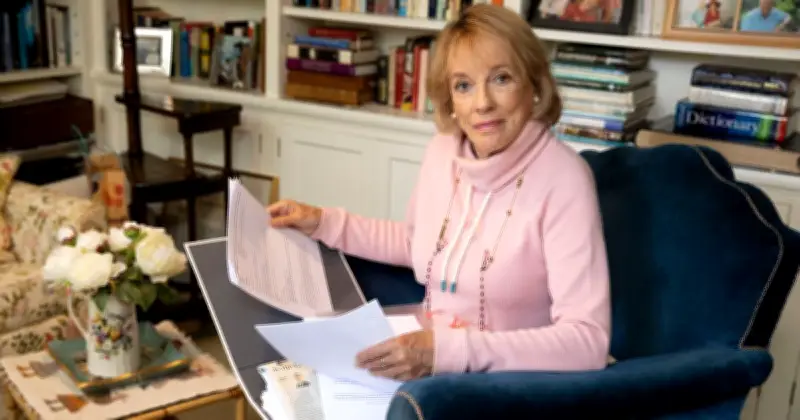
Very few people have been able to capture the zeitgeist over so many decades quite like Dame Esther Rantzen. We met on numerous occasions over the years and, on one of the first, I distinctly remember being scolded for calling her a national treasure.
“National treasure”, she barked, “that makes me sound like some dusty old antique that belongs in a stately home somewhere – and I can assure you there’s plenty of life left in me yet, young man”. It was a mistake I never made again during our 15-year friendship.
A perfectionist with a warm heart
Esther’s warmth, energy, smile, and propensity to champion unfashionable causes, were infectious and well-known but despite her sunny demeanour and huge optimism, she was certainly no pushover. Angry? Never. Pushy? Sometimes. A perfectionist? Always.
Many was the time I would call her up with an idea or in forlorn hope of securing her backing for some hare-brained scheme, only to be met with “Now, Giles, have you really thought this through?” It always felt like a blow to the solar plexus, but delivered with a smile. But that was the magnificence of Esther. She got things instantly and, to paraphrase her children: “Hell hath no fury like Esther being told no.”
Grieving Desi and the birth of The Silver Line
It always struck me as deeply ironic that despite moving mountains to try and combat loneliness among older people, perhaps the cause she cherished most, she continued to grieve the loss of her beloved husband Desmond Wilcox, saying: "I miss my Desi so very much." It was his death in 2000 that inspired her to set up The Silver Line, a 24-hour helpline for older people and it was in his memory that she continued to try and make the world a better place, saying, with a beaming smile: "Not a day goes by when I don't think of Desi."
It was perhaps why, during the grip of Covid, Esther upped sticks from north London to the New Forest, Hampshire, and hunkered down in the beautiful bolthole they once shared as she lived out her final years.
A haven in the New Forest
Inside, her walls were peppered with nods to her glory days, framed front covers of Radio Times from her days fronting That's Life!, pictures of her children and grandchildren, trinkets and treasures from a lifetime rubbing shoulders with the great and the good. It was an oasis of calm away from the maddening world she inhabited and loved being the maelstrom of creativity within.
Surrounded by unspoilt beauty, lush fields, ponies, and a lovingly tendered wild flower garden, Esther rejoiced in the boisterous arrival of her five grandchildren and relished moments of quiet contemplation. I was lucky enough to visit her in Hampshire shortly before she went public with her cancer diagnosis. Naturally, she gave nothing away. She was always attentive, unfailingly forthright and, dare I say, partial to one or two blue jokes, occasionally and deliciously untactful, and a bit of a gossip to boot, all strictly off the record though.
Even into her eighties
Even into her eighties, her days were ones of early starts and late nights, beavering away, answering phone calls and ensuring those who had the devil’s work delegated to them knew what to do and by when. She loved being the mother hen and getting the best out of people. In a different world Esther could have made a fantastic poker player, her bright smile hiding a multitude of worries.
But in a rare moment when her guard was down, and over a cuppa, she told me: "When times are tough I get my head down and just plough on, but it's the happy days I find the hardest. Mother's Day was absolutely wonderful... but Desi wasn't there and he should have been. It was a lovely spring afternoon, the sun was shining and he would have been so proud of his children and grandson. He had such a capacity for kindness and loved spending time with his family."
Esther married documentary maker Desmond in 1977 and they had three adoring children who in turn gave her five grandchildren. But after his death from heart disease she was plagued by unshiftable loneliness and struggled to come to terms with the searing reality of solitude.
A lasting legacy
The idea for The Silver Line came to her when she moved out of her marital home and was struck with crippling isolation. Yet instead of retreating into obscurity, she flung herself into helping others, haranguing TV executives, MPs and her string of celebrity chums, racing to embark on another madcap campaign, something her eldest child Rebecca described as her first and true love. It resulted in the launch in 2013 of the only free and confidential telephone service that offers Britain's older people friendship, advice and information.
Esther was deeply moved and immensely proud that some referred to it as "The Silver Lifeline". But even after helping millions of OAPs Esther, who was patron or vice president of 15 charities, told me: "The passage of time doesn't make it any easier. Yes, I am very busy but I still get terribly lonely. Loneliness is about loss. And you can only understand if you have lost a crucial aspect of your life you relied upon, like I did. Loneliness can strike everyone, rich or poor, unknown or famous, but there is a real stigma that stops older people asking for help. They don't want to be a burden. It's very hard to come back to a dark flat and find there is no one to give you a kiss or say, 'How was your day?' or 'Would you like a cup of tea?'"
Britain will now be feeling the loss that Esther herself felt in 2000. The world will be a much darker place without her wit, wisdom, and energy, but her enduring legacy of helping others will live on.