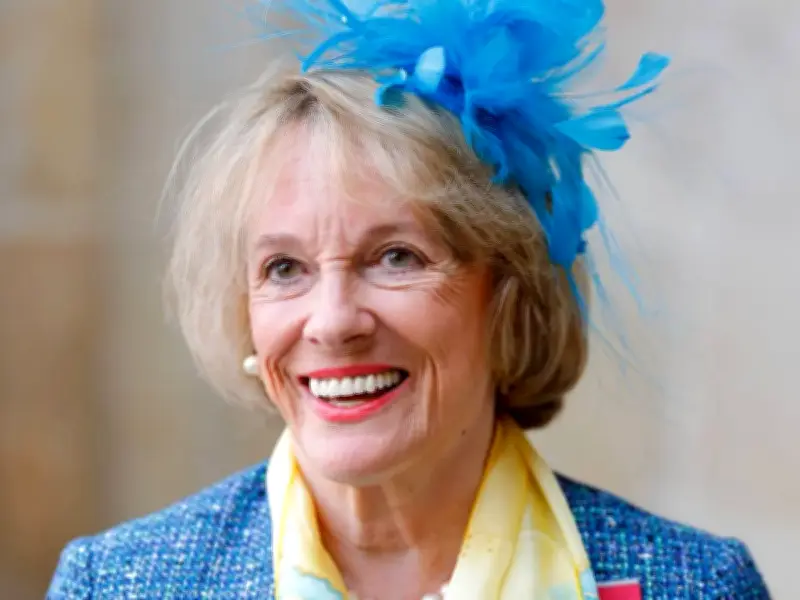
Dame Esther Rantzen, the television presenter who founded Childline and campaigned for assisted dying, has died aged 86 after a battle with lung cancer. Her daughter Rebecca Wilcox described her as “brave, brilliant, clever and charismatic.”
From That’s Life! to Childline
Rantzen became a household name presenting That’s Life!, a mix of consumer rights, funny-shaped parsnips and a dog who said “Sausages.” After 21 years presenting one of the nation’s favourite shows, regularly seen by 18 million viewers, she went on to appear on Strictly Come Dancing, survived ITV’s Australian jungle and discovered her family secrets in Who Do You Think You Are?
She also appeared on Question Time while standing as an independent candidate for Luton South. The mum-of-three, who had five grandchildren, was awarded seven honorary doctorates and was a patron of 19 charities.
Childline: her “fourth child”
Rantzen founded Childline after presenting a BBC programme on child abuse that was inundated with calls. She turned to the then BBC controller, Michael Grade, for help, along with BT, and Childline was born. On October 26, the charity marks its 40th anniversary, an occasion Rantzen desperately wanted to reach but heartbreakingly didn’t.
Her daughter Rebecca Wilcox told The Mirror: “Childline, I would describe as her fourth child, our fourth sibling and it was the preferred child! Now I understand why because I’m deputy President and volunteer counsellor. It is the one place that children choose to come and tell us what’s on their mind, be that good, bad or ugly.”
Advocate for older people and assisted dying
More than 25 years after launching Childline, Rantzen set up the Silver Line Helpline with Age UK, a free, confidential, 24-hour helpline providing friendship for older people. She spoke of her own loneliness after her husband, documentary maker Desmond Wilcox, died aged 69 in 2000.
In December 2023, she announced she had joined an assisted dying clinic in Switzerland, even paying the hefty bill and filling out all the forms. But when the end came, she was too ill to fly. In September, as the assisted dying bill went back to the Commons, she said she was “too physically fragile to make the journey.”
In one of her last messages to Peers, she asked: “What I’m saying to you is: don’t try and sabotage democracy. Give us all the choice that you would want yourself. And then we can die in dignity, pain-free, and leave our families and our loved ones with happy memories. That’s all we ask.”