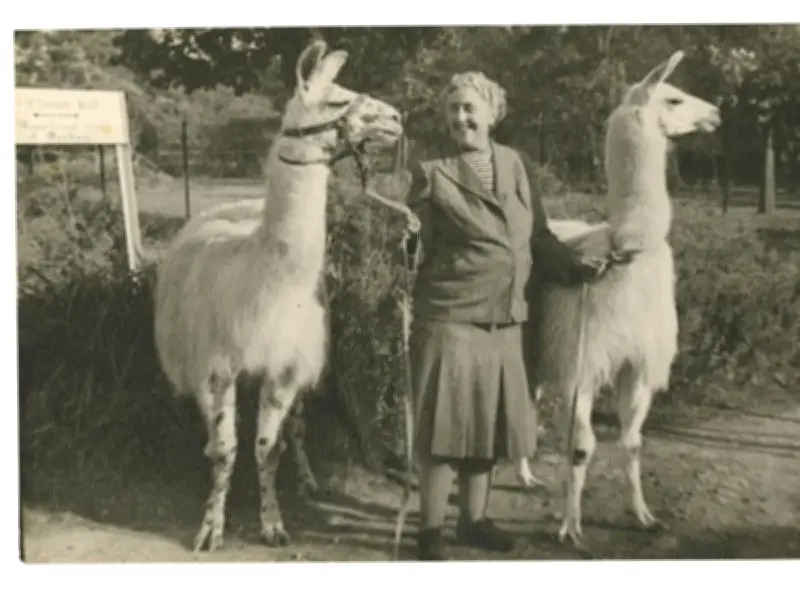
A major new British Library exhibition will reveal Agatha Christie as a pioneering surfer and early digital nomad, drawing on rare access to her personal archive. Agatha Christie: A World of Mystery opens on 30 October, marking 50 years since the novelist's death, and runs until June 2027.
Lead curator Lucy Rowland described Christie as "a bit of a digital nomad, basically." She said: "All she needed was a typewriter and a study table, and she was happy. She wasn't Miss Marple, this old woman living in a village. She lived this extraordinary life, travelling, writing, meeting interesting people and doing interesting things. At the same time she was a very private woman. Everyone knows the name, they know the films, they know the books, but we get to give this insight behind the scenes into her life."
Surfing pioneer and world traveller
Christie discovered surfing in 1922, and curators believe she was the first British woman to stand up on a surfboard. The exhibition includes a surfing montage from Hawaii and a replica of the surfboard she posed with. Christie captioned the photo with words to the effect that surfing is easy, involving pushing the board out to sea, sitting on it, and waiting for a wave.
The show takes visitors through five immersive rooms tracing her life, from the country house where she was born, through a First World War hospital, a 1920s train station, an archaeological dig in the Middle East, and finally a 1950s West End theatre. Born Agatha Mary Clarissa Miller on 15 September 1890 in Torquay, Devon, Christie died on 12 January 1976 aged 85.
Hidden depths in the archive
Guinness World Records lists her as the best-selling novelist of all time, with roughly two billion copies of her novels sold, placing her behind only Shakespeare and the Bible among the world's most-published books. Among more than 200 items on display, Rowland highlighted a handbook called the Pharmaceutical Pocket Book for Practitioners and Students, which bears "A.Christie" written in the top right corner, proof of the grounding in poisons she gained working in a hospital dispensary during the First World War.
Christie's lifelong interest in photography features prominently, with family albums annotated in her own hand. Photographs from her debutante year in Egypt show her with the pyramids behind her, wearing an Edwardian hat and riding a mule. Her ten-month world tour in 1922, taken with her first husband Archie to promote the British Empire Exhibition, took her from South Africa to Australia, New Zealand, Canada and Hawaii, and inspired the plot of The Man in the Brown Suit.
From amateur to official photographer
Christie's marriage to archaeologist Max Mallowan, whom she met through the excavation team Leonard and Katharine Woolley, turned her from an enthusiastic amateur into the expedition's official photographer. Her camera, a Leica DRP III, is displayed alongside her photographs of the Tell Brak head, one of the Middle East's oldest known portrait busts. Christie developed and printed her own photographs in cramped rooms in the heat and dust of the Middle East, sometimes filtering her own water before use, and shot what is considered some of the earliest amateur colour footage in the region.
The exhibition also includes a letter Christie wrote to Max after a journey on the Orient Express when the train became stuck, and a wooden giraffe that featured in The Man in the Brown Suit, bought for her daughter Rosalind. Christie's married life on the digs inspired Murder in Mesopotamia, which Rowland describes as a thinly veiled account of the Woolleys' own excavations. Agatha Christie: A World of Mystery opens at the British Library on 30 October.