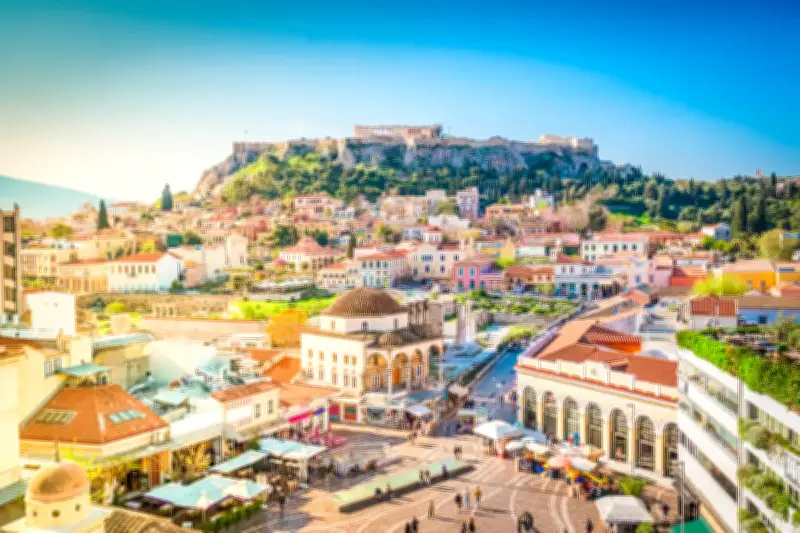
Athens has transformed into a food capital where visitors can enjoy bustling bars, traditional taverna fare, or discover new-wave gems in its many restaurants, but this was not always the case. Visiting Athens for its food might have sounded like a joke to previous generations. Unlike many other Mediterranean countries, including Italy, Spain and Turkey, Greece had no renaissance and no aristocracy to fund chefs and develop sophisticated cuisines. Simple village dishes didn’t always translate well: in the past, tourists would suffer a summer scorching and some desiccated moussaka so they could puff up the Acropolis in August before skedaddling to an island. However, recently the Greek capital has undergone a gastronomic renaissance.
A Shift in Dining and Ingredients
Athens always offered the joys of eating outdoors – by the sea in summer, or winter sunshine on the city’s streets – but these days chefs are rethinking the uses of Greece’s unrivalled ingredients, such as scented, sun-ripened tomatoes, barrel-aged feta, and the best olive oil in the world. Enlightened visitors are also re-thinking their trips, arriving at more temperate times of year, and taking advantage of how culinary traditions are moving in exciting directions. They’re exploring beyond the tourist traps and over-Airbnb-d areas around the Acropolis, finding treasures in humbler neighbourhoods such as Petralona, Keramikos, or hipster Kypseli. A bonus is the growing number of restaurants serving food from Asia, Africa, the Balkans and the Middle East.
From Crisis to Culinary Confidence
In the 1980s, Athenians were leaving behind a history of rural poverty, fasoláda bean stew, and a largely vegetarian diet. They discovered fast food and began eating too much meat. The 1990s saw new levels of wealth; brunch, sushi and lobster spaghetti were aspirational goals for the upwardly mobile. By the time of the 2004 Athens Olympics, a cohort of Athenians existed who had never known hunger, war or dictatorship. Consequently, the economic crisis that began in 2009 was a devastating shock and the next decade saw severe unemployment and deprivation, accompanied by an influx of traumatised refugees and migrants.
Athenians who didn’t depart during the brain drain took stock. Unable to pay the rent, some moved back in with parents and grandparents, and others relocated to ancestral villages; rare is the person who has no toehold on an island or mountainside. Family olive groves beckoned, vineyards were tended, organic farming debated. Alongside the unlikely flourishing of the arts in Athens during the crisis (actors, musicians and artists often worked unpaid), there was a flowering of Greek foodies. They examined things previously taken for granted by most Athenians: eating seasonally, shopping at farmers’ markets, sourcing locally. Covid provided a final push.
Tradition Reimagined
Boosted by foreign appreciation of the Mediterranean diet and its delicious, healthy basic ingredients, Athenians returned to their grandmothers’ kitchens – literally in the case of Anastasia Miari, who wrote the celebrated Yiayia: Time-perfected Recipes from Greek Grandmothers. This trend “isn’t just nostalgia or a return to tradition”, chef and writer Carolina Doriti told me. “It’s a new confidence in Greek cuisine, where tradition has become something alive that we can build on, rather than something fixed in the past.” Doriti celebrated this trend for “honest and rooted cooking” in her wonderful books Salt of the Earth and The Greek Islands Cookbook. For this sort of excellent but unpretentious food, she loves the restaurants Lesvion in the Galatsi neighbourhood of Athens and Athos in Votanikos.
Alongside simple and enlightened Athenian tavernas are Michelin-starred restaurants, where local ingredients are metamorphosed in exquisite concoctions for tasting menus. There are riffs on grandma’s chickpeas and wild greens as she never imagined, and Yiayia might be even more astonished at how her descendants dine on Japanese-Greek hybrids, such as soba noodles with tahini, Ethiopian doro wat, Georgian khachapuri and Lebanese fattoush. Eating in Athens has changed.